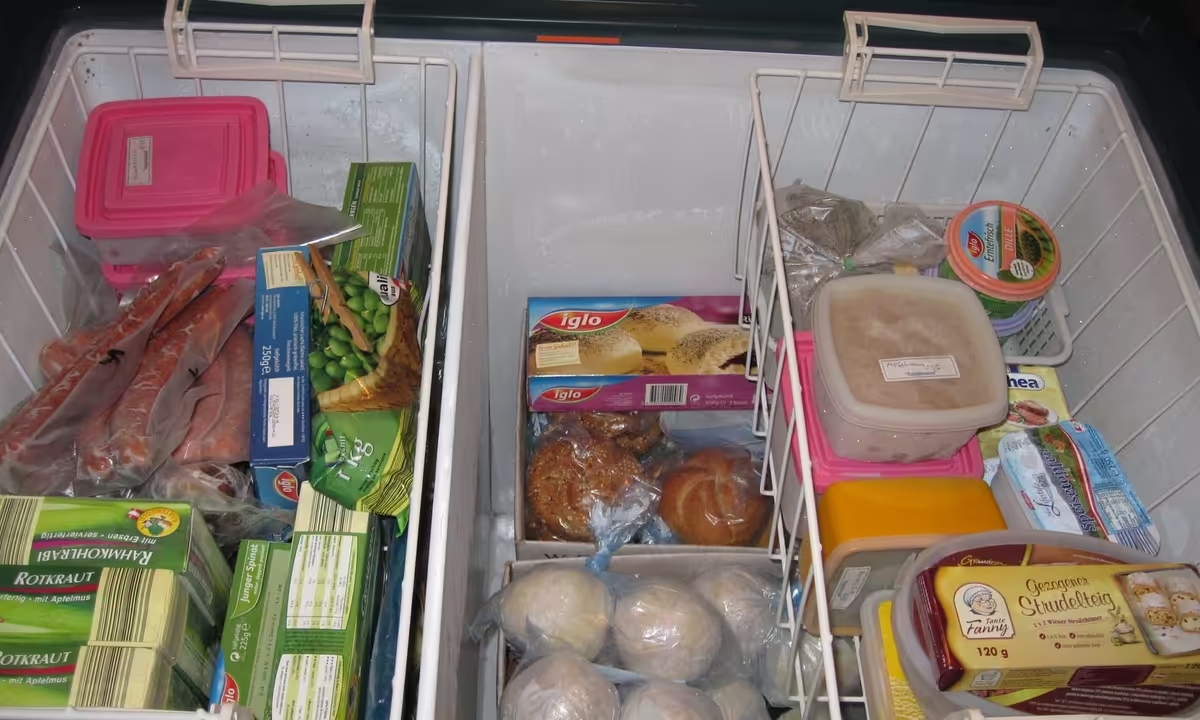
Freezing is the safe part. Thawing is where food actually gets into trouble, because a thawing package warms from the outside in — the surface can sit in the bacteria-friendly zone for hours while the center is still frozen solid. Every method below solves that problem in its own way. The one method that doesn’t — the counter — is the reason this guide exists.
Why the counter is off-limits
Between roughly 40 °F and 140 °F, bacteria on food multiply freely, and a counter-thawing roast spends hours right in that band. The outside reaches room temperature while the inside is still ice; by the time the middle thaws, the surface has had a full shift in the danger zone. Room-temperature thawing isn’t always catastrophic, but it’s a pure gamble with no upside — every safe method below is barely less convenient. Skip it, especially for meat, poultry, seafood, and cooked dishes.
Fridge thawing: the default
The refrigerator is the gold standard because the food never leaves food-safe temperatures. Move the package from freezer to fridge — on a plate or in a bowl to catch drips — and let time do the work. Small portions of ground beef thaw overnight; a whole chicken or big turkey needs a day or more, roughly a day per few pounds. Plan backwards from dinner: when in doubt, move it to the fridge the night before, and a day early for anything big.
Two bonuses of fridge thawing: food thawed this way keeps safely for another day or two in the fridge (raw meat) or three (cooked dishes), and it can be refrozen — with some quality loss — if plans change again.
Cold-water thawing: the fast lane
Forgot to plan? Seal the food in a leak-proof bag (this step is not optional — waterlogged meat and cross-contaminated sink water are both real problems), submerge it in cold tap water, and change the water every 30 minutes so it stays cold. A pound of steak thaws in under an hour this way; shrimp can be done in fifteen minutes under a slow cold run. Cold-water-thawed food is now technically in the food-safety window, so cook it immediately and don’t refreeze it raw.
Microwave thawing: the honest option
The defrost setting works, with honesty about what it does: it thaws unevenly, and edges can start cooking while centers stay frozen. Use it in short bursts, flip and separate the food as it softens, and then — this is the rule — cook it immediately. Microwave-thawed food has already spent some time warm; it shouldn’t sit, and it shouldn’t go back to the freezer raw. The microwave is the right answer when dinner is now, and the wrong answer when dinner is four hours away.
Cooking from frozen: the underused fourth option
A lot of food doesn’t need thawing at all:
- Thin fish fillets like cod and salmon cook straight from frozen with a few extra minutes.
- Flat-frozen ground beef goes into a hot pan, breaking up as it softens at the edges.
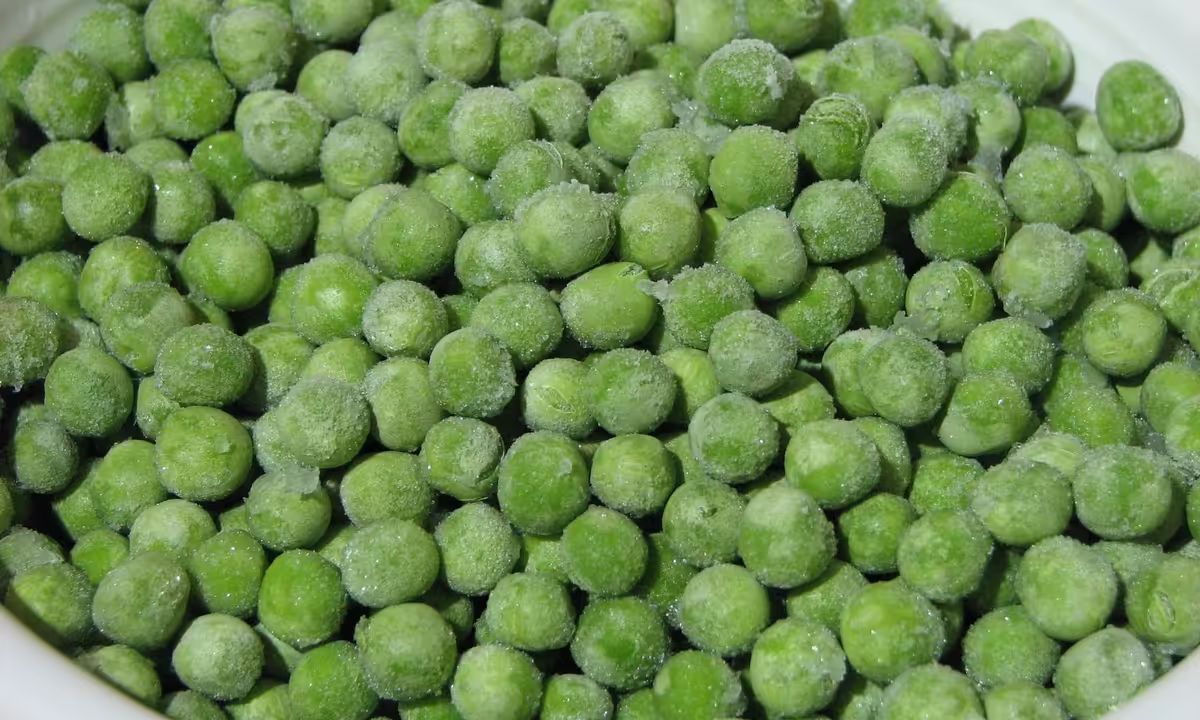
- Blanched vegetables, like peas or corn, go straight into pots and pans.
- Frozen soup slides out of its bag into a saucepan over low heat.
- Casseroles and lasagna bake from frozen, covered, with extra time and a foil-off finish.
Cooking from frozen is the safest option of all — the food spends no time between freezing and heat — and it’s often the most convenient. The exceptions are big roasts and whole birds, which need real thawing to cook evenly, and anything breaded, which loses its coating if thawed and is designed to bake from frozen instead.
Refreezing, in one paragraph
Refreezing is about how the food thawed, not a superstition. Food thawed in the fridge can go back into the freezer — expect slightly drier texture, because ice crystals do a little more damage each cycle. Food thawed in cold water or the microwave should be cooked first; freezing the cooked result is fine. Food that thawed on the counter should never be refrozen raw — cook it thoroughly if it still smells and looks right, or let it go. How to freeze meat covers the quality cost of double-freezing in detail.
Signs a thaw went wrong
Trust your senses, but know what they’re telling you. Ice crystals pooled inside a vacuum bag or a package with a sloshing puddle means the food thawed at some point and refroze — safe if it stayed cold the whole time, but the texture has taken a hit, so plan a braise or a sauce rather than a roast. Off smells, sticky surfaces, or any sour note on raw protein after a thaw mean the thaw went warm as well as wet; that’s a discard. Freezer burn, by contrast, is dryness, not spoilage — trim it and carry on. The line to remember: cold thawing is forgiving, warm thawing is not, and smell plus time is how you tell them apart.
The exceptions that thaw anywhere
Bread, baked goods, and most fruit don’t care about the rules above — they’re not perishable-protein territory. Slices of bread thaw on the counter in minutes or toast from frozen; blueberries go straight from freezer to batter or blender. Thawing safety is about perishables; everything else is about convenience. And for the clock-watching, how long food lasts in the freezer explains why frozen-solid food was never the risk — the dates there are quality dates, not safety deadlines.
Related: Start at the source with how to freeze leftovers, since most thawed food is yesterday’s dinner. Seafood has its own from-frozen tricks in how to freeze seafood, and our meat and seafood cards list thawing guidance per food.
Sources
Sources: USDA FSIS The Big Thaw safe-defrost guidance; FoodKeeper for post-thaw windows.