Can You Freeze Shrimp?
Shrimp may be the most freezer-friendly seafood in the case — in fact, most of it has already met a freezer once on its way to you. Handled right, it comes back sweet, springy, and ready for the pan.
Also called: prawns · raw shrimp · shell-on shrimp · peeled shrimp
Yes — shrimp freezes beautifully for 3–6 months, especially in a single layer or glazed with water.
How to get shrimp into the freezer
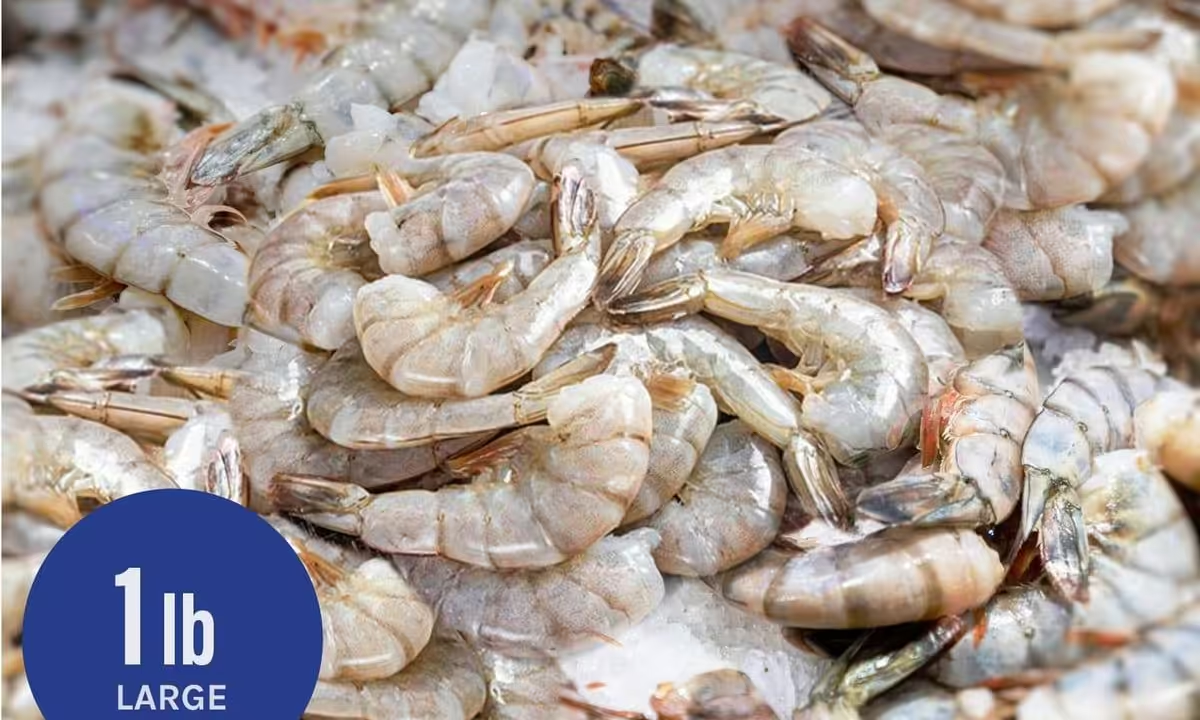
Freeze shrimp in a single layer on a tray until solid, then bag — or add a water glaze: freeze briefly, coat with ice water, refreeze. Shell-on shrimp protect their own meat slightly better.
Before it goes in
- Rinse shrimp under cold running water and drain well.
- Peel and devein now if you plan to cook straight from the bag later.
- Spread in a single layer on a parchment-lined tray and freeze until firm.
- Transfer to a freezer bag, press out the air, and label with the date.
- For a glaze, dip the half-frozen shrimp in ice water and refreeze once more.
Containers & wrapping
Rigid freezer containers or heavy freezer bags, with a tray for the initial single-layer freeze. Vacuum sealing works well — the shell offers a little extra armor against ice crystals.
Freezer storage
3–6 months
Shell-on shrimp edge out peeled for quality over long storage. Most shrimp is frozen at sea anyway, so a well-glazed bag easily beats the fish-counter alternative.
The freezer stops the safety clock for shrimp and only slows the quality one. At a steady 0 °F / -18 °C it stays safe while frozen, so the number on the label is about taste.
How shrimp should be thawed
Thaw in the refrigerator overnight, or for a fast dinner, seal in a bag and submerge in cold water for 30–45 minutes. Shrimp also go straight into simmering dishes from frozen.
Is refreezing shrimp safe in practice?
Not recommended raw. Quality drops hard and the safety margin thins — buy frozen shrimp and keep them frozen until cooking instead of thaw-and-refreeze cycles.
Texture & flavor changes
Thawed shrimp keep their snap surprisingly well when frozen fast and kept cold. Left too long, they turn mealy and waterlogged; a plain ice glaze prevents the worst of the drying.
Best uses after thawing
Where thawed shrimp shines:
- Stir-fries
- Garlic shrimp
- Pasta
- Tacos
- Curries
Which version is going in the freezer?
Raw shrimp freeze best and keep the firm snap that matters for stir-fries and pasta. Cooked shrimp survive the freezer but come back firmer and less sweet — best folded into salads or chowders after thawing.
Shell-on shrimp shield themselves during freezing and thawing. Peeled shrimp are dinner-ready but dry faster — glaze them or vacuum-seal to compensate.
Caveats worth knowing
- Never refreeze shrimp thawed at the store counter — cook them the same day instead.
- Freeze shrimp well before their date; the sweet, briny smell is the first thing to dull.
- Cooked shrimp turn rubbery in the freezer faster than raw — freeze raw whenever you can.
Shrimp freezing: questions
Can you freeze raw shrimp?
Yes — spread them in a single layer on a tray, freeze until firm, then transfer to a freezer bag with the air pressed out. Frozen at 0 °F, raw shrimp keep good quality for 3–6 months, and freezing pauses spoilage entirely while they stay solid.
How long can you freeze shrimp?
Three to six months for best quality, with shell-on and glazed shrimp at the long end. They remain safe indefinitely at 0 °F / -18 °C, but texture and sweetness fade first — mealy shrimp are a quality problem, not a safety one.
Can you cook shrimp from frozen?
Yes — shrimp are one of the few proteins that go straight from freezer to pan. Simmer, sauté, or steam them a minute or two longer than thawed; for pasta and stir-fries, skip the thaw and let the pan do the work.
The details that decide it
Five months at minus 20 costs you half the bite, month by month
The time cost of frozen storage is now measured on shrimp muscle at every scale, and the numbers climb steadily rather than jumping. In a five-month study of giant freshwater prawn held at minus 20 degrees, shear force fell from about 955 grams to 755, gumminess and chewiness dropped roughly 46 percent each, and water-holding capacity slid from 85.5 percent to 68.5 — with thawing loss rising from 8.2 to 12.5 percent of the sample mass. Histology showed the mechanism underneath: muscle fibers grew irregular and loosely arranged, inter-fiber spaces enlarged, and the connective-tissue area fraction nearly tripled. Crucially the losses were significant between every storage interval, meaning month one in the freezer already cost more than month zero. There is no shelf in your freezer where shrimp stops paying rent.
- Chewiness fell about 46 percent over five frozen months.
- Thawing loss rose from 8 to 12.5 percent of sample mass.
- Every storage interval measured significantly worse than the last.
The shrimp is still metabolically alive in the freezer, and losing
The newest finding separates shrimp from almost everything else on this site: frozen storage is not chemically inert for this animal. Metabolomic and lipidomic profiling of whiteleg shrimp at minus 18 degrees found a coordinated stress response still running — proline, an osmolyte known to reduce thawing loss and preserve springiness by buffering ice recrystallization, was significantly depleted, alongside betaine and energy metabolites, while membrane lipids were remodeled with glycerophospholipid and sphingolipid pathways linked to flavor decline and texture loss. The same study found the metabolic damage at minus 18 was substantially greater than at minus 80, so this is a temperature-driven burn-down, not a passive freeze. A bag of shrimp in a typical freezer is an organism under slow siege, and the reserves it would use to protect its own texture are the ones being consumed.
- Proline, a natural ice-buffer, depletes during frozen storage.
- Membrane lipid remodeling links to flavor and texture decline.
- Minus 80 preserved lipid balance far better than minus 18.
Fast freezing is the one dial that changes the outcome, and colder is faster
Since the ice does the mechanical work, crystal size is the lever, and the species comparisons prove it. Crayfish frozen in liquid nitrogen at minus 80 formed smaller ice crystals that minimised damage to muscle cells and myofibrillar protein, retaining the highest molecular-weight protein profiles and solubility across five freeze-thaw cycles where conventionally frozen samples lost half their protein solubility; the liquid-nitrogen samples also avoided the surface wrinkling and pore formation of slower freezing, and delayed the unravelling of ordered alpha-helical protein structures into disordered ones. Home freezers cannot reach those speeds, but the direction is the whole game: the fastest possible freeze with good air circulation around a thin, flat package is not a nicety, it is the single control that most changes what comes back out of the bag.
- Liquid-nitrogen freezing kept protein solubility across five cycles.
- Slow-frozen samples lost about half their protein solubility.
- Thinner packages freeze faster and cut crystal size at home.
Related foods