The freezer is the most forgiving appliance in the kitchen, but it rewards discipline. Air, moisture, and time are the three things working against everything you put in there. These ten rules deal with all three, and they apply whether you’re freezing a tray of berries or a pot of stew.
1. Cool before you freeze
Warm food dumped into a cold freezer steams the compartment, warms its neighbors, and forms bigger ice crystals. Give it thirty minutes on the counter — no more than two hours, less if the kitchen is hot — then move it in. Speed matters with big pots of chili or stock: divide them into shallow containers so the cold reaches the center quickly. We go deep on the cooling rules in how to freeze leftovers.
2. Air is the enemy
Freezer burn is dehydration, plain and simple. An exposed surface loses moisture, oxidizes, and turns gray and leathery. Press plastic wrap directly onto the surface of anything soft, squeeze the air out of freezer bags with the top almost sealed, and double-wrap anything that will sit longer than a month. A chicken breast wrapped loosely stays safe long past the point it is worth eating.
3. Portion for the meal you’ll actually cook
Freeze food the way you’ll use it. A kilo of ground beef frozen in one brick means thawing all of it for a single dinner. Flatten it in a bag into a thin sheet you can snap pieces from, or freeze half-cup blobs on a tray. The same logic applies to tomato sauce: two-cup portions match a pasta night, one-cup portions match a pizza.
4. Label everything
Every package gets three things: what it is, how much, and the date it went in. Masking tape and a marker outlive memory. An unlabeled frozen lump is a mystery you’ll throw away in a year, which is the most expensive kind of inventory. Our freezer organization and labeling guide has a full system; the short version is that a ten-second label saves a ten-dollar meal.
5. Freeze flat
Flat is faster and tidier. A thin layer freezes quickly, which means smaller ice crystals and better texture, and flat bags file upright like folders instead of avalanching out of the drawer. Lay bags of soup, sauce, and ground meat on a baking sheet until solid, then stand them up.
6. Hold the freezer at 0 °F / -18 °C
At 0 °F / -18 °C, food kept solidly frozen stays safe indefinitely — that’s the USDA’s line, and it holds for meat, vegetables, bread, everything. What runs out is quality, not safety. The windows you’ll see on our food cards measure taste and texture. A cheap freezer thermometer tells you whether the dial is telling the truth; most freezers run warmer than their setting.
7. Don’t overpack, don’t underpack
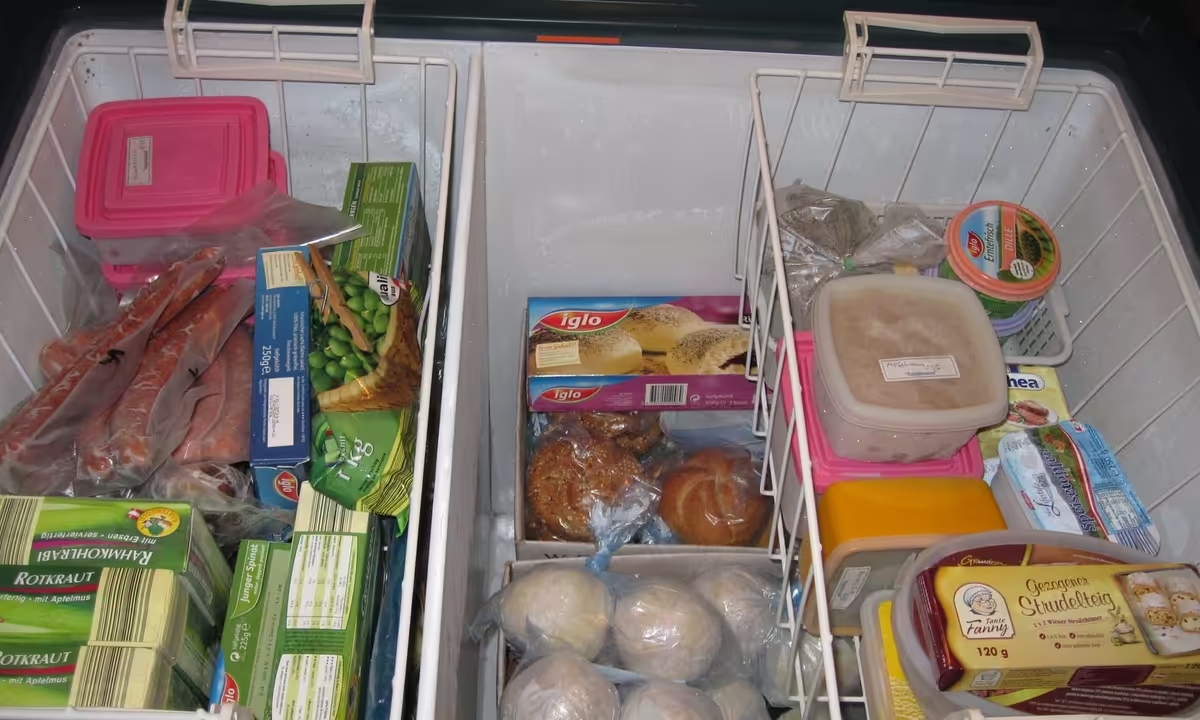
A freezer full of solid food holds its cold better than an empty one, but airflow still matters. Cramming a warm casserole against a week’s worth of frozen food slows everything down. Stagger big additions: chill them in the fridge overnight, or add them to a partly emptied drawer. In a chest freezer with dead space, a couple of frozen water jugs add thermal mass without blocking air.
8. Freeze in recipe units
The second half of portioning is measuring. Half-cup cubes of stock, two-cup bags of sauce, single steaks wrapped separately, cookie dough scooped ball by ball. The question to ask at the moment of freezing is not “how much do I have?” but “how much will I need at once?”
9. Use the quick-freeze setting
If your freezer has a fast-freeze or “super” button, use it an hour before you load. It drops the compartment temperature so new food freezes hard instead of softening the old. No button? Spread new items out on the coldest shelf, spaced apart, then consolidate once they’re solid. Frozen neighbors are your enemy for the first few hours only.
10. Rotate stock
First in, first out. New food goes behind or under old food, and the oldest package gets cooked this week. This one habit does more for freezer quality than any gadget — it means nothing sits long enough to go quietly gray in the back corner.
What a proper freeze looks like on a Sunday
- A tray of strawberries frozen single-layer, then bagged.
- Blanched broccoli dried well and packed in two-serving bags.
- Half a loaf of bread sliced before freezing, so toast is a two-minute job.
- Ground beef flattened into a thin sheet, ready to break into portions.
- A banana bread cooled, sliced, and double-wrapped.
- Every one of them labeled with the dish and the date.
Twenty minutes of work, six weeks of easier dinners.
Where quality bends
Some foods won’t come back as themselves no matter how well you wrap them. Milk separates — it’s fine shaken into cooking, grainy in a glass. Shredded cheese turns crumbly and wants to be melted. Fried food goes limp. None of that is a safety problem; it’s a planning problem. The dairy and vegetables shelves show the pattern category by category, our tour of foods that freeze well covers the foods that come back unchanged, and the food cards on this site tell you exactly what to expect from the rest.
Related: Start with how to thaw frozen food safely — freezing well only pays off if thawing goes right. Then check how long food lasts in the freezer for the quality windows, and browse the freezes-well list to see what comes back closest to new.
Sources
Sources: USDA FSIS Freezing and Food Safety for the 0 °F framing and wrap practice; FoodKeeper for the window examples.