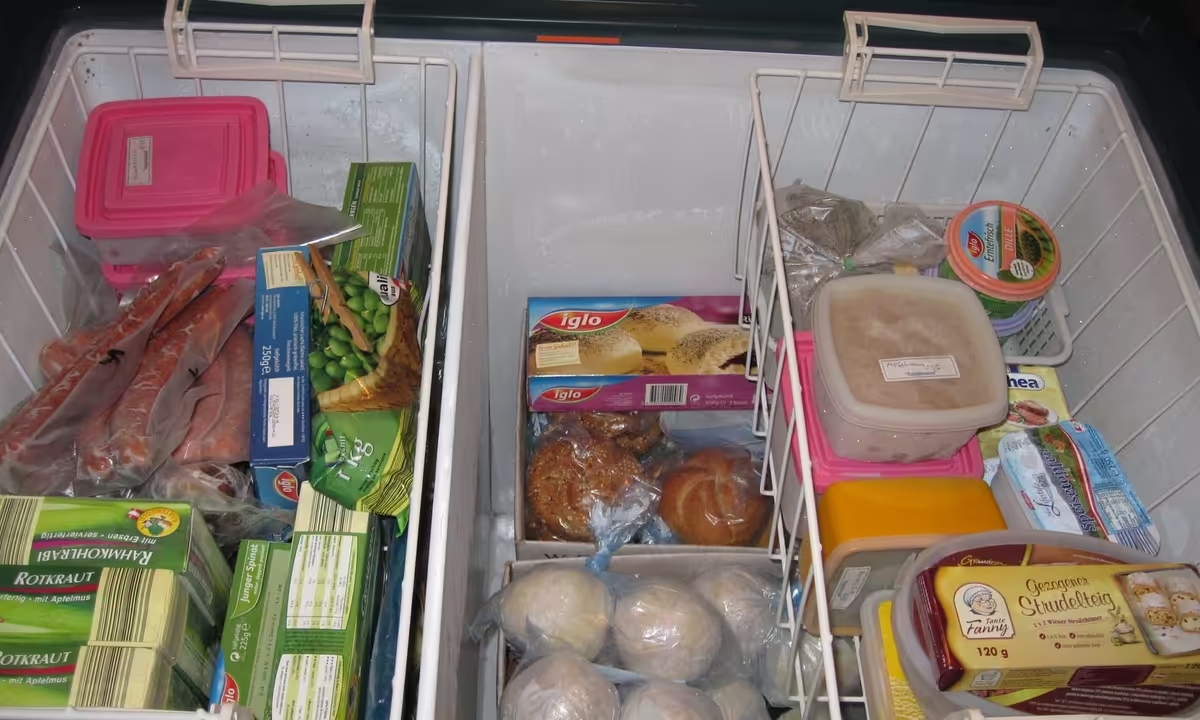
Every freezer has two eras: before you label things and after. Unlabeled freezers fill with anonymous white parcels, and food dies quietly in the back because nobody knows what it is or how old it is. Labeled, zoned freezers work like a tiny pantry — you can see the inventory, cook from it, and stop buying your third bag of frozen peas. None of this takes gadgets; it takes a system you’ll actually keep.
Label like a warehouse
Three facts per label: what it is, how much, when it went in. “Beef stew, 2 servings, 12 Aug” beats “stew?” for the same reason a warehouse labels every pallet. Use freezer tape or masking tape and a permanent marker — regular labels peel off frost, and marker on bare plastic scrubs off in the wash. Write the label before the package goes in, while you still remember what’s in it.
A working habit: date the freeze, not the cook. Windows count from the moment the food met the freezer, so that’s the number that matters when you’re deciding whether the chili is still at its best. How long food lasts in the freezer has the window table to check against.
Zones, or a place for every kind of package
Freezers have natural microclimates, and matching food to zone buys quality:
- The door is the warmest spot, warmed every time it opens. Store short-timers there: the heavy cream you’ll use this week, a stick of butter for toast, nuts, herbs in oil, the buttermilk you’ll bake with this weekend. Nothing you’re keeping for the long haul lives in the door.
- The top or front is prime real estate for this week: thawing bin, ready meals, the bread you’re working through.
- The deep middle and bottom hold long-storage: flat bags of chicken stock, wrapped roasts, trays of strawberries.
- One bin gets one job. A clear “eat me first” basket is the single best anti-waste device in the freezer — anything near its window or unlabeled goes in it, and the basket is checked before anything new is bought.
Chest freezers work differently: they zone in layers. Newest at the bottom, oldest on top, and a hanging fabric bag (a sweater organizer, honestly) files flat bags vertically where you can flip through them like folders.
Freeze flat, file upright
The organizational superpower is flatness. Food frozen in thin, flat layers freezes faster, thaws faster, stacks without avalanches, and files upright like books. Soups, stocks, sauces, and ground beef in freezer bags — laid flat on a baking sheet until solid, then stood on edge in a bin — turn a chaotic drawer into legible shelves. This is rule five from how to freeze food properly, and it’s the one that changes the most.
The inventory habit, kept simple
Fancy apps fail because they demand a new ritual. The minimum viable inventory is a whiteboard or a note on the fridge: one line per package as it goes in — “chili ×2, 12 Aug” — and one strike-through as it comes out. Thirty seconds a week to reconcile. The point isn’t record-keeping; it’s that when you’re at the store wondering whether you already have meatballs, the answer is on the door.
Pair it with rotation: new goes behind or beneath old, and the oldest matching package gets pulled when you cook. First in, first out is the whole system. A freezer that rotates never surprises you.
What the system is protecting
All this labeling exists because frozen food doesn’t shout its age. A bag of blueberries from last summer looks identical to last week’s, and cookie dough hides in the drawer like a lump of moon rock. The soup you meant to eat in December is perfectly safe in March — the stakes are quality and money, not safety, because food held solidly at 0 °F / -18 °C stays safe while it stays frozen. The system is how the quality windows get respected without anyone keeping it all in their head.
Defrosting and cleaning the freezer
Frost thicker than about a centimeter makes the freezer work harder and shrinks usable space. Defrost when the stock is low: move food to a cooler (or a neighbor’s freezer), unplug, prop the door open, and let it melt with towels for the puddle — no knives against the coils, no chiseling. Wipe with warm soapy water, dry fully (moisture is future frost), and restock with the oldest items on top. An hour a season, and the drawer stops being a glacier.
One related emergency skill worth knowing: in a power cut, keep the door shut. A full freezer holds food frozen for roughly two days, a half-full one for about one — which is one more reason to keep it stocked and zoned rather than running on two ice trays.
Related: The freezing rules that make a tidy freezer possible are in how to freeze food properly, and how to thaw frozen food safely covers the day you finally pull that labeled bag. To stock the zones with things that last, start from foods that freeze well and the baked goods and sauces shelves.
A starter system for tonight
If all of this sounds like a weekend project, it is not — the working version takes one evening. Pull everything out, bin the mystery items (you will not thaw them anyway), and group what remains into the four zones above: proteins, vegetables and fruit, baked goods and breads, and flavor bases. Give each zone one shelf or one basket, put the oldest items on top, and write the date on anything that lacks one. That is the whole skeleton; the labels, the inventory sheet, and the eat-me-first basket grow onto it over the following week because each small habit saves a real moment of standing in front of the open drawer deciding nothing.
The habit that pays most is also the smallest: when you freeze something, write two things — what it is and when it went in. Every system above is automation layered on that one sentence with a marker.
Sources
Sources: USDA FSIS Freezing and Food Safety (safety-at-0-°F framing and power-cut guidance) and FoodKeeper storage windows.