The freezer is a preservation machine, not a time machine. Ice crystals form wherever there’s water, and emulsions split when fat re-solidifies at the wrong speed. Some foods shrug that off. Others come back unrecognizable — or, in a handful of cases, genuinely worse than useless. Here are the casualties, honestly described, plus the workarounds that make many of them usable anyway.
One thing to keep straight as you read: almost nothing on this list becomes unsafe in the freezer. These are quality failures. The food is usually still edible; it’s the experience that collapses. Real safety problems start when perishable food thaws warm or sits out too long — a different failure, covered in our thawing guide, and not something freezing itself causes.
Salad leaves and watery crunch
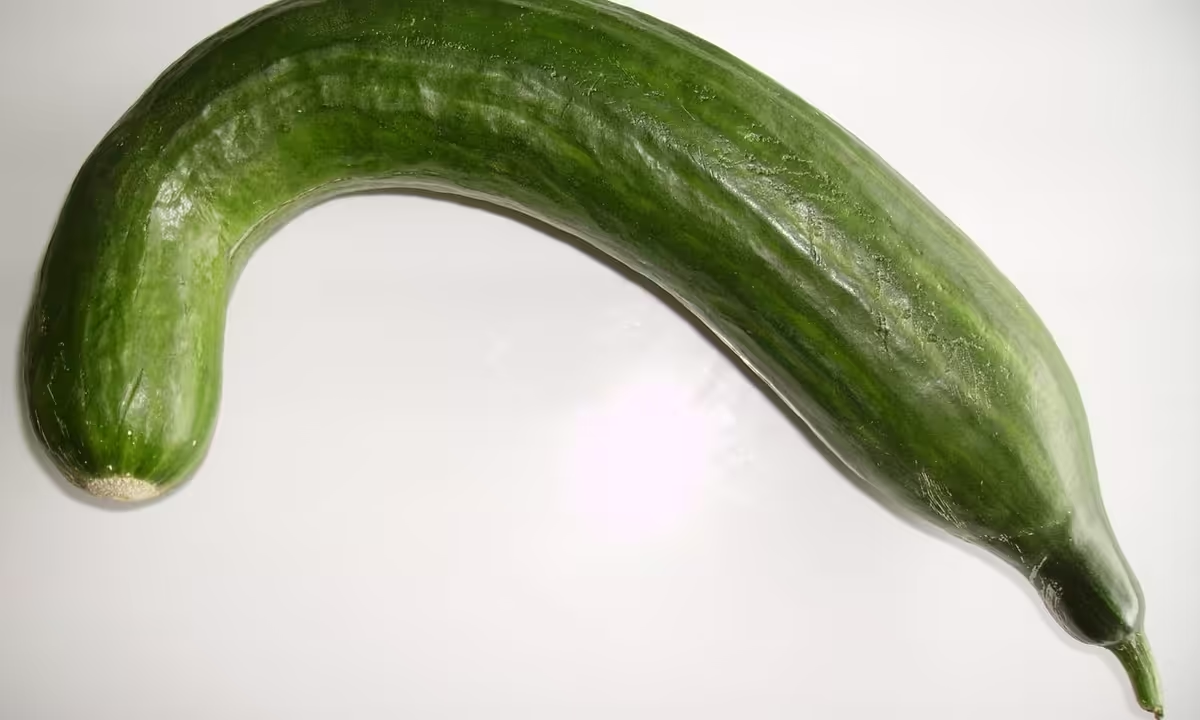
Crispness is cell structure full of water, and freezing ruptures exactly that. Lettuce thaws into a translucent, collapsed version of itself; cucumber does the same with extra waterlogging. Celery keeps a little backbone but loses its snap. The workaround is to stop pretending they’re salad: frozen-then-thawed leaves and cucumber are fine blitzed into smoothies, cooked into soups, or simmered into stock, where texture was never the point. They just can’t go back on a plate raw. If your produce drawer keeps overflowing, the better fix is upstream — buy less, and blanch-and-freeze the sturdy members of the vegetables family instead.
Custards and cream sauces
A custard is a delicate suspension — eggs holding milk in a soft gel — and freezing tears the gel apart. Thawed custard weeps and curdles, and a frozen-and-reheated hollandaise is a broken sauce with butter specks. Make these fresh; they’re fast. The nuance worth knowing: the same custard baked inside something — a quiche, say — freezes respectably, because the surrounding structure catches the weep. The component doesn’t freeze; the finished dish can.
The pastry exception
Baked goods with custard elements split the difference. A custard tart filling turns grainy, but a fruit pie, a cake, and most cookies carry their dairy comfortably. Judge the structure around the dairy, not the dairy alone.
Fried food and anything crispy
Crisp is a dry, brittle surface meeting moist heat — the exact opposite of what a freezer produces. Fried chicken and spring rolls lose their crunch in storage and gain sogginess on thawing, and a microwave finish finishes them off entirely. The partial rescue: freeze them open on a tray first so they don’t frost-weld, bag once solid, and reheat from frozen in a hot oven or air fryer — never thawed, never microwaved. They won’t be fresh-fried. They’ll be close enough on a Tuesday, which is the honest deal.
Mayonnaise and its emulsion cousins
Mayonnaise is oil suspended in egg and acid, and the freeze-thaw cycle shakes that suspension apart into an oily, curdled puddle. Alone, mayonnaise is a no — don’t freeze it by itself or freeze a dish that leans on it as a finishing sauce. The workaround is dilution and structure: inside a tuna bake or a casserole where starch holds everything together, the mayo survives as an ingredient even though it would never survive as a sauce. Same story for dressings and dips built on it. Keep the jar in the fridge door and make what you need.
Eggs in the shell
Whole eggs expand as they freeze, and the shell loses that argument — you get cracked shells, exposed contents, and a mess in the drawer. Crack and beat them first, and eggs freeze fine for months; they’re one of the quiet workhorses of baking prep. Hard-cooked is different again: the yolks turn chalky but usable, while the whites of hard-boiled eggs go rubbery and watery, which is why egg salad is a make-it-fresh dish. The workaround lives in the method: freeze whites and yolks separately — yolks need a pinch of salt or sugar to stay scoopable — and thaw them for baking. The eggs shelf has the details for each form.
High-water produce and starchy mash
The freezer has opinions about starch and water. Raw potatoes darken and go oddly sweet in the cold. Mashed potatoes thaw gluey or grainy depending on how much butter is holding them together — though folded into shepherd’s pie, they behave, because the topping freezes as part of the dish rather than as a bare component. And watermelon thaws to mush; frozen cubes are for blending, not slicing. The pattern: high-water, high-structure foods lose the structure, and starchy foods want to be frozen inside a dish.
When the answer is the fridge, not the freezer
Some foods don’t want either long-term option, and that’s fine — not everything needs to be banked. Lettuce, cucumber, and berries keep best unwashed and dry in the fridge for days, not months. Custards, hollandaise, and mayo are quick to make and quick to use; their freshness is the dish. If you routinely throw out wilted produce or half jars of dressing, the fix isn’t freezing — it’s smaller, more frequent shopping for the fragile stuff, and freezing only what freezes. Save the freezer’s authority for the foods that respect it.
How to read these verdicts
“Not recommended” on a card is about that food as listed — mayo in a bowl, lettuce in a salad, custard in a cup. Cooked into something, folded into something, or repurposed for blending, many of these foods have a second life. That’s the difference between our three verdicts: the middle ground lives on the freezes-with-changes list, and the full hall of fame of failures is on the not-recommended list. When in doubt, search the food — every card says what changes and what it’s good for after thawing.
Related: For contrast, see foods that freeze well — the short list of foods that come back unchanged. How to freeze dairy explains which milk products separate and which don’t, and since many “don’t” foods survive inside a finished dish, how to freeze cooked meals is the workaround guide. Per-food verdicts are also collected on the sauces shelf, where several of these casualties live.
The freezer door is not the danger here, though: food held solidly at 0 °F / -18 °C stays safe while it stays frozen, and every “not recommended” on this list is a verdict about eating well, not about safety.
Sources
Sources: verdicts and failure modes cross-checked against USDA FoodKeeper storage guidance and the USDA FSIS freezing and food-safety pages; the FDA food-safety pages cover the listeria and ready-to-eat items mentioned above.