Can You Freeze Eggs?
A dozen eggs nearing their date, or hens having a productive week, both end the same way here: cracked into a bowl, beaten, and frozen. The shell is the only part of an egg that fails in the freezer — and it fails messily, so never freeze eggs in it.
Also called: whole eggs · raw eggs · beaten eggs · frozen eggs
Yes — eggs freeze well once out of the shell and beaten, ready for scrambles, custards, and baking for months.
How to freeze eggs
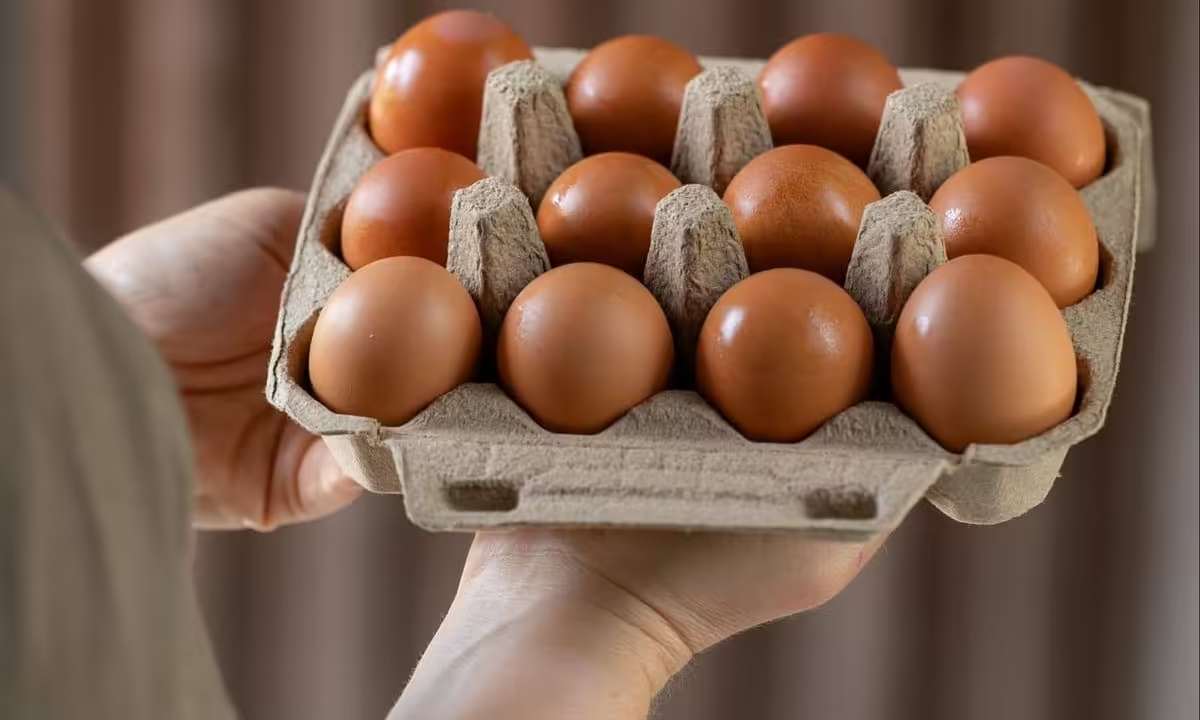
Beat the eggs just until blended and freeze in ice-cube trays or muffin tins, then transfer to labeled freezer bags. A pinch of salt or sugar per few eggs guards the yolk portion against gelling.
Before it goes in
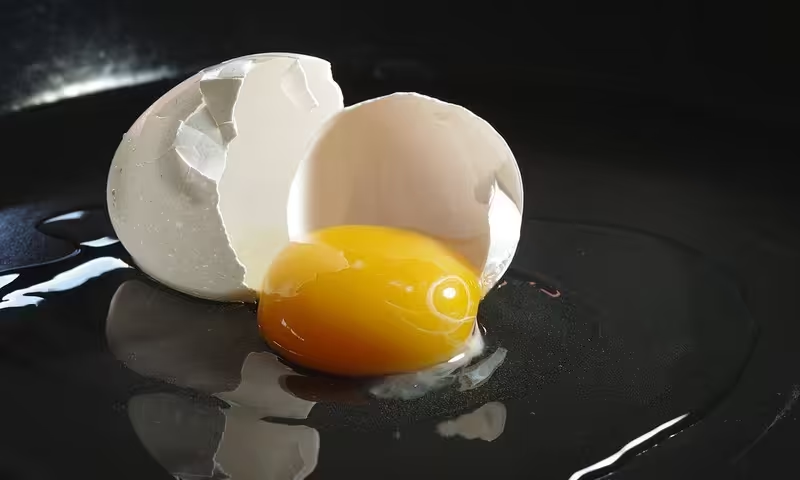
- Crack the eggs into a bowl, one at a time against a flat surface, so shells never sneak in.
- Beat gently until whites and yolks are just combined; overbeating adds air that turns foamy on thawing.
- For savory use, whisk in 1/8 teaspoon of salt per four eggs — or the same gesture of sugar for baking.
- Pour through a strainer into ice-cube trays or muffin tins for even, egg-sized portions.
- Freeze until solid, pop the portions into a bag, and label with the count and date.
Containers & wrapping
Ice-cube trays and muffin tins for the initial freeze, then labeled freezer bags. One standard ice cube holds about two tablespoons, so two cubes run close to one large egg — test your tray once and write the answer on the bag.
Freezer storage
up to 12 months
Public guidance gives frozen eggs a full year of safety while solidly frozen at 0 °F; quality is best in the first few months, so rotate the oldest bags forward.
Safe and good are two different clocks for eggs: at 0 °F / -18 °C it stays safe as long as it is solidly frozen, and the up to 12 months window above is about eating quality.
How to defrost eggs safely
Thaw in the refrigerator overnight — about a cup of frozen eggs takes roughly that long. Use thawed eggs only in fully cooked dishes; they are not for raw dressings or runny applications.
Can eggs survive a second freeze in practice?
Not recommended. Thawed eggs lose body on a second freeze and the safety margin narrows; portion well the first time and the question never comes up.
Texture & flavor changes
Beaten whole eggs thaw slightly thicker than they went in, with a faint graininess the yolk brings. Scrambled, baked, or whisked into custard, the difference disappears; a fried egg is impossible once beaten anyway.
Best uses after thawing
Where thawed eggs shines:
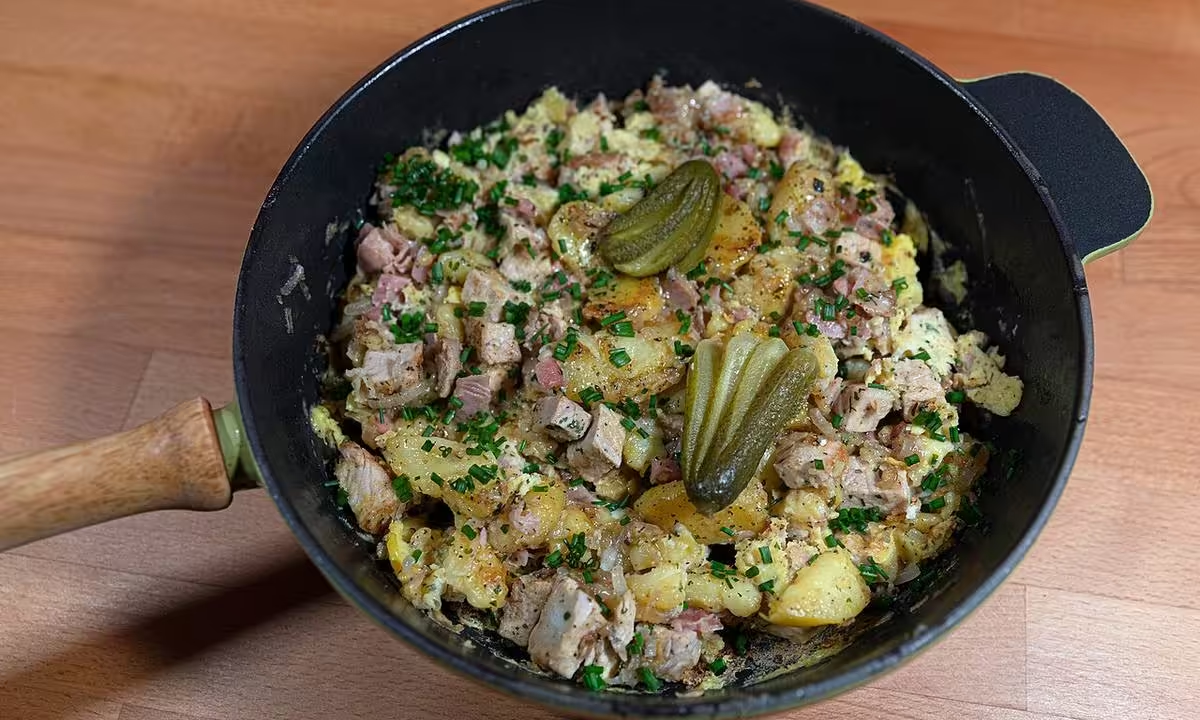
- Scrambles and omelets
- Baking
- Quiche and custards
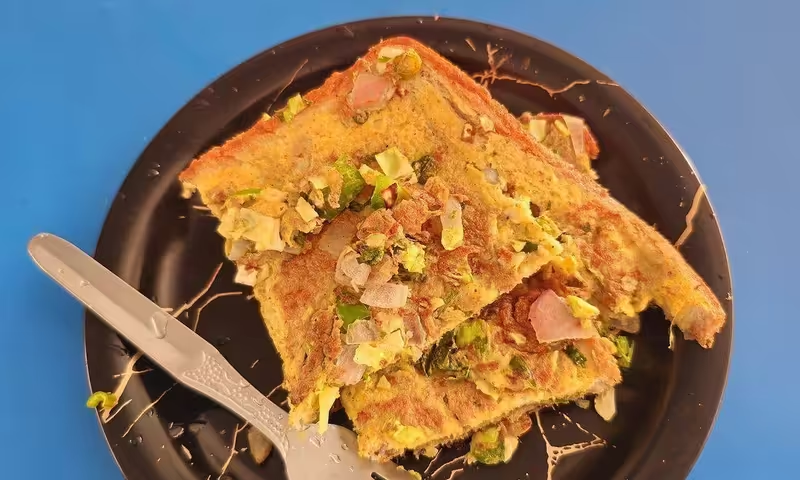
- French toast
- Breakfast burritos
Which version are you freezing?
Beaten whole eggs are the workhorse. Whites freeze plain and still whip; yolks need a pinch of salt or sugar to keep from gelling — each has its own card with the details.
Raw beaten eggs are the success story. Cooked eggs are a different animal — hard-boiled whites turn rubbery and weepy — so see the hard-boiled eggs card before freezing dyed leftovers.
Caveats worth knowing
- Never freeze eggs in the shell — expanding contents crack the shell, and a thawed in-shell egg is unsafe to save.
- Salt or sugar additions matter for flavor: label each bag savory or sweet so baking never meets the salted batch.
- Cook thawed eggs fully — no raw-batter tasting, soft scrambles, or other undercooked applications.
What readers ask about eggs
Can you freeze eggs in the shell?
No. The contents expand as they freeze and crack the shell, exposing the egg to contamination. Crack, beat, and freeze in trays or bags instead — it takes five minutes and the eggs pour out in usable portions later.
Do frozen eggs need salt or sugar added?
Whole beaten eggs freeze acceptably without anything, but a small addition — 1/8 teaspoon of salt or about 1.5 teaspoons of sugar per four eggs — prevents the yolk portion from gelling thick and grainy. Choose salt for savory cooking and sugar for baking, and label which is which.
How long can you freeze eggs?
Up to twelve months while they stay solidly frozen at 0 °F. Safety holds for the full year; texture is best within the first few months, so date the bags and use the oldest first.
Can you freeze raw eggs for baking?
Yes, and it is one of the best reasons to freeze them. Beat lightly, add sugar rather than salt, and portion by recipe amounts. Thawed eggs behave like fresh in cakes, cookies, and quick breads.
The details that decide it
Twenty days at minus twenty turned whole liquid egg into a firmer gel and released its water
Whole egg liquid is a protein solution, and freezing it is a controlled way to watch a gel form. This study portioned homogenised whole egg liquid into vacuum bags, stored it at minus twenty and then made gels from it after zero, ten, twenty, thirty and sixty days, tracking the water with low-field nuclear magnetic resonance as well as measuring texture. The free water signal rose sharply after ten days of freezing, and once the samples had spent twenty days frozen the fraction of water in the tightly bound state climbed markedly as the peaks shifted. The gel itself firmed with time: after ten days the samples were significantly harder, more adhesive and more chewy than the fresh gel. By day sixty the water that had come loose from the protein network accounted for 73.06 per cent of the total, against 29 per cent in the gel made from never-frozen liquid, which is the clearest statement in the paper of what a long freeze does to egg.
- The liquid was stored at minus twenty and gelled at zero, ten, twenty, thirty and sixty days.
- The gel was significantly harder, more adhesive and more chewy after ten days of freezing.
- Loose water reached 73.06 per cent of the total by day sixty against 29 per cent fresh.
Five days at minus twenty plus further thaw cycles, and an olive leaf extract held the gel together
A cylinder of cooked egg gel is a good model of what happens to a boiled or steamed egg in the freezer, because it has enough structure to measure but no crust or shell to hide behind. This study kept cylindrical egg gels five days at minus twenty in a still-air freezer, defrosted them for sixteen hours at four degrees, and put part of the set through two or three further freeze-thaw cycles before measuring. The variable was an olive leaf water extract, prepared at four degrees and freeze-dried into a powder, which the authors describe as unusually resistant to freezing. Its activity is carried mainly by oleuropein, present at 10.9 to 12.6 grams per hundred grams of dry leaf, and the practical effect they report is anti-syneresis: the treated gels held their water instead of weeping it as the ice came and went.
- The gels spent five days at minus twenty in a still-air freezer.
- They were defrosted for sixteen hours at four degrees before testing.
- The oleuropein in the leaf extract ran 10.9 to 12.6 grams per hundred grams dry weight.
Fifteen frozen days made an egg sausage chewier, and two additives together capped the weeping
Cooked egg sausage is a gel in a casing, which makes it the practical version of the frozen egg problem: it can take the cold without falling apart but it squeezes out water. This trial froze cooked egg sausages at minus twenty-five in a forced-air chamber, moved them to a minus eighteen cabinet for a fifteen-day store, and tested texture by penetration while measuring syneresis as the liquid that leaves the gel. Modified cassava starch at three per cent cut that weeping to about one per cent, and the best combination across the whole set was two per cent whey protein isolate with the three per cent starch, which the authors credit with improving the textural properties after freezing rather than merely limiting the damage. Whey protein on its own was not enough: five per cent of the isolate still failed to protect the sausage against the freezing stress.
- The sausages were frozen at minus twenty-five and then held at minus eighteen for fifteen days.
- Three per cent modified cassava starch cut syneresis to about one per cent.
- Five per cent whey protein isolate alone was insufficient protection.
Related foods