Can You Freeze Mashed Potatoes?
Holiday-cooking anxiety ends the day you learn mashed potatoes freeze. Make a double batch while you have counter space, freeze it flat in bags, and reheat a bag on the stovetop for a fresh-tasting side with zero peeling. Rich, buttery mashes recover best.
Also called: mash · mashed potato · potato mash · make-ahead mashed potatoes
Yes — mashed potatoes freeze beautifully; they loosen on thawing, so beat in extra butter or warm milk as you reheat.
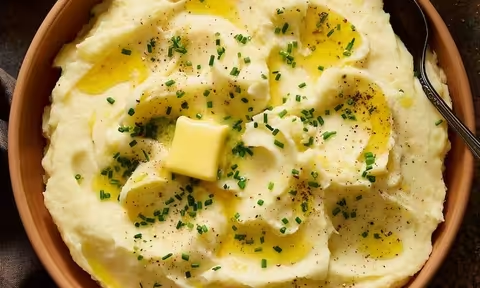
Getting mashed potatoes ready for the freezer
Freeze mashed potatoes rich in butter and cream — the fat protects the texture. Spread portions flat in freezer bags or fill containers with headroom, and reheat low and slow with extra liquid beaten in.
Before it goes in
- Season the mash slightly generously — freezing dulls salt, butter, and pepper a little.
- Cool the mash completely at room temperature, no longer than an hour or two.
- Portion into flat freezer bags or containers in side-dish amounts with a little headroom.
- Press the bags flat so they stack neatly and thaw quickly and evenly.
- Label each bag with the date and the portion size.
Containers & wrapping
Flat freezer bags — they stack like files and thaw fast — or rigid containers with an inch of headroom. Avoid overfilled tubs; expanding mash splits lids.
Freezer storage
2–3 months
Count from freeze day. A buttery layer on top is normal; graininess and stale flavor arrive with time.
Cold does not make mashed potatoes dangerous over time. Held at 0 °F / -18 °C it remains safe indefinitely, and the window above is an honest estimate of when texture starts to go.
Thawing mashed potatoes the right way
Thaw overnight in the refrigerator, then reheat gently on the stovetop or in a low oven, stirring in a splash of warm milk or cream. A microwave works in bursts with stirring between them.
Is refreezing mashed potatoes safe at home?
Not recommended — reheated mash that was frozen once turns gluey and flat on a second cycle.
Texture & flavor changes
Thawed mash is slightly looser and wetter than fresh, sometimes faintly grainy at the edges. Vigorous reheating with warm milk and a fresh knob of butter brings it back to serving condition; low-fat, water-heavy mash suffers most.
Best uses after thawing
Where thawed mashed potatoes shines:
- Weeknight side dish
- Shepherds pie topping
- Thanksgiving prep
- Cottage pie
- Colcannon
Which version do you have?
A mash made with plenty of butter and cream freezes far better than an olive-oil or broth mash, which can turn gluey. If you plan to freeze, make the rich version.
Caveats worth knowing
- Skip freezing mashed potatoes made with oil or water instead of butter and dairy — they turn pasty and dull.
- Do not leave mash cooling for hours before freezing; warm mash in a deep container sours fast.
- Reheat thoroughly and gently; scorched bottoms and cold centers are the real risks with reheated mash.
What people ask about freezing mashed potatoes
Can you freeze mashed potatoes with butter and milk in them?
Yes — and you should. The dairy fat cushions the starches and keeps the texture smooth after thawing. Plain, water-mashed potatoes freeze noticeably worse, turning pasty. Beat in a little extra warm milk when reheating and the mash tastes freshly made.
How long can you freeze mashed potatoes?
Two to three months for best quality. They remain safe as long as they stay frozen solid, but flavor fades and the texture grows grainier with time — ideal for making holiday sides a few weeks ahead.
Why did my thawed mashed potatoes turn gluey?
Overworking is the usual culprit, not the freezer alone. Vigorous beating or high-speed reheating breaks down starch cells. Reheat gently, stir in warm milk or cream, and fold rather than whip; a knob of cold butter at the end restores richness.
Related foods