Can You Freeze Broccoli?
Broccoli was made for the freezer aisle, and the home version works nearly as well. Two minutes in boiling water sets the bright green color, and the florets stand by for almost a year — more than the bag from the store can honestly claim.
Also called: broccoli florets · frozen broccoli · broccoli crowns
Yes — blanched broccoli freezes 10 to 12 months, coming out bright green and ready for stir-fries, soups, and roasting.
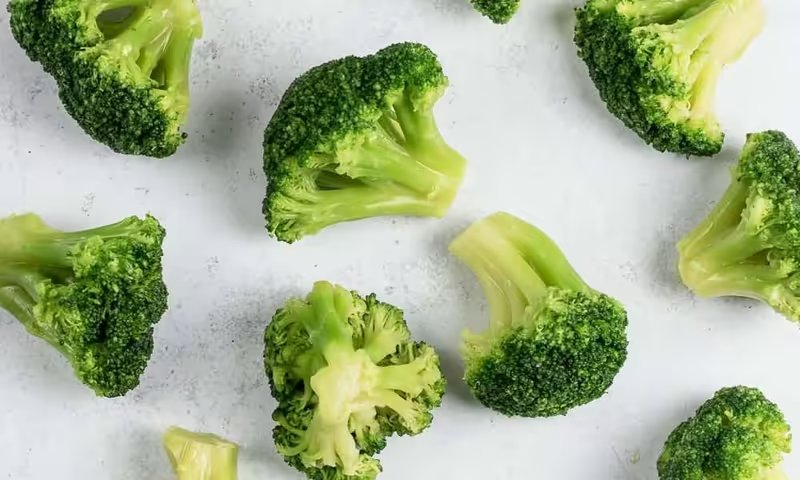
How to prepare and freeze broccoli
Cut into florets, blanch for two to three minutes, chill in cold water, dry well, and freeze open on a tray before bagging. Frozen florets steam, roast, or stir-fry straight from the freezer.
Before it goes in
- Cut the crown into even florets; peel and slice the stem too — it freezes beautifully.
- Blanch in boiling water for two to three minutes until bright green and just tender.
- Plunge into cold water to stop the cooking, then drain and dry thoroughly.
- Tray-freeze in a single layer until solid, then transfer to freezer bags.
Containers & wrapping
Tray-freeze first so florets pour out individually, then flat freezer bags or rigid containers. Include the peeled stem — sliced, it is the sweetest part frozen.
Freezer storage
10–12 months
Blanched properly, broccoli keeps its color and mild cruciferous flavor most of a year. Unblanched florets turn brown-gray and bitter within weeks — the blanch is not optional.
The freezer stops the safety clock for broccoli and only slows the quality one. At a steady 0 °F / -18 °C it stays safe while frozen, so the number on the label is about taste.
How to thaw broccoli without losing quality
No thawing needed — steam, roast, or stir-fry frozen florets directly. Roasting from frozen works surprisingly well at high heat with plenty of oil and space on the pan.
Is a second freeze safe for broccoli in practice?
Not recommended once thawed; blanched broccoli that stayed frozen solid is fine, but thawed florets go soft and sulfuric on a second cycle.
Texture & flavor changes
Thawed broccoli is slightly softer than fresh with a milder flavor — it has been cooked once, after all. It holds its color and shape well for a vegetable and never quite returns to raw snacking crispness.
Best uses after thawing
Where thawed broccoli shines:
- Stir-fries
- Soups
- Roasted side dish
- Pasta with garlic
- Fried rice
Caveats worth knowing
- Do not skip the blanch — unblanched broccoli turns dull, bitter, and sulfurous within a month or two.
- Dry florets thoroughly before bagging; trapped water freezes into ice clumps.
- Roasting frozen broccoli needs a hot oven and space; crowding steams it pale and limp.
Common questions about frozen broccoli
Do you have to blanch broccoli before freezing?
Yes — two to three minutes in boiling water, then an ice bath. Blanching deactivates the enzymes that would otherwise fade the color and turn the flavor bitter and sulfurous in the freezer. Without it, florets degrade within weeks.
How long can you freeze broccoli?
Ten to twelve months at good quality when blanched first. It stays safe indefinitely while frozen solid, though the florets gradually soften and the flavor mildens — use the year-old bags in soups.
Can you roast frozen broccoli?
Yes — toss the frozen florets with oil and salt and roast at high heat straight from the freezer. Give them space on the pan so they roast rather than steam, and expect tender-crisp edges in about 20 minutes.
The details that decide it
Two months at minus eighteen already weakens what the floret gives up in digestion
A frozen floret does not just have to survive the freezer; it has to give up its compounds when eaten. This study steamed and boiled fresh broccoli, stored the cooked florets either refrigerated for two weeks or frozen for two months, and then ran everything through simulated gastrointestinal digestion. The recovery index is the share of a compound that survives digestion, and freezing cut it across the board: phenols recovered at only 60.3 to 64.4 per cent from the frozen florets against 82.4 to 84.4 per cent from the refrigerated ones, and flavonoids at 44.7 to 47.7 per cent against 60 to 67.1 per cent. Vitamin C fared worst of all, its recovery index falling to just 14 per cent in the digested frozen boiled florets and 16 per cent in the frozen steamed ones. The antioxidant assays told the same story from the other end: for frozen boiled broccoli the radical-scavenging percentage fell from 67.4 in fresh florets to 29.1, with only 43.2 per cent of the fresh activity retained, and the frozen steamed florets kept 45.1 per cent.
- Two weeks refrigerated against two months frozen, then digested.
- Frozen florets recovered 60.3 to 64.4 per cent of phenols against 82.4 refrigerated.
- Vitamin C recovery fell to 14 and 16 per cent, boiled and steamed.
A 133-day freezer stay barely moves the glucosinolates, and the thaw decides the rest
The glucosinolates are the sulfur compounds a broccoli floret is grown for, and this study followed frozen florets for 133 days at minus twenty, then thawed them by water, refrigerator and air. During the freezer stay itself the aliphatic glucosinolates held steady, with one exception: glucoiberin rose a significant 40 per cent over the first 34 days, and among the indolic compounds only 4-hydroxy glucobrassicin moved, up 33 per cent after ten days. Vitamin C slipped 11 per cent by day 102 and finished under 12 per cent total loss, while total phenols lost 13 per cent over the first 34 days and then held, ending below 19 per cent. The thaw was the sharper knife. Water thawing cost 58 per cent of the total aliphatic glucosinolate content, against 38 per cent for refrigerator thawing and 42 per cent for air, and glucobrassicin alone fell 45 per cent under water while the colder thaws left it intact. Vitamin C retention followed the same order: 87 per cent for refrigerator thawing, 60 per cent for water and 54 per cent for air.
- Florets stored 133 days, then thawed by water, refrigerator and air.
- Glucosinolate loss: 58 per cent by water, 38 refrigerator, 42 air.
- Refrigerator thawing kept vitamin C best at 87 per cent against 60 and 54.
Freezing leaves the floret measurably more antioxidant than the raw one, and a little more oxidised
Freezing does something to a vegetable that a fresh one never experiences: ice forms inside the tissue, and that damage changes what an extract can pull out. This study took ten raw, ten frozen and ten heated batches each of broccoli and measured radical scavenging, total phenolics and malondialdehyde, the marker of membrane oxidation, in every one. Freezing raised the DPPH radical-scavenging activity from 15.47 per cent in raw florets to 19.93 per cent, and heated florets sat between at 17.52 per cent. The total phenolic content rose with it, from 6.41 milligrams per decilitre raw to 8.12 frozen, which the authors attribute to ice crystals rupturing cell walls and making the phenolics easier to extract. The oxidation marker moved too, though: malondialdehyde climbed from 47.74 to 60.65 nanomoles per gram, a genuine cost of the ice damage running alongside the extraction gain. The raw-versus-frozen difference was statistically significant on all three measures.
- Ten raw, ten frozen and ten heated batches compared.
- DPPH scavenging rose 15.47 raw to 19.93 frozen; heated florets read 17.52.
- Phenolics climbed 6.41 to 8.12 while malondialdehyde rose 47.74 to 60.65.
Related foods