Can You Freeze Hollandaise?
Some sauces tolerate the freezer; hollandaise is not one of them. Its butter-and-yolk emulsion lives on warm, careful whisking, and freezing shatters that arrangement into a greasy, curdled puddle no whisk fully repairs.
Also called: hollandaise sauce · blender hollandaise
No — hollandaise is a warm butter emulsion that breaks when frozen and never truly re-forms; make it fresh.
What to do instead
Do not freeze it. Make hollandaise the day it is served and hold it warm — in a thermos or a bowl set over barely simmering water — for up to an hour.
Before it goes in
- Plan hollandaise for the day of serving; it holds warm for about an hour without trouble.
- If an egg-yolk surplus is the real problem, cure the yolks with a pinch of salt instead and keep them in the refrigerator for the week.
- For make-ahead brunches, prepare a blender hollandaise base and finish it in two minutes while the eggs poach.
- Keep leftovers refrigerated in a sealed jar for up to two days and rewhisk over low heat with a teaspoon of warm water.
Containers & wrapping
No freezer container helps here. Refrigerate leftovers in a sealed jar for up to two days — the refrigerator is hollandaise's other home, and the only one it has.
Storage
Do not freeze
Held warm it is good for about an hour; refrigerated leftovers last two days and can sometimes be rewhisked back to service.
Read the window on hollandaise as advice, not a warning. At 0 °F / -18 °C it is safe to eat at any age; Do not freeze is simply where the flavor and texture are worth the most.
If it froze anyway
If a portion was frozen by accident, thaw it in the refrigerator and expect complete separation. Rewhisking over gentle heat with a slow trickle of hot water can approximate, not restore, the original.
A second round after an accident
Never — a second freeze turns hollandaise into butter flecks floating in watery liquid, permanently.
Texture & flavor changes
Total. The emulsion splits into liquid butter, grainy yolk solids, and free water, and even a blender cannot fully rebind it. Sauces rescued this way read as greasy rather than glossy.
If it froze anyway, use it here
Where it still works:
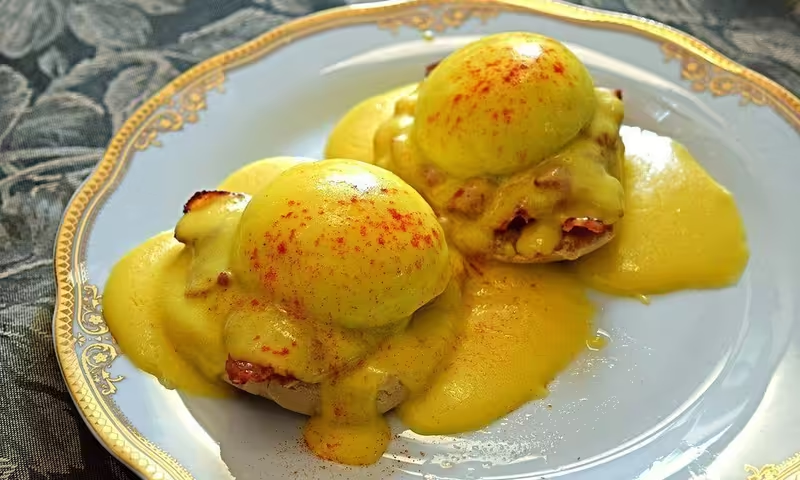
- Same-day eggs Benedict
- Asparagus service
- Blender make-ahead base
- Rewhisked leftovers (two days)
Which version is it?
All warm butter emulsions — béarnaise, mousseline, beurre blanc — share hollandaise's fate in the freezer. Hold them warm for the meal; refrigerate and rewhisk leftovers within two days.
Caveats worth knowing
- Warm butter emulsions do not survive ice crystals — no container or technique changes the outcome.
- Hollandaise held too warm too long carries a real food-safety risk; keep it above 140 °F or below 40 °F, never lingering in between.
- Blender make-ahead recipes keep the finished sauce in the refrigerator for at least a day — follow them exactly if you are prepping early.
Hollandaise FAQs
Can you freeze hollandaise sauce?
No. Freezing breaks the warm butter-and-yolk emulsion, and thawing leaves a grainy, greasy separation that never fully re-forms. Make it fresh, hold it warm for up to an hour, and refrigerate — do not freeze — any leftover sauce.
What can I do with leftover hollandaise?
Refrigerate it in a sealed jar for up to two days, then rewhisk gently over low heat with a teaspoon of warm water. Broken leftovers still work as a buttery drizzle over roasted vegetables or stirred into scrambled eggs, where a split sauce goes unnoticed.
How do restaurants keep hollandaise warm without breaking it?
They hold it in a thermos or a covered bowl over barely simmering water for an hour or two. Home cooks can do the same — steady warmth, no boiling, and an occasional whisk keeps the emulsion stable right up to serving.
Related foods