Can You Freeze Mayonnaise?
Mayonnaise fails the freezer on two counts: the emulsion breaks into oily curds, and partially thawed mayo lingers in the temperature danger zone where eggs are at their least trustworthy. Skip it — the workarounds are easy.
Also called: mayo · homemade mayonnaise · store-bought mayonnaise
No — mayonnaise is an egg-and-oil emulsion that splits when frozen, leaving it broken and questionable.
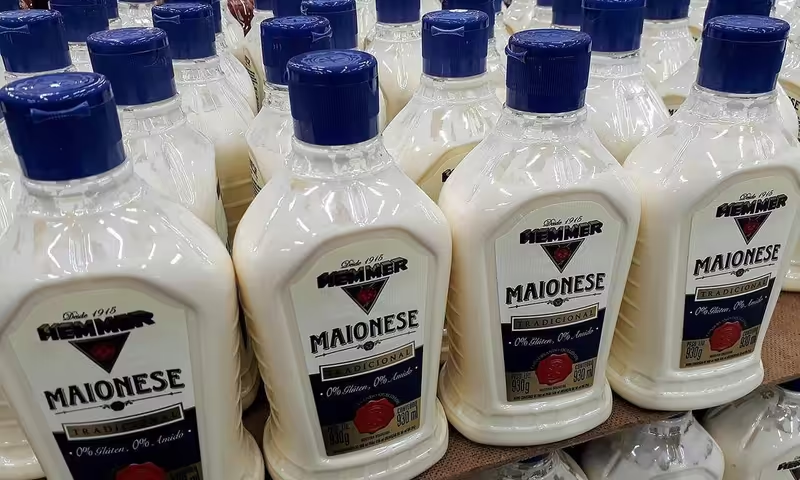
What to do instead
Do not freeze mayonnaise on its own. Keep the jar in the refrigerator and buy it in sizes you finish in two months — the workarounds for a dish that needs body are easy.
Before it goes in
- Build ahead sandwiches without the mayo and spread it fresh on the day.
- For egg or chicken salad, keep the filling refrigerated and eat it within a few days.
- Keep an opened jar in the refrigerator and use it within two months; mayo keeps remarkably well chilled.
- For make-ahead creaminess, prep the components and stir mayonnaise in at serving.
Containers & wrapping
None for the mayo itself. For assembled dishes, wrap them airtight and add mayonnaise at serving time, not before.
Storage
Do not freeze
Opened mayonnaise keeps about two months in the refrigerator — far longer than most foods it accompanies, so freezing buys you nothing.
Cold does not make mayonnaise dangerous over time. Held at 0 °F / -18 °C it remains safe indefinitely, and the window above is an honest estimate of when texture starts to go.
If it froze anyway
If a jar was frozen by accident, thaw it in the refrigerator and expect complete separation — an oily, curdled mass. It is best discarded rather than repaired.
A second round after an accident
No. Mayonnaise should not be frozen once, let alone twice; every cycle worsens both the break and the safety picture.
Texture & flavor changes
Total separation: oil weeps free, egg solids clump, and the texture turns grainy and greasy at once. Even a blender cannot restore the smooth, stable spread mayonnaise is prized for.
If it froze anyway, use it here
Where it still works:
- Spread at serving time
- Mixed into warm bakes
- Stirred into dressings
- Brightening a cold sauce
Which version is it?
Mayonnaise baked into a casserole or bound into a filling holds up as part of the dish, because the bake hides the split — see the egg-salad and casseroles cards. It is mayonnaise alone, in a jar or a dollop, that the cold ruins.
Caveats worth knowing
- Mayonnaise left out or thawed slowly spends hours in the danger zone — the real risk, beyond the ruined texture.
- Homemade versions with raw or lightly cooked egg deserve extra caution; never gamble on a thawed batch.
- A sandwich built with mayo and kept cold goes soggy within hours — spread it fresh instead.
Mayonnaise FAQs
Can you freeze mayonnaise?
No — mayonnaise is an oil-and-egg emulsion that breaks completely when frozen, turning oily and curdled with no reliable fix. There is also a safety angle: slow thawing leaves it warm too long. Keep it in the refrigerator, where it lasts months.
What happens if you freeze mayo?
The emulsion splits: oil separates, egg solids clump, and the mixture turns grainy and greasy. Whisking will not bring it back. If it happened by accident, thaw it in the refrigerator, check for off smells, and plan to discard.
Can you freeze sandwiches with mayonnaise?
The mayo breaks and turns the bread soggy, so it is not worth it. Build ahead sandwiches without mayonnaise — mustard and butter spread fine — and add mayo fresh when you are ready to eat.
Related foods