Leftovers are a decision you make twice: once tonight, once when you find them. Freezing removes the second decision entirely — a labeled bag of chili from three weeks ago is dinner, not archaeology. The rules are short, and one of them (about rice) is the only genuinely safety-critical thing in this guide.
The two-hour window
Cooked food shouldn’t sit at room temperature longer than two hours before it’s chilled or frozen — and if the room is above 90 °F, that shrinks to one. Bacteria double in number the longer food lounges in the warm band, and the freezer can’t undo time; it only stops the clock where you left it. So after dinner, package and chill the extras with the same seriousness you gave the cooking.
The 3–4 day rule, and why freezing resets it
Cooked food keeps three to four days in the fridge — that’s the standing food-safety guidance, and it’s a hard edge, not a suggestion. Freezing is how you rescue the pot you won’t finish by Thursday. Food frozen within that window stays safe essentially indefinitely (held solidly frozen at 0 °F / -18 °C, it can’t age into danger); the quality clock is what you’re managing, and two to three months is the comfortable range for most leftovers.
The practical rhythm that follows from those two rules: cook once, eat fresh twice, freeze the rest. Whatever’s left on day three goes into the freezer, not the back of the fridge to be rediscovered on day seven. That one habit eliminates most household food waste without anyone eating the same dinner four nights running — and it means everything you thaw is a few weeks old at most, which is where quality is still on your side.
Cool it fast
Big containers cool slowly, and slow cooling is the thing bacteria enjoy. Divide a big pot of chicken soup into shallow containers or flat bags — an inch or two deep cools in under an hour. An ice bath speeds it further: set the pot in a sink of cold water and stir now and then. Once the food is no longer hot, it can go straight to the freezer. What you’re avoiding is the combination of deep, warm, and patient.
Rice is the one that matters
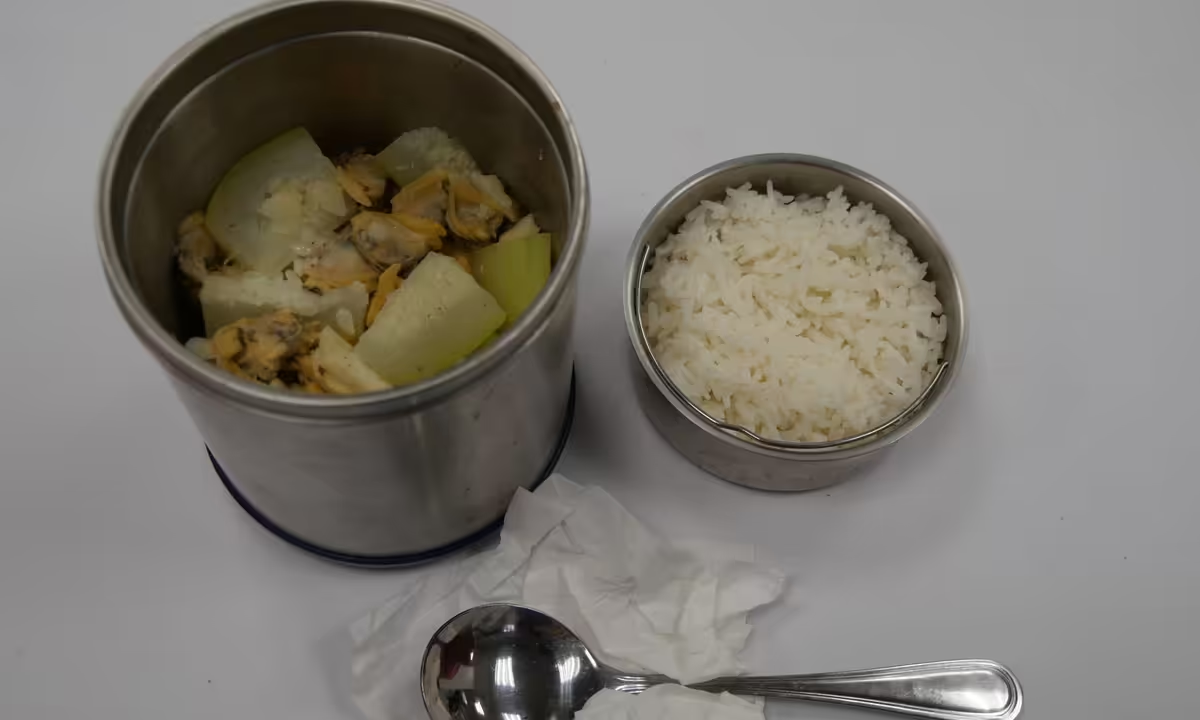
Cooked rice carries a spore-forming bacterium (Bacillus cereus) that survives cooking and wakes up in warm, damp, patient food. Its toxins don’t all break down on reheating, which is why rice rules are stricter than other leftovers: get cooked rice chilled within the hour, spread it on a tray to cool fast if it’s a big batch, and freeze in flat bags. It thaws and reheats brilliantly — better than most people expect — and the same care applies to fried rice and any paella or risotto heading for the freezer.
Label with the freeze date, not the cook date
If you cooked it Tuesday, froze it Wednesday, and eat it in February, “cooked Tuesday” is a memory that misleads. Write the dish, the portion, and the date it went into the freezer; that’s the date your quality window counts from. A roll of tape and a marker live next to the freezer for a reason. The full labeling system — plus the “eat me first” basket — is in freezer organization and labeling.
Portioning matters as much as labeling here. Freeze leftovers in meal-sized units — two servings of soup per container, single portions of stew for desk lunches — and they thaw fast and get eaten instead of forgotten. A one-liner on the label about the portion (“2 servings, with rice”) saves a guessing game later. Everything grain-based follows the same care as the rice rule; the grains cards cover cooked rice and its cousins in detail.
What reheats well, and what doesn’t
Best second acts: soups and stews of every kind, braises, saucy pasta (pack it extra saucy), roast beef sliced with its juices, stuffing, and gravy in cubes. Pizza reheats respectably from the freezer in a hot oven. Mixed results: stir-fry loses its crunch — freeze the components separately next time — and chicken thighs with skin turn soft, which is fine if you’re shredding them into something saucy anyway. Mashed potatoes and plain cooked pasta come back changed: usable, a little softer, best in casseroles where sauce covers the difference.
The reheat, done right
Thaw in the fridge overnight when you’ve planned, or reheat from frozen with patience — a covered pan on low, a microwave at medium with a stir halfway. However you do it, finish the job: food should be steaming hot all the way through before it earns a second meal. And once reheated, don’t send it back — leftovers reheat well once, and repeated warm-cool cycles are the path to both sad texture and real risk. The safe-thaw options are laid out in how to thaw frozen food safely.
Related: Scaling this up to deliberate batch cooking is covered in how to freeze cooked meals. For the quality windows on every kind of leftover, see how long food lasts in the freezer — and browse the leftovers category to see which cooked dishes have their own card and verdict.
Sources
Sources: USDA FSIS Leftovers and Food Safety (the two-hour rule, the four-day refrigerator window, the one-reheat rule); FoodKeeper for per-dish windows.