Can You Freeze Risotto?
Risotto is honest about its limits: the starch structure that makes it luscious on night one sets solid in the freezer, and no amount of stock fully revives the silk. What you get instead is a superb head start on arancini, cakes, and fried second acts.
Also called: leftover risotto · mushroom risotto · italian rice
Yes — thawed risotto sets into a stiff, starchy block and never returns to its silky prime, but it makes the best arancini of your life.
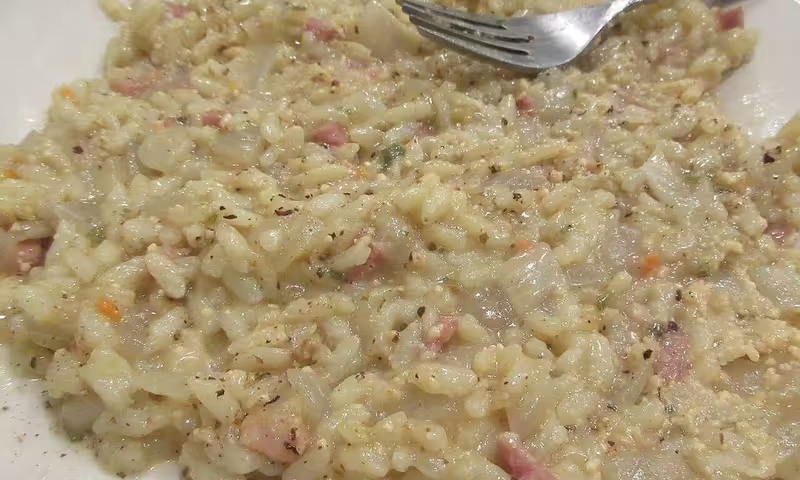
Freezing risotto the right way
Freeze in flat portions, then thaw and reform into patties for arancini or risotto cakes — or reheat gently with generous warm stock, stirring like the first cook, to recover a softer second-rate creaminess.
Before it goes in
- Spread the risotto into flat layers in bags or shallow containers; it sets solid, and flat thaws faster.
- Freeze it slightly looser than you would eat it — it firms up in the cold.
- Portion by purpose: cup-sized blocks for cakes, larger ones for reheating as-is.
- Leave out delicate garnishes like lemon zest and herbs; add them at reheating.
- Cool quickly and freeze within a day of cooking.
Containers & wrapping
Flat freezer bags or shallow containers. Portion deliberately — a solid two-liter block of risotto thaws at geological speed.
Freezer storage
2 months
The starch retrogrades — firms and weeps — as it sits, so earlier is creamier. Beyond two months the texture turns chalky even for arancini.
Cold does not make risotto dangerous over time. Held at 0 °F / -18 °C it remains safe indefinitely, and the window above is an honest estimate of when texture starts to go.
What to do when risotto comes out
Fridge overnight, then either reform into cakes or reheat in a pan over low heat with warm stock, stirring until creamy. Reheat until steaming hot throughout.
What are the rules for refreezing risotto?
No — reheated risotto has been through enough. Freeze in purpose-sized portions so a single night never needs two.
Texture & flavor changes
The suspension of starch and stock breaks down: thawed risotto is thick, clumpy, and slightly grainy, and it never quite returns to its flowing prime. Reheated with stock and steady stirring it reaches maybe eighty percent — plenty for dinner, revelatory as arancini.
Best uses after thawing
Where thawed risotto shines:
- Arancini
- Risotto cakes
- Stuffed vegetables
- Panic dinners
Which version are you freezing?
Reheating with stock gets a decent approximation; repurposing into arancini or cakes is where frozen risotto actually shines — the set starch is an advantage there.
Caveats worth knowing
- Do not expect the original silk — the freezer sets the starch, and only warm stock plus stirring can fake it back.
- Seafood risottos fare worst; mushroom, saffron, and squash versions handle the freeze best.
- Cool it quickly and reheat steaming hot — the cooked-rice rules apply in full force here.
Questions people ask about risotto
Can you freeze risotto?
Yes, but manage expectations: the starch sets into a firm, clumpy block and reheated risotto never fully returns to its silky flow. Revive it with warm stock and constant stirring for a decent approximation — or embrace the set texture and make arancini, where frozen risotto actually shines.
How do you reheat frozen risotto?
Thaw overnight in the refrigerator, then warm it in a pan over low heat, adding warm stock a ladle at a time and stirring until creamy. Reheat until steaming hot throughout; expect roughly eighty percent of the original texture.
Can you make arancini with frozen risotto?
Yes — it is the best possible use. The set, starchy texture that disappoints as reheated risotto is exactly what arancini need for holding shape. Thaw, form into balls, stuff, bread, and fry; many cooks deliberately freeze risotto for this alone.
The details that decide it
Which risottos freeze best — and which to eat fresh
The version matters far more than the technique. Mushroom, squash, pumpkin and saffron risottos freeze the most gracefully, because their flavour comes from the base and their texture is soft to begin with. Seafood risotto is the one to eat fresh: prawns and mussels turn rubbery and the shellfish flavour dulls as it sits. Pea and asparagus versions sit in the middle, fine frozen but with a faded colour, so hold a few back to fold in at the end.
- Mushroom, squash and saffron versions freeze best.
- Seafood risotto is worth eating fresh rather than freezing.
- Green vegetables lose their colour — keep a little to add fresh.
Reheating risotto in the microwave without it going gluey
A pan is the best way back, but a microwave will do the job if it is treated like the pan. Put the risotto in a wide bowl rather than a narrow one, add a splash of stock or water, cover it, and heat it in short bursts, stirring hard between each one. The stirring is what rebuilds the emulsion of starch and liquid; without it you get a hot, gluey lump rather than anything approaching creaminess. The shape you choose decides how long dinner takes, because risotto freezes into something closer to a brick than a block. Press it flat into freezer bags or shallow trays and portion by what a single meal needs rather than by what the pan happened to hold: flat portions thaw overnight and heat in minutes, while a deep tub is still frozen in the middle when the outside has already turned gluey. Leave delicate garnishes out and add them at the end.
- Use a wide bowl, not a deep one, and cover it.
- Short bursts, with a hard stir between each one.
- Press it flat and portion by the meal, so it thaws in minutes and not hours.
Risotto usually makes the decision for you
Risotto is one of those dishes people leave in the fridge intending to finish it cold, and it is a cooked-rice dish either way: cool it fast and get it completely cold. In practice the texture has usually made the decision for you, because the starch sets harder with every day it sits. Freeze it while it still tastes like the meal it was.
- Spread it flat and cool it fast; depth keeps the middle warm.
- It firms up a little more each day in the fridge.
- Past the window, freezing cannot make it safe again.
Related foods