Can You Freeze Cooked Rice?
Rice is a dinner multiplier — fried rice on Tuesday, burrito bowls on Thursday — but it plays by the strictest safety rule in this guide. Bacillus cereus spores survive cooking and multiply on warm rice, so the batch goes from pot to freezer within the hour.
Also called: rice · white rice · leftover rice · steamed rice · frozen rice
Yes — cooked rice freezes well: cool it within the hour, reheat it steaming hot, and it returns fluffy.
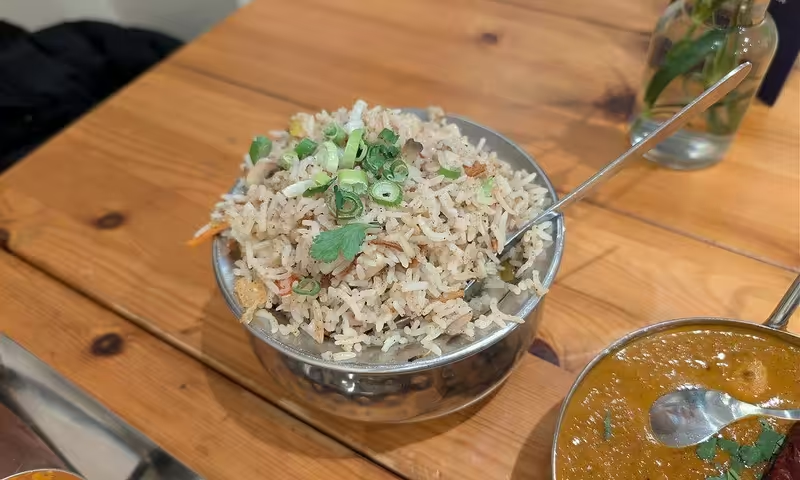
What to do before cooked rice goes in the freezer
Spread the hot rice on a sheet pan to cool fast, portion into meal-sized flat freezer bags, and reheat from frozen with a splash of water until steaming throughout.
Before it goes in
- Spread cooked rice in a thin layer on a sheet pan to cool quickly — speed is the safety rule.
- Within the hour, portion into meal-sized amounts in flat freezer bags or shallow containers.
- Press bags flat and stack them; thin slabs thaw in minutes later.
- Label with the date and the rice type — jasmine, basmati, and sushi rice behave differently.
Containers & wrapping
Flat freezer bags are the shape of the law here — thin slabs reheat evenly. Rigid containers work for portioned bowls; leave a little headroom.
Freezer storage
2–3 months
Safety depends on what happened before freezing, not after: rice chilled fast and reheated hot keeps well. Flavor fades gradually beyond three months.
Freezer burn, drying and dulled flavor are quality problems with cooked rice, not safety ones — anything solidly frozen at 0 °F / -18 °C is still fine to eat, just further from fresh.
How to thaw cooked rice properly
No thaw needed. Microwave from frozen with a tablespoon or two of water, covered, stirring halfway, until every bite steams. A covered skillet with a splash of water works too.
Can cooked rice be refrozen without risk?
Not recommended. The fast-cool and hot-reheat rhythm that keeps rice safe does not survive a second loop; portion by meal instead.
Texture & flavor changes
Long-grain rice comes back nearly identical — a touch drier, fixed by the splash of water. Short-grain and sushi rice turn firmer as their starches retrograde; they are at their best in fried rice, where firmness is the point.
Best uses after thawing
Where thawed cooked rice shines:
- Fried rice
- Burrito bowls
- Grain bowls
- Rice pudding
- Congee
Which version are you working with?
Basmati and long-grain need no special handling after a freeze. Sushi rice and short-grain set hard in the cold — rather than fighting that, build fried-rice, congee, or pudding dishes around the harder grain.
Caveats worth knowing
- Cool within one hour and refrigerate or freeze — rice left warm for hours is the classic food-poisoning trap.
- Reheat until steaming hot all the way through; lukewarm rice is exactly the temperature spores enjoy.
- Freeze rice that is fresh and clean, not a pot that already spent three days in the refrigerator.
Cooked Rice: questions about the freezer
Is it safe to freeze cooked rice?
Yes — freezing is one of the safer things you can do with leftover rice. The danger window is the hours it spends warm before it goes in, not the months it spends frozen. Cool it fast, freeze within the hour, and reheat until steaming hot all the way through.
What about rice that has already been in the fridge 4 or 5 days?
Freezing it does not make it safe again. The 3–4 day fridge limit exists because cooked rice is one of the few common leftovers where the danger is a bacterium already multiplied in the food rather than something freezing could stop. If it is past the window, bin it. If you are unsure how long it sat, the smell will not help you — Bacillus cereus toxins do not always change how food tastes or smells.
How long can you freeze cooked rice?
Two to three months for quality. Rice stays safe indefinitely while solidly frozen, because the risk was never in the freezer — but it dries out, loses aroma and goes bland well before that, so rotate through the bags first-in, first-out.
The details that decide it
Why cooked rice has a one-hour rule
Cooked rice is one of the few everyday leftovers where the risk is not something that got in, but something that already multiplied inside it. Bacillus cereus is a soil bacterium whose spores survive cooking, and it is specifically good at cooked starch left near room temperature. The toxin it produces is not reliably destroyed by reheating, which is why the official advice is about time and temperature rather than simply heating the food through. Every other rule on this page follows from that one: cool fast, freeze fast, reheat until it visibly steams, and never twice. The clock around that rule is the one most people get wrong. Two hours at room temperature is the ceiling, one hour when the air is above roughly 90 F, and three to four days in the refrigerator before it goes in the freezer, which is the limit the food safety authorities allow rather than a target. A bowl that has already spent hours warm cannot be rescued by freezing it promptly afterwards; the freezer pauses growth rather than reversing time.
- Under 140 °F (60 °C) is the band where the spores wake up.
- A steaming-hot pot dropped in the freezer can hold its own centre warm for hours, so cool it in a thin layer first.
- Two hours at room temperature is the ceiling, one hour above roughly 90 F, and three to four days chilled before freezing.
Freezing rice in single portions instead of one big tub
The shape you freeze rice in decides how it thaws. One deep tub freezes into a solid brick whose centre takes hours to warm, and it re-steams unevenly. Meal-sized flat bags, pressed thin, freeze fast, stack in the door, and reheat in minutes with a splash of water. Portioning by the meal also quietly solves refreezing, because there is no half-used batch to worry about — you take out exactly what you are going to eat.
- Press bags flat so they stack and thaw in minutes rather than hours.
- One portion per bag means no thawed leftovers to refreeze later.
- Freeze within the hour, so thinner is faster for a safety reason too.
Reheating frozen rice without drying it out
Rice reheats best straight from frozen, not thawed first. Add a tablespoon or two of water, cover, and microwave in short bursts, stirring once halfway, until every grain steams. The water becomes steam and re-fluffs the grains from the inside, where a thaw-first plate tends to reheat dry and clumped. A covered skillet with a splash of water does the same job on the stove, and rice headed for fried rice does not need reheating at all.
- No thaw needed — water plus steam re-fluffs the grains.
- Cover it and microwave in bursts, stirring once halfway.
- Get it steaming hot throughout for safety, not just warm.
Related foods