Can You Freeze Congee?
Congee may be the most freezer-suited dish in the grain world — it is already loose, starchy, and forgiving, and it asks only for a splash of water to come back. Freeze it in single bowls and breakfast is ten minutes of simmering away.
Also called: rice porridge · jook · juk · rice congee
Yes — congee freezes easiest of any grain dish; it thickens in storage and thins right back with water or broth.
How to freeze congee
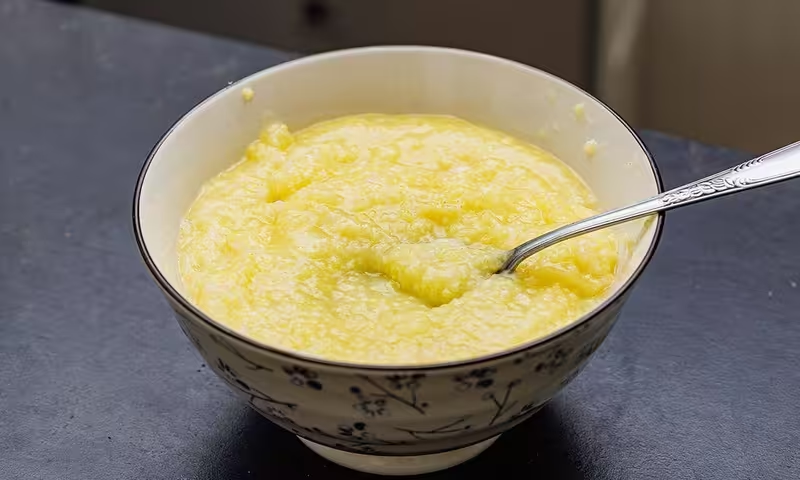
Freeze slightly thinner than you serve it, in single-portion containers, and reheat with water or broth until it loosens and steams. Toppings go on fresh.
Before it goes in
- Cook the congee a touch thinner than usual — it thickens as it freezes and again while reheating.
- Cool quickly, then portion into single-serve containers with an inch of headroom.
- Freeze plain or lightly seasoned; keep the soy sauce, scallions, and fried shallots for serving day.
- Label the date — plain congee and chicken congee look identical under a layer of frost.
Containers & wrapping
Single-serve rigid containers or freezer bags laid flat. Headroom matters more than usual — congee expands and its surface gels tight to a lid.
Freezer storage
2–3 months
Meat stirred through the congee freezes just as well as the base; crunchy and fresh toppings never do.
Nothing spoils while congee is genuinely frozen. Held at 0 °F / -18 °C it is safe indefinitely, and the date on the bag tracks flavor and texture rather than danger.
The right way to thaw congee
Reheat from frozen or fridge-thawed in a pot with a good splash of water or broth, stirring until smooth and steaming. Microwave at half power works too, stirring twice.
How do you refreeze congee safely?
No. The starch has gelled and loosened once already; a second cycle makes it pasty.
Texture & flavor changes
Expect a solid-looking, gelatinous block when cold — pure starch behavior, not spoilage. Reheated with liquid it turns silky again, a shade thicker than the day it was made.
Best uses after thawing
Where thawed congee shines:
- Quick breakfasts
- Sick-day meals
- Light suppers
- Topping canvas
- Baby-food base
Caveats worth knowing
- Freeze it plain or gently seasoned — toppings like scallions, peanuts, and fried dough belong on the fresh bowl.
- The cold congee block looks alarming and solid; that is starch, not bacteria — loosen it with liquid and steam it hot.
- Cool the pot fast before freezing, same as any cooked grain; congee holds heat for hours in a thick pot.
Common questions about frozen congee
Can you freeze congee with chicken or pork?
Yes — the meat freezes as tender as the day it simmered, since congee cooks it gently to begin with. Shred it before freezing if you like, and add fresh garnishes after reheating; the base and the toppings have different freezer rules.
How long can you freeze congee?
Two to three months for best quality, safe longer while solidly frozen. The starch keeps firming over time, so older portions simply want a little extra water or broth during the reheat.
Why did my congee get so thick in the freezer?
Rice starch retrogrades — re-forms into a gel — as it cools and freezes, turning the porridge into a sliceable block. It reverses with heat and liquid: reheat with a splash of water or broth, stirring, and it turns silky again.
The details that decide it
Congee, jook and rice porridge — what you are actually freezing
The names travel. Jook and juk are the Cantonese words, congee is the one most people search, and rice porridge is what a recipe calls it when it is not being specific. They are the same dish: rice cooked far past done in a lot of water or stock until it breaks down into a soft, spoonable porridge. That matters for the freezer only because everything sharing the name shares the behaviour — a starch gel that sets solid when cold and loosens again when it is heated with liquid.
- Jook, juk, congee and rice porridge all freeze the same way.
- The base is what you freeze; the toppings go on later.
- Freeze it lightly seasoned so one portion can go sweet or savoury.
Congee follows the rice clock, not the soup clock
Congee is a cooked-rice dish, so it inherits the rice clock rather than the soup one: cool it fast, chill it hard, and get it into the freezer while it is still loose. In practice a pot rarely waits long, because congee thickens as it cools and every extra day makes it stiffer. The starch gel it sets into in the cold only gives way again on a hotplate with liquid moving through it, so the texture worth reheating is the one it had leaving the stove.
- The rice clock applies, not the one you would use for soup.
- A pot that thickens as it cools is behaving normally.
- Cool it fast — congee is a wet starch that sours quickly.
One frozen portion, three different bowls
Plain congee is a base, and a frozen portion is a head start on more than one meal. Thawed and loosened, a single container becomes a pork and century-egg bowl with a few fresh additions, a ginger-and-chicken bowl, or a sweet one with coconut milk and fruit if you froze the pot unseasoned. That is the argument for freezing it plain: a pot already darkened with soy can only become one thing. The same logic gives the small-portion version, which is the most useful thing to keep: freeze it in ice-cube trays or small lidded pots so a single serving can be thawed and loosened with water or stock to whatever consistency is wanted, and that is also what makes it the right thing to have on a day when something soft and mild is all that appeals.
- Freeze it unseasoned so one portion can go either direction.
- Reheat to a simmer, then add the protein or topping fresh.
- Freeze small plain pots or trays so one serving thaws alone, and loosen it with water or stock.
Related foods