Can You Freeze Cod?
Of all the fish in the freezer aisle, cod is the veteran — most of it arrives frozen anyway. Lean and low in fat, it hides ice-crystal damage better than salmon or tuna, and vacuum sealing pushes quality toward the six-month mark.
Also called: cod fillets · Atlantic cod · Pacific cod · cod loins
Yes — cod freezes well for 4–6 months when wrapped airtight; lean white fish tolerates the freezer better than fatty fish.
The freezer routine for cod
Vacuum-seal if you can — lean fish rewards airtight wrapping with a longer window. Otherwise wrap tightly in plastic, then foil or a freezer bag, and get it into the freezer the day you buy it.
Before it goes in
- Pat the fillets dry; moisture is the enemy of texture.
- Portion into meal-sized pieces so you never thaw more than dinner needs.
- Wrap tightly in plastic, then slide into a freezer bag or wrap in foil.
- Press out every bit of air, label, and freeze flat for quick thawing.
Containers & wrapping
Vacuum-seal bags are ideal; otherwise double wrap — plastic against the flesh, foil or a rigid bag outside. Cod dries out long before it spoils, so airtight is everything.
Freezer storage
4–6 months
Lean fish keeps quality longer than fatty fish; the long end of the range belongs to vacuum-sealed fillets. Freezer burn shows as pale, dry patches — trim them or expect cottony flesh.
Cold does not make cod dangerous over time. Held at 0 °F / -18 °C it remains safe indefinitely, and the window above is an honest estimate of when texture starts to go.
How to bring cod back
Refrigerator-thaw overnight on a plate. Vacuum-sealed fillets can thaw in cold water in 30–60 minutes. Cook soon after thawing — cod does not improve with waiting.
Can you thaw and refreeze cod at home?
Only if it stayed refrigerator-cold, and expect visibly worse texture. Better to cook the lot and freeze the cooked fish in chowder or fish cakes.
Texture & flavor changes
The flesh releases more water after thawing, so expect a softer fillet and some milky liquid in the pan. Pat dry, salt lightly, and sear hard — good technique shrinks the gap with fresh.
Best uses after thawing
Where thawed cod shines:
- Fish and chips
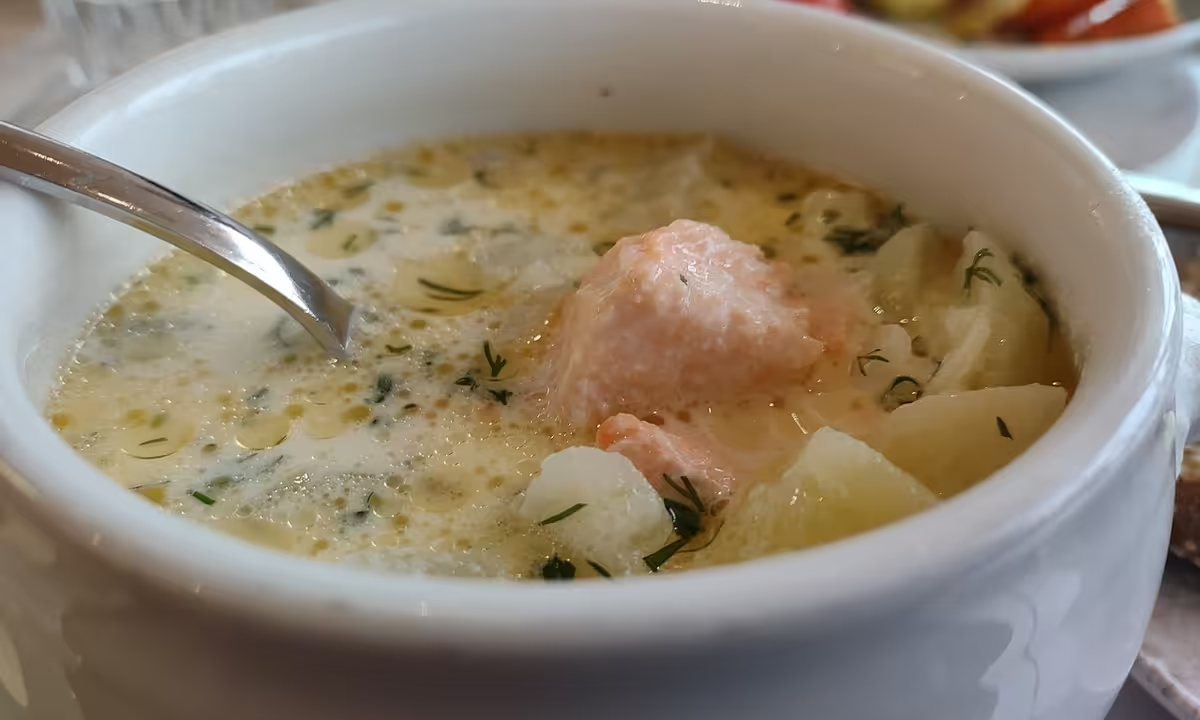
- Chowders
- Fish cakes
- Baked dishes
- Fish tacos
Which version are you working with?
Fillets are the practical choice — portioned, quick to thaw, no bones. Whole fish freeze fine but thaw slowly and hog freezer space; gut and scale first, and plan on longer cooking.
Caveats worth knowing
- Ask whether counter fish was previously frozen — thawed-for-display cod must be cooked, never refrozen raw.
- Skip freezing cod already close to its date; the window counts from freeze day, not purchase day.
- Poorly wrapped cod develops freezer burn within weeks — double wrap without exception.
Questions about frozen cod
Can you freeze fresh cod?
Yes. Cod's lean flesh freezes well — wrap airtight or vacuum-seal and freeze at 0 °F within a day of buying. Quality holds for 4–6 months, longer than fatty fish manages, because there is little fat to go stale.
How long can you freeze cod?
Four to six months for best quality, with vacuum-sealed fillets lasting longest. It stays safe indefinitely while frozen solid; after that the flesh dries and flavors dull, so sooner is flakier.
Can you refreeze cod after thawing?
Refrigerator-thawed cod can be refrozen once, but the fillet loses moisture and turns mealy. If it thawed on the counter or feels warm, do not refreeze it — cook it through immediately instead.
The details that decide it
A lean fish is not immune to time, it simply runs a different clock
Cod is often treated as the safe, low-fat option, but its problem was never fat and freezing does not remove it. A review of North Atlantic cod handling describes the sequence of spoilage as autolytic before it is microbiological: the tissue enzymes go to work on the flesh first, breaking down structure and texture, and bacteria take over the story only afterward. Avoiding oxidation by having little fat does not make the fish stable, because the same review notes that even in lean flesh such as cod oxidation produces texture changes. The practical shape of this is a quality window with distinct stages rather than a single cliff, which is why a fillet can lose its springiness well before it smells spoiled.
- Cod spoils autolytically first, with microbial spoilage following.
- Low fat removes the oxidation fuel but not the enzyme clock.
- Even lean cod flesh shows texture changes from oxidation.
Slow freezing turns cod spongy, and it is entirely a crystal-size effect
The difference between a good and a poor frozen cod fillet is mostly how fast it crossed the freeze. The review of cod freezing practices is explicit that slow freezing produces larger ice crystals, which form network structures through the flesh and leave it spongy once thawed, while a faster freeze keeps the crystals small enough that the flake survives. This is why the same species handled well and handled badly give different products. And the thaw side has its own rate: in still air, the review reports whole cod thawing at only about ten millimetres an hour at fifteen degrees, which means a thick fillet spends a long time passing through the warm band where the enzymes that began the spoilage clock are active again. Small crystals and a quick, controlled thaw are the two halves of one answer.
- Slow freezing builds large crystals that leave a spongy texture.
- Faster freezing keeps crystals small enough to preserve the flake.
- Whole cod thaws in still air at roughly ten millimetres an hour.
The failure on cod is the surface drying before the inside has thawed
What actually ruins a frozen cod fillet, time and again, is dehydration at the surface rather than spoilage at the core. The cod review notes that unwrapped or unglazed product, especially under higher airflow, suffers dehydration that leads to lipid oxidation and freezer burn, and that long-term cold storage degrades any fish toward protein denaturation and rancidity. Air thawing has a narrow landing zone too: it should stay below twenty degrees to keep bacterial growth down, yet not so cold that the thaw drags on and lets oxidation and yield loss accumulate. Glazing, tight wrapping or vacuum all work for the same reason, by keeping the surface from meeting moving air. The centre of a well-wrapped fillet is usually fine; the failure is almost always the skin-side face that dried.
- Unwrapped cod dehydrates at the surface and freezer-burns first.
- Air thawing wants to stay below twenty degrees to limit bacteria.
- Glazing, tight wrap or vacuum all exclude the air that dries it.
Related foods