Can You Freeze Lasagna?
If the freezer had a signature dish, lasagna would be it. Double the recipe, build two pans instead of one, and bake the second straight from the freezer on some future busy Tuesday — assembled unbaked, it actually holds its texture better than the leftovers slice.
Also called: lasagne · frozen lasagna · homemade lasagna
Yes — lasagna is the freezer classic: assemble it unbaked and it cooks from frozen with better texture than most thawed leftovers.
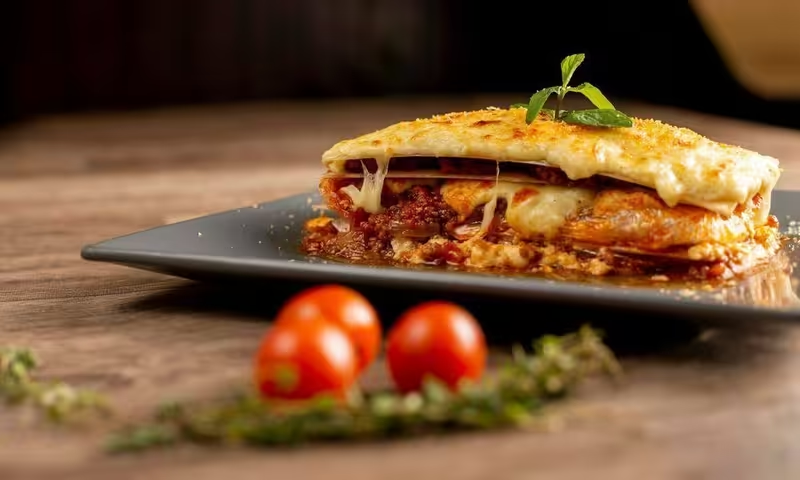
How to freeze lasagna without spoiling it
Best of both worlds: freeze one pan unbaked — lined and double-wrapped — to cook from frozen later, and freeze leftover baked slices individually for instant lunches. Unbaked is the better freeze; baked slices are the convenience play.
Before it goes in
- Assemble in a freezer-safe pan, stopping just before the oven step.
- Slightly undercook regular noodles so they finish absorbing moisture during the future bake.
- Chill the pan first so the wrapping does not stick to soft cheese.
- Wrap tightly in plastic then foil, and label with the date and baking instructions.
- For leftovers, cool baked slices fully and wrap each one separately.
Containers & wrapping
Freezer-to-oven glass or metal pans, heavy foil, and plastic wrap; individual slices in flat freezer bags. Skip pans you would not trust under the broiler.
Freezer storage
2–3 months
Unbaked pans keep their best texture for two to three months; baked slices fade slightly faster as the sauce keeps soaking into the pasta.
The freezer stops the safety clock for lasagna and only slows the quality one. At a steady 0 °F / -18 °C it stays safe while frozen, so the number on the label is about taste.
Thawing lasagna: the practical method
Unbaked: bake from frozen at 375 °F with foil on for most of the time — allow roughly 45 extra minutes over the usual bake. Baked slices: fridge-thaw overnight or microwave from frozen until steaming hot in the middle.
Is it safe to refreeze lasagna in practice?
No for baked or reheated lasagna. An unbaked pan that thawed in the refrigerator without warming should be cooked promptly — not returned to the freezer.
Texture & flavor changes
Slightly softer noodles and a little more weep as the layers settle — baked slices can read marginally more stewed. Cooked from frozen unbaked, the dish comes out remarkably close to fresh; ricotta can grain slightly, which the sauce hides.
Best uses after thawing
Where thawed lasagna shines:
- New-parent meals
- Busy weeknights
- Potlucks
- Single-serve lunches
Which version do you have?
Unbaked wins on texture — the pasta finishes cooking in the oven instead of sitting saturated. Baked leftovers freeze fine as slices; just expect softer layers.
Caveats worth knowing
- Never slide a frozen glass dish into a hot oven — thermal shock cracks it; start it cold or thaw first.
- No-boil noodles drink extra moisture; add a little more sauce to unbaked pans headed for the freezer.
- Cool baked lasagna within two hours — a deep pan stays warm for hours, so slice it to cool faster.
Questions about frozen lasagna
Can you freeze lasagna before baking it?
Yes — and it is the best way. Assemble the pan unbaked, chill it, wrap tightly in plastic and foil, and freeze for two to three months. Bake from frozen at 375 °F with foil on, adding roughly 45 extra minutes, then uncover to brown the top.
How long can you freeze lasagna?
Two to three months for best quality — unbaked pans hold texture slightly better than baked leftovers. It stays safe longer while frozen solid, but the sauce soaks into the noodles and the top loses freshness over time.
Can you freeze leftover cooked lasagna?
Yes. Cool the pan quickly, cut it into slices, and wrap each one separately or layer them in a container with parchment. Slices reheat from frozen in the microwave or from thawed in the oven until steaming hot in the middle.
Related foods