Can You Freeze Chives?
Chives are the exception among tender herbs: freeze them chopped and dry, straight in a bag, and they keep their clean onion snap for months. They will never snip into neat green rounds again — but as a seasoning, they barely change.
Also called: fresh chives · chive · garlic chives
Yes with changes — frozen chives keep their onion bite but soften and darken; best stirred into dishes.
Freezing chives: the method
Snip into small pieces with scissors, freeze dry in a flat freezer bag or jar, and pinch out pinches straight into dishes. No water, no oil needed — chives are the tender herb that skips the ice-cube tray.
Before it goes in
- Wash the bunch and dry it completely — water makes the pieces clump and ice.
- Snip into quarter-inch pieces with scissors, discarding any limp or slimy strands.
- Spread the pieces on a tray to pre-freeze for an hour if you want them loose.
- Transfer to a flat bag or small jar, press out the air, and label.
Containers & wrapping
A small rigid jar is ideal — you can pinch chives like a spice jar — or a flat bag with the air pressed out. Keep it sealed; chives share their onion aroma generously.
Freezer storage
3–6 months
The sharp onion note mellows gradually; pieces are liveliest in the first three months. They stay safe long after — just gentler, more of a background note.
Safe and good are two different clocks for chives: at 0 °F / -18 °C it stays safe as long as it is solidly frozen, and the 3–6 months window above is about eating quality.
Thawing chives without spoiling it
None needed — frozen chives scatter straight onto scrambled eggs, baked potatoes, and into compound butter and dressings. They thaw in a minute and soften slightly.
Can you refreeze chives once it has thawed if you are careful?
Yes, if the jar or bag stayed cold — chives are dry and hardy once chopped. Reseal quickly; condensation is what turns good frozen chives into a green ice block.
Texture & flavor changes
The pieces darken from bright green toward olive and soften from crisp to tender, but the onion flavor holds surprisingly well. As a raw garnish they read slightly tired; stirred into eggs, butter, and sauces, they pass easily.
Best uses after thawing
Where thawed chives shines:
- Scrambled eggs
- Baked potatoes
- Compound butter
- Sour cream dips
- Soups
Caveats worth knowing
- Frozen chives never regain their crisp snip — for visible garnish, grow or buy fresh.
- Any moisture in the bag freezes them into one clump; the dry, pre-freeze step is worth it.
- Their aroma migrates — seal the jar well or the ice cream gets opinions.
Questions about frozen chives
Can you freeze fresh chives?
Yes — and unlike basil or cilantro, chives freeze well dry. Snip them into pieces, dry them thoroughly, and store them in a flat bag or jar for three to six months. Pinch out pinches frozen; they thaw instantly in hot dishes.
How long do frozen chives last?
Three to six months for the brightest flavor; they stay safe while solidly frozen beyond that. The onion note mellows over time, so aging jars are best spent on eggs, soups, and dips rather than garnish.
Do frozen chives work in sour cream and onion dip?
Yes — stir them in frozen and let the dip sit for ten minutes; they soften right into it. The color is a touch darker than fresh and the bite slightly gentler, which suits a dip far better than a garnish.
The details that decide it
A bunch of chives is two vegetables, and only one of them is the good half
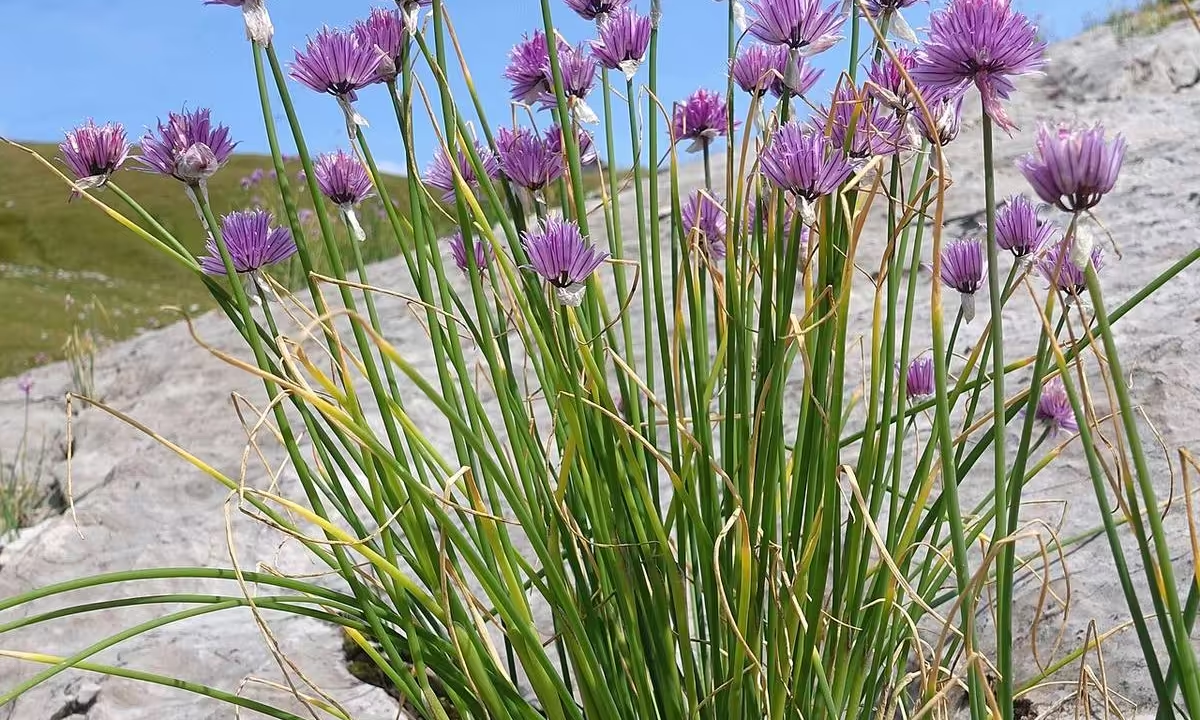
An Allium is not one uniform tissue, and chives make the split unusually stark because they carry a round green part and a bottom white part with genuinely different chemistry. Chives, Chinese chives, leek and Welsh onion all show this two-part architecture, while garlic and onion divide the same way into green leaves and bulbs or cloves. Measurement of phenolic compounds and antioxidant activity across those tissue parts found the contribution differs sharply between them, so a bunch of chives is carrying two different ingredients in one wrap. That is the practical point for freezing: trim the tough pale stem ends off, because you are not getting flavour from them, and keep the hollow green tubes whole rather than chopping them short.
- Chives carry a round green part and a bottom white part.
- Phenolics and antioxidant activity differ sharply between them.
- Trim the white stem ends; keep the green tubes whole.
The antioxidant story here is phenolic and vitamin C, not sulfur
Chives are usually written up for their sulfur compounds, the fructans and the polysulfides. Measurement across their tissue parts found something more useful for a cook: those compounds showed only weak antioxidant activity, while phenolic compounds and ascorbic acid contributed significantly to it. That inverts the usual assumption about what an Allium is nutritionally doing, and it has a freezing consequence, because ascorbic acid is heat-labile and phenolics are comparatively robust. If you blanch chives, you are spending some of the vitamin C to fix the colour. Short blanch, cool under running water, and freeze them for what they are — a green herb that happens to taste of onion.
- Sulfur compounds showed weak antioxidant activity in measurement.
- Phenolics and ascorbic acid contributed significantly instead.
- Blanching spends some heat-labile vitamin C.
These leaves are among the first to go, so the field matters more than the method
Chive leaves are highly active after harvest, which makes them susceptible to nutrient loss, wilting and yellowing — the same pattern documented for Chinese flowering cabbage and typical of a leafy Allium with no storage root to draw on. There is no curing step and no rind to protect the leaf, so nothing about chives improves while they wait; the base page already owns why leaves are blanched and this one does not repeat it. What is worth adding is that the gap between the field and the freezer is nearly the whole quality budget for this crop. Dry them thoroughly on paper towel before they go anywhere near a bag, because a wet hollow tube holds water in the bore where nothing will dry it, and get them frozen the same day you cut them.
- Chive leaves are highly active after harvest and yellow quickly.
- There is no curing step and no rind protecting the leaf.
- Dry the hollow tubes properly; freeze the same day.
Related foods