Can You Freeze Pork Chops?
Pork chops are lean, which makes them both a weeknight favorite and a better freezer citizen than their reputation suggests. Wrapped airtight, they hold 4–6 months and come back to the pan with only a whisker less juice than the day they were wrapped.
Also called: bone-in pork chops · boneless pork chops · pork loin chops
Yes — pork chops freeze well for 4–6 months; wrap airtight and they grill, pan-sear, or braise nearly like fresh.
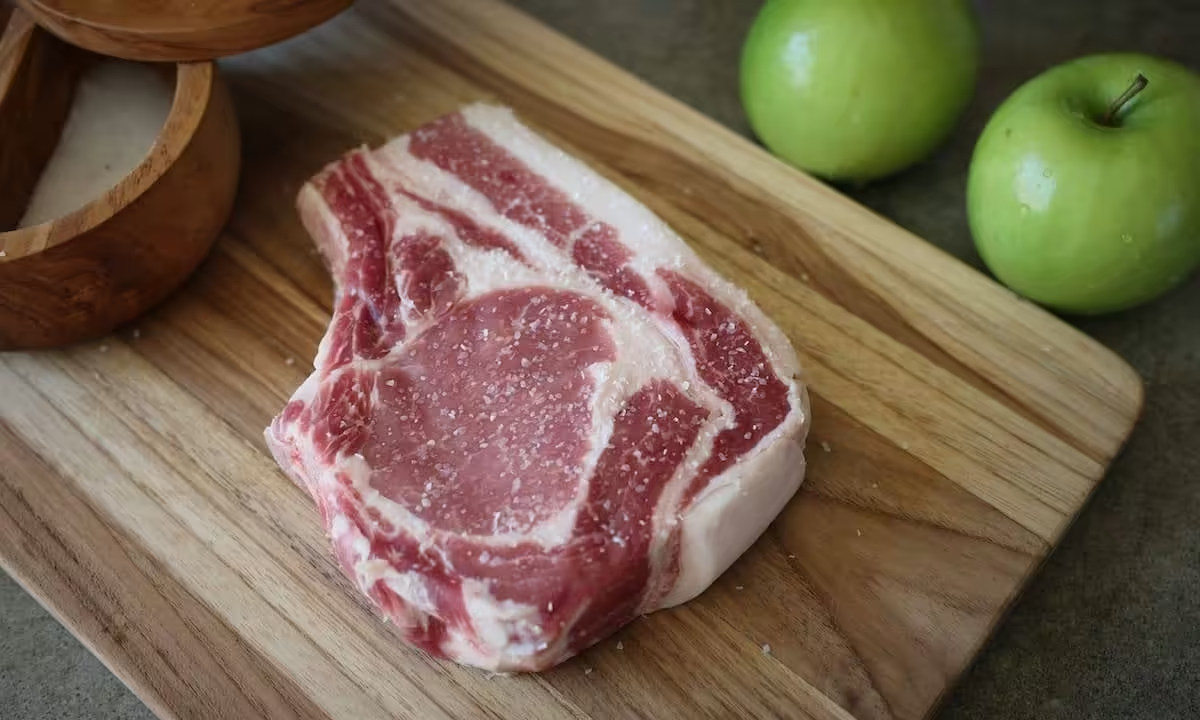
How to freeze pork chops at its best
Wrap each chop individually in freezer paper or plastic, then bag portions airtight. Individual wraps mean you pull two chops without thawing the family pack — which is how the freezer actually gets used.
Before it goes in
- Freeze chops while fresh — within a day or two of purchase.
- Wrap each chop tightly, pressing the wrap directly to the meat.
- Bag the wrapped chops in pairs or fours, air pressed out.
- Label with the cut thickness and date.
- Freeze flat; thin packs thaw overnight in the refrigerator.
Containers & wrapping
Freezer paper or vacuum bags are the classics for chops; heavy zip-top bags with the air pressed out do the same job. Butcher paper alone is too porous for anything past a month.
Freezer storage
4–6 months
Chops hold quality 4–6 months; a whole pork roast tolerates 4–12. Solidly frozen pork stays safe at 0 °F / -18 °C — the calendar tracks moisture, not safety.
Read the window on pork chops as advice, not a warning. At 0 °F / -18 °C it is safe to eat at any age; 4–6 months is simply where the flavor and texture are worth the most.
Thawing pork chops: what to do
Refrigerator overnight is the default; sealed bags in cold water cut it to an hour or two. Pat dry before searing so the surface browns rather than steams. The counter is never part of the plan.
Can you freeze pork chops again after thawing at home?
Yes if fridge-thawed and still cold — once. Refrozen chops lose noticeable juice, so steer the second round toward braises, smothered preparations, or shredding.
Texture & flavor changes
Thawed chops release a bit more liquid and can tighten slightly; a 30-minute brine before cooking restores much of the snap. Bone-in chops weather the freeze marginally better than thin boneless ones.
Best uses after thawing
Where thawed pork chops shines:
- Pan-seared chops
- Smothered chops
- Grilled chops with glaze
- Pork schnitzel
- Braised dishes
Which version is going in the freezer?
You can freeze chops straight in a marinade — the acid and salt season them as they thaw. Skip salting plain chops long before freezing; salt pulls moisture that then freezes in the wrong place.
Caveats worth knowing
- Thin-cut chops (under half an inch) dry fastest — use them within 2–3 months or plan a saucy braise.
- A loose wrap shows up as gray, dry-edged meat after thawing; that is freezer burn, a quality issue you trim, not a safety alarm.
Pork Chops: questions about the freezer
How long can you freeze pork chops?
Four to six months at best quality. Like all frozen meat they stay safe indefinitely at 0 °F / -18 °C, but lean chops begin to dry and tighten near the end of the window, so rotate the stock and use the oldest packs first.
Can you freeze pork chops in a marinade?
Yes — it is an efficient move. Bag the chops with the marinade, press out the air, and freeze; the meat seasons as it thaws in the refrigerator. Just skip long pre-salting before freezing, which draws out moisture that then sits on the surface as ice.
Should pork chops be frozen in the marinade?
Yes, in a bag with the air pressed out; the acid in a marinade keeps the chop from drying during the freeze rather than speeding it up.
The details that decide it
In pork the oxidation marks climb with each cycle, and the loin protein clumps as it sits
Pork is not a passive passenger in the freezer. Work on frozen pork reports that protein oxidation rises with repeated freeze-thaw cycling, with predictive models forecasting higher carbonyl content and thiobarbituric-acid-reactive substances as the cycles accumulate, and that the myofibrillar proteins drawn from pork loin tend to aggregate over long frozen storage whether the cabinet sits at minus twenty or minus fifty. Aggregation here is not merely cosmetic: as the myosin heads stick together they lose the conformation that held water, and the secondary structure shifts from ordered helix toward sheet and coil. A chop is a lean cut with little fat to mask any of this, so the change reads directly as a drier, firmer bite rather than being hidden inside a marbled matrix.
- Repeated cycling raises both carbonyl content and TBARS in pork.
- Pork loin myofibrillar proteins aggregate over prolonged frozen storage.
- Myosin secondary structure shifts from helix toward sheet and coil.
Two chops from the same loin can freeze differently, and the muscle is the reason
Freezing susceptibility is a property of the tissue, not just of the freezer. A review of frozen-thawed meat quality records that muscles differ in proximate composition, pH and fibre-type makeup, and argues that this inherent variation is what changes how each one responds to a freeze-thaw. The physical damage is the same in kind everywhere, ice crystals that sever the Z-line, weaken the I-band and open the gaps between myofibrils, but the extent depends on how much water a given muscle holds and how its fibres are arranged. A loin chop and a shoulder steak are not interchangeable in the freezer for that reason. When a recipe tells you one cut thaws better than another, the mechanism is usually this: pH and fibre type setting how much free water there is to turn into crystal.
- Muscles differ in pH, water content and fibre type before freezing.
- Crystals sever the Z-line, weaken the I-band and widen myofibril gaps.
- How much freezable water a muscle holds sets how much it loses.
The water a chop gives up on thawing is weight you already paid for
Thaw loss is often treated as a cooking note, but on a chop it is a purchase note. A comparative review of thawing methods describes how traditional air and water thawing, because they are slow, produce considerable drip, and that this loss of fluid and the nutrients dissolved in it is why minimising thawing loss is treated as the goal rather than a side effect. Small steps move it: in one cited trial a high-voltage treatment cut the thaw time on frozen beef striploins by about forty-two percent and reduced purge by roughly twenty percent, largely because the meat spent less time in the warm band where enzymes keep working. The practical reading for a chop is that a controlled, quicker thaw keeps more of what you bought in the meat and less of it in the plate.
- Slow air and water thawing produce the most drip from a chop.
- Drip carries fluid and dissolved nutrients out of the meat.
- A faster controlled thaw cut purge about 20 percent in one trial.
Related foods