Can You Freeze Salami?
Salami is one of the foods the freezer was never meant for: it is already preserved, keeps for weeks in the refrigerator, and freezing mostly trades texture for time you did not need. As a fix for a surplus log cut into too many slices, though, it works.
Also called: hard salami · genoa salami · soppressata
Yes, but rarely worth it — salami keeps for weeks already; freezing works for surplus but dulls the slices.
How to store salami in the freezer
For genuine surplus, wrap the uncut portion — or slices separated by parchment — airtight and freeze up to 2 months. For everyday keeping, rewrap the cut end tightly and refrigerate; that is the better tool here.
Before it goes in
- Decide the split: refrigerator for this month's snacks, freezer for the surplus.
- Wrap the cut face tightly in plastic or freezer paper.
- Layer any sliced portions between parchment sheets.
- Bag airtight, label, and freeze flat.
Containers & wrapping
Airtight bags or containers; parchment between slices prevents a frozen brick you cannot separate. The whole, uncut log freezes far better than slices — cut it after thawing.
Freezer storage
2 months
Whole hard salami keeps about 6 weeks refrigerated uncut; frozen slices hold acceptable quality about 2 months. It stays safe while frozen, but the freezer's only real job here is pausing a surplus.
A freezer at 0 °F / -18 °C is a safety off-switch for salami. It stays safe for as long as it is solid, so the 2 months window on this page is a quality promise rather than a deadline.
Thawing salami: the practical method
Refrigerator-thaw in its wrapping overnight. Pat slices dry if they have wept. Whole logs slice more cleanly after 20 minutes at cool room temperature — a brief rest, not a thaw.
Is a second freeze safe for salami without risk?
Not recommended — each cycle toughens the slices and deepens the saltiness as moisture leaves. Freeze the uncut log instead and slice after thawing.
Texture & flavor changes
Slices turn firmer and slightly chewy, with edges that dry first; the mellow fermented tang can flatten. On a sandwich or in a pasta salad, barely noticeable; as a solo tasting board, noticeable.
Best uses after thawing
Where thawed salami shines:
- Sandwiches and panini
- Pasta salads
- Pizza
- Antipasto skewers
- Charcuterie (fresh only)
Which version are you freezing?
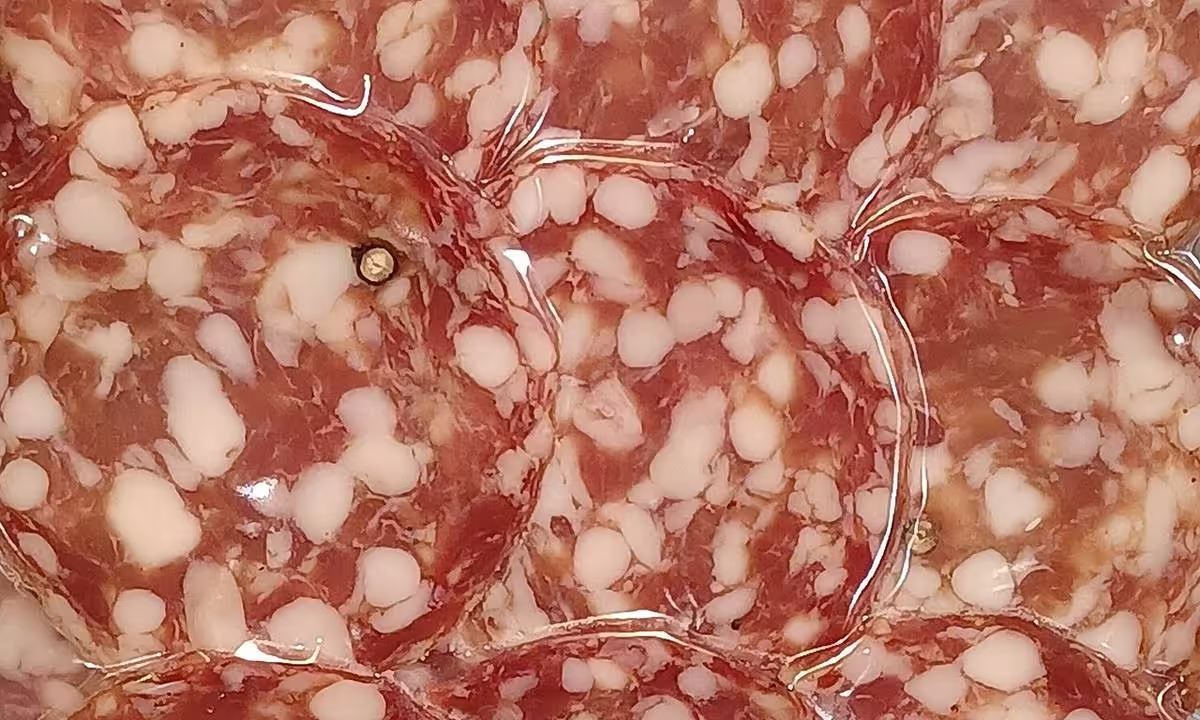
Uncut logs freeze tolerably and slice nicely after thawing; sliced packs stick, dry, and weep. If you buy whole, freezing the surplus half is reasonable — for pre-sliced packs, the refrigerator is the better home.
Caveats worth knowing
- Whole, uncut salami logs are the freezer's only success story here — pre-sliced packs are where quality goes to suffer.
- If the casing or surface shows sliminess or an off odor after thawing, that is not freezer damage — discard it.
Salami freezer questions
Can you freeze salami?
You can — it stays safe while frozen and holds acceptable quality for about 2 months. But salami is already cured and keeps for weeks in the refrigerator, so freezing is usually unnecessary. If you do freeze it, an uncut log fares far better than slices.
Why does frozen salami taste different?
Ice crystals and moisture loss concentrate the salt and toughen the fat, so thawed salami reads saltier and chewier, with a flatter tang. It still works on sandwiches and in cooked dishes — but for a tasting board, fresh-sliced from the refrigerator is the better call.
How do you slice frozen salami?
Freeze the stick whole and slice it from frozen; the fat cuts cleanly cold and the slices separate instead of sticking.
Related foods