Can You Freeze Beef Jerky?
Jerky is the rare meat the freezer cannot help: drying already did the preservation work, and an airtight bag in a cool pantry keeps it for months. Freezing is safe and technically optional for very long storage, but thawing brings condensation — and moisture is the one thing jerky cannot afford.
Also called: jerky · dried beef · homemade jerky
No — jerky is already shelf-stable; freezing adds little and thaw condensation invites staleness. Keep it sealed and cool.
What to do instead
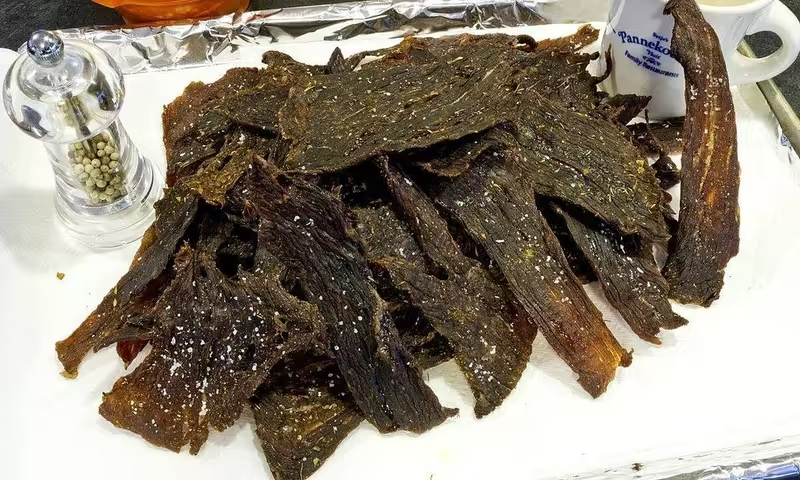
Skip the freezer by default. Store jerky airtight in a cool, dark spot — vacuum-sealed unopened bags keep for months, and opened bags last a few weeks, longer refrigerated. That is the whole toolkit this food needs.
Before it goes in
- Decide whether long storage is needed at all — most jerky is eaten long before it turns.
- Keep the jerky in its original vacuum seal, unopened, for the months-long pantry keep.
- Add a second sealed bag around the package as an outer layer.
- Keep the pack flat and unopened until you are ready to eat it.
Containers & wrapping
The original vacuum pack, plus an outer bag for extra protection. Homemade jerky without preservatives is more perishable — refrigerate it in airtight bags, and treat its window as shorter.
Storage
Not recommended
Not a freezer food — the pantry does this job better: unopened vacuum bags keep months, opened bags a week on the counter or a month refrigerated. Long storage is the pantry's job, not the freezer's.
Two temperatures, two meanings, on beef jerky: 0 °F / -18 °C keeps it safe indefinitely, while the Not recommended window is where it still tastes like itself. Date the package and the two stay separate.
If it froze anyway
If a pack froze by accident, thaw it in the refrigerator unopened — opening a cold bag mid-thaw condenses moisture onto the meat. Let it come fully to refrigerator temperature before opening, then eat promptly.
A second round after an accident
No — each freeze-thaw cycle condenses water onto dried meat, the exact condition that turns jerky stale and, eventually, unsafe. Dry it, seal it, store it cool; leave the freezer out of it.
Texture & flavor changes
Thawed jerky emerges slightly damp on the surface and loses its snap, turning chewy-stale within days of opening. The freeze itself does not spoil it — the moisture cycle undermines the dryness that preserves it.
If it froze anyway, use it here
Where it still works:
- Trail snacks (as-is)
- Emergency pantry stock
- Camping stores (sealed)
- Jerky powder seasoning
Which version is it?
Commercial jerky is vacuum-sealed and preserved — pantry-stable for months. Homemade is a different animal: less dry, no preservatives — refrigerate it and eat it within a week or two.
Caveats worth knowing
- Homemade jerky without nitrites or a thorough dry-out is genuinely perishable — refrigerate it and use it within a week or two rather than trusting any storage method.
- If jerky shows mold, moisture beading inside a sealed bag, or an off smell, discard it — dried meat hides early spoilage poorly once moisture returns.
Beef Jerky FAQs
Can you freeze beef jerky?
You can, and it stays safe — but it is rarely worth it. Jerky is already preserved by drying, so the freezer adds little storage life while the thaw's condensation dampens the meat and invites staleness. Keep it sealed and cool instead; the pantry is the right appliance.
How should you store beef jerky to make it last?
Airtight and cool. Unopened vacuum packs keep for months in a pantry; once opened, squeeze the air out, reseal, and finish the bag within a week or two — refrigeration stretches that. The enemies are moisture and air, not room temperature itself.
Why did my frozen jerky go stale after thawing?
Condensation. Cold dried meat gathers moisture from the air the moment its container opens, and moisture re-activates exactly the spoilage that drying prevents. That is why a pack that froze by accident is best thawed sealed in the refrigerator and opened only once it is fully cold again.
Related foods