Can You Freeze Crab?
Crab is labor, which is exactly why freezing picked meat makes sense — crack once, eat three times. The catch: thawed lump meat loses its proud structure, so save the prettiest presentation for fresh and let the freezer feed the dips and cakes.
Also called: crab meat · picked crab · king crab · dungeness crab · blue crab
Changes — picked crab meat freezes fine for 2–3 months but turns fragile; it shines in cooked dishes rather than a chilled feast.
What to do before crab goes in the freezer
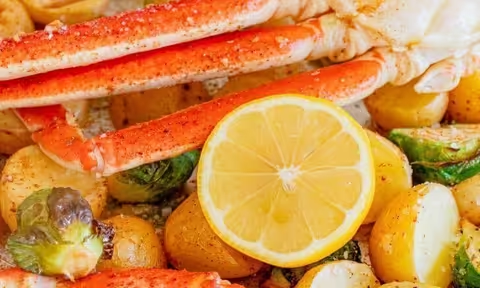
Freeze picked, cooked crab meat in rigid containers topped with a little milk or brine, or vacuum-sealed with all the air out — its delicate flesh dries fast without protection.
Before it goes in
- Pick the meat carefully, keeping lumps whole; shards thaw mushier.
- Drain, then pack into rigid containers leaving minimal headspace.
- Top with a spoonful of milk or the crab's own brine — an old fishmonger trick against freezer dryness.
- Label with the date and freeze immediately.
Containers & wrapping
Rigid freezer containers or vacuum bags; crab meat crushes easily, so do not squeeze. Keep some liquid contact — air pockets are where delicate flavor fades.
Freezer storage
2–3 months
The sweet, delicate flavor fades before anything else; in-shell legs and claws hold up longer than lump blue crab. Use the calendar for quality and the freezer for safety.
Cold does not make crab dangerous over time. Held at 0 °F / -18 °C it remains safe indefinitely, and the window above is an honest estimate of when texture starts to go.
The thaw that suits crab
Thaw overnight in the refrigerator in its container, then drain gently. Shelled legs and claws can be reheated straight from frozen by steaming.
Can you return crab to the freezer after thawing?
No — picked crab meat breaks down fast. Once thawed, use it within a day or two in cooked dishes.
Texture & flavor changes
Lump meat softens and can weep; the distinct sweetness survives better than the texture. Legs and claws reheat more gracefully than picked meat, which belongs in crab cakes, dips, and pasta after thawing.
Best uses after thawing
Where thawed crab shines:
- Crab cakes
- Seafood dip
- Pasta
- Chowder
- Fried rice
Which version do you have?
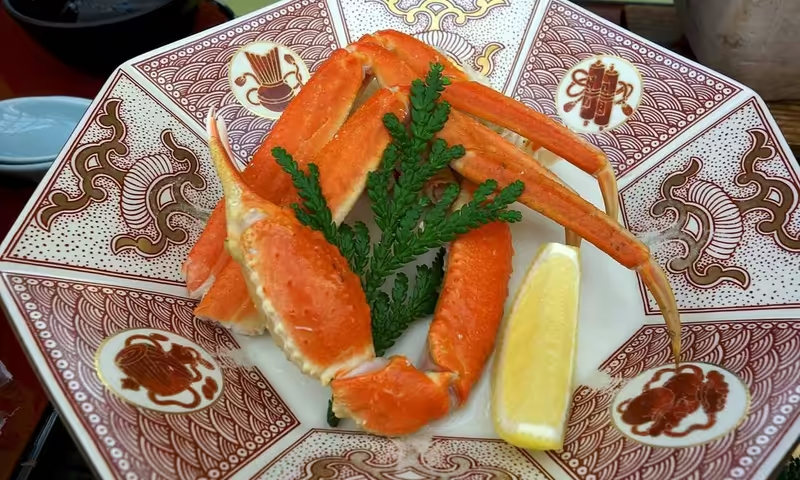
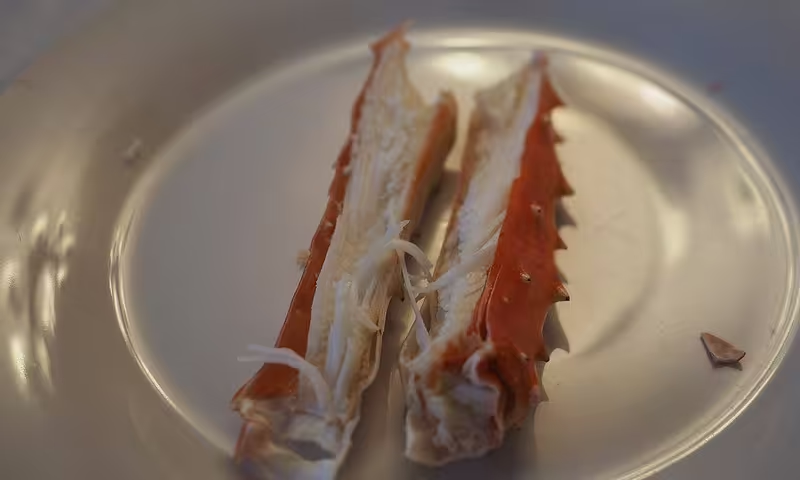
Picked meat freezes well in containers with a splash of brine or milk; legs and claws freeze in the shell and reheat by steaming. The shell protects better but thaws slower.
Caveats worth knowing
- Freeze cooked crab only — raw crab in the shell thaws unevenly and is a poor freezer candidate.
- Thawed lump meat will not stand up in a cold crab cocktail; plan cakes and dips instead.
- Discard crab meat that smells ammonia-sharp after thawing; freezing does not reverse spoilage.
Crab freezing FAQs
Can you freeze crab meat?
Yes — picked, cooked crab meat freezes for 2–3 months when packed airtight, ideally with a little brine or milk on top to prevent drying. Expect softer texture after thawing; it is best in crab cakes, dips, and chowders rather than served cold.
How long can you freeze crab legs?
Two to three months for best quality, a bit longer than picked meat since the shell protects it. Reheat legs from frozen or thawed by steaming; they stay safe as long as they remain solidly frozen.
Can you refreeze crab?
Refreezing picked crab meat is not recommended — it turns soft and watery. Legs that stayed refrigerator-cold can go back once, but the meat inside dries out. Portion deliberately the first time.
The details that decide it
Crab is cooked before it is frozen, and the cook has a known gap in it
A frozen crab is almost always a cooked crab, and the reason is both practical and biological. Blue crab is the highest-value species landed in the United States, at roughly fifty thousand tonnes and a couple of hundred million dollars at the dock each year, and the industry cooks it before it is chilled or frozen. That cook is aimed at Listeria monocytogenes, and it is effective against it, but the same processing literature notes the gap that remains: Clostridium botulinum may still survive the treatment. So the freezer is not inheriting a sterile product. It receives a cooked one with a specific residual hazard, which is why a frozen crab still has to be handled and reheated as a ready-to-eat product with a real risk profile rather than as an inert ingredient.
- Blue crab is the top US species by value and is cooked before freezing.
- The cook targets Listeria monocytogenes and removes it effectively.
- Clostridium botulinum can survive the cook, so the product is not sterile.
A cold crab and a pressure-treated crab are solving the same pathogen problem
Because heat cannot close every gap in a shellfish, processors reach for pressure. High-pressure processing at around four hundred to six hundred megapascals is used to destroy common seafood pathogens including Vibrio and Listeria species, and it does so while leaving the meat essentially raw in appearance, which is why it has become a standard tool for ready-to-eat shellfish rather than a laboratory curiosity. Studies on blue crab assess the treatment for exactly that purpose, extending the microbiological shelf life of a cooked, ready-to-eat product. The useful comparison for a frozen crab is that pressure and cold are doing different jobs: pressure reduces the pathogen load before storage, and freezing afterward only holds the line, so the quality of a frozen crab depends heavily on the lethality step it received first.
- High-pressure processing uses roughly four hundred to six hundred megapascals.
- It destroys seafood pathogens such as Vibrio and Listeria species.
- Pressure reduces the load; freezing only holds the line afterward.
A stored crustacean collects nitrogen and oxidation markers on the same clock
When a crustacean sits in the freezer, the chemical evidence of time shows up on several markers that rise together. Work on frozen crayfish, a close analogue, tracks total volatile basic nitrogen accumulating gradually as storage lengthens, protein carbonyl content climbing as the protein oxidises, and thiobarbituric-acid-reactive substances marking the lipid side, with the authors noting that the lipid and protein oxidations are linked through a free-radical chain reaction and influence each other. A cook applied before freezing leaves its own mark, because heat rearranges the bonds that tie the tissue together and shifts the mass the product releases over time. For crab, the reading is that these numbers are a clock, not independent faults, and they start before the crab ever reached the freezer.
- Total volatile basic nitrogen accumulates gradually with storage time.
- Protein carbonyls rise while TBARS tracks the linked lipid oxidation.
- Lipid and protein oxidation are coupled through a free-radical chain.
Related foods