Can You Freeze Potatoes?
The potato is the one vegetable that fights the freezer raw. Left whole and uncooked, it turns gray-green, oddly sweet, and mushy, because its starches convert to sugar and its cells collapse. Cook or par-boil it first, though, and the freezer becomes a potato's friend.
Also called: spuds · raw potatoes · new potatoes · baking potatoes
Yes with a catch — raw potatoes turn gray and sweet in the freezer, so freeze them par-boiled or cooked instead.
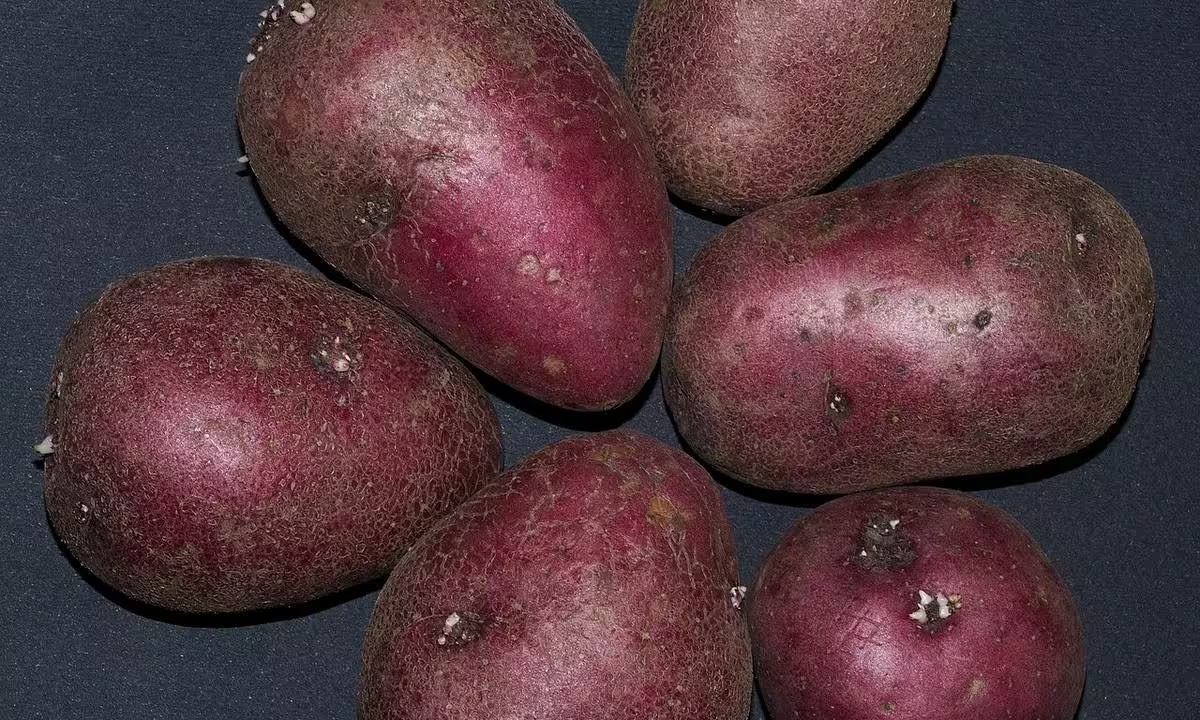
What to do before potatoes goes in the freezer
Par-boil or fully cook potatoes before freezing. For roast potatoes, boil until barely tender, freeze open on trays, and they go straight from freezer to hot oven; for mash-friendly results, cook fully and freeze in portions.
Before it goes in
- Peel and cut potatoes into even chunks or the shape you plan to cook them in.
- Boil for five minutes until barely tender at the edge — par-boiling, not cooking through.
- Drain well and steam-dry over low heat for a minute so surface moisture is gone.
- Freeze in a single layer on a lined tray until solid, then bag in portions.
- Cool fully cooked potatoes completely before bagging — trapped steam invites ice and sogginess.
Containers & wrapping
Tray-freeze first so chunks stay separate, then move to freezer bags or rigid containers. Mashed or roasted potatoes do well in portion-sized containers with a little headroom.
Freezer storage
10–12 months
Cooked potato quality drops in flavor before safety ever becomes a question — stale, freezer-burned surfaces appear first. Date everything and rotate.
Nothing spoils while potatoes is genuinely frozen. Held at 0 °F / -18 °C it is safe indefinitely, and the date on the bag tracks flavor and texture rather than danger.
Thawing potatoes safely
Skip thawing for par-boiled roast potatoes — straight into a hot oven with oil, they crisp better than ever. Cooked and mashed portions thaw overnight in the refrigerator and reheat gently.
Is a second freeze okay for potatoes without risk?
Not recommended. A second freeze turns cooked potatoes watery and gray-edged; portion so you never have to.
Texture & flavor changes
Raw is the disaster case: frozen-thawed raw potatoes discolor to gray and taste sweet-sodden as their starches convert. Cooked first, potatoes mostly keep their character — par-boiled ones crisp in the oven better than fresh, while mashed and boiled ones go slightly watery.
Best uses after thawing
Where thawed potatoes shines:
- Oven roast potatoes
- Shepherds pie topping
- Mash
- Hash browns
- Potato soup
Which version is it this time?
Par-boiled chunks are the freezer shortcut for crispy roast potatoes — they go from bag to hot oven without thawing. Fully cooked potatoes (boiled, roasted, mashed) are better for mashing and topping dishes where the texture is already soft.
Caveats worth knowing
- Never freeze raw potatoes whole or cut — the gray, sweet, collapsed result is not fixable by cooking.
- Variety matters: waxy new potatoes hold together best; floury russets turn grainier after freezing but mash fine.
- Potatoes frozen cooked sweeten slightly over time; use within a couple of months for the truest flavor.
Potatoes freezing questions
Can you freeze raw potatoes?
Not successfully. Raw potatoes turn gray or dark, develop an unpleasant sweetness as their starches convert to sugar, and collapse into mush when thawed. Par-boil for five minutes or cook them fully first — then they freeze well for a couple of months.
Why do potatoes turn gray after freezing?
Enzymes and cold-triggered sugar conversion darken raw potato flesh, and ice crystals rupture cell walls so they soften. Blanching or cooking deactivates the enzymes and sets the texture, which is why cooked potatoes freeze fine while raw ones do not.
How long can you freeze cooked potatoes?
Cooked potatoes keep two to three months; raw blanched cubes and halves keep ten to twelve months. They stay safe while frozen solid, but flavor dulls and they sweeten slightly the longer they sit, so use them sooner rather than later.
Can you freeze roast potatoes to re-crisp later?
Yes — par-boil until barely tender, freeze open on a tray, then roast from frozen in a hot oven with oil. The frozen exterior steams briefly then crisps; many cooks find freezer roasties better than fresh.
The details that decide it
Sugar pushed into a raw potato slice before freezing kept its cells and its bite
A raw potato freezing badly is a cell problem, not a starch problem: water turns to ice, the ice grows where the cell walls cannot hold it, and the slice leaks its juice on the way back. This study took fresh-cut potato slices and pushed a sugar solution into them before the freezer, comparing trehalose against sorbitol and comparing vacuum impregnation against simply soaking at atmospheric pressure. Every slice then spent twenty-four hours at minus forty and a two-hour thaw at twenty-five degrees, and the two sugars separated cleanly on the results. Both raised the sugar content of the tissue above an untreated control, and vacuum impregnation penetrated further than soaking. On every measure that follows from cell damage the sorbitol group came out ahead: its juice loss rate was significantly lower than the control, its electrolyte leakage was lower, and at forty minutes under vacuum it held nineteen newtons of puncture hardness where the trehalose slices held nine point nine. Even the best treated slice was softer than a fresh one, which is the honest summary: the sugar reduces the damage the ice does rather than preventing it.
- The slices spent twenty-four hours at minus forty and came back over a two-hour thaw at twenty-five.
- At forty minutes under vacuum, sorbitol held nineteen newtons of puncture hardness against nine point nine for trehalose.
- The sorbitol group reached five hundred point eight milligrams per millilitre of total sugar at fifty minutes.
Frozen prefried potato strips can be steered down to nineteen micrograms of acrylamide per kilogram
Most frozen potato in a supermarket is a prefried strip waiting for its second fry, and what that strip carries is decided long before the freezer, which makes it the clearest case of the freezer being a pause rather than a treatment. This study made prefried strips from two Peruvian varieties and varied the ultrasound power, the precooking temperature and the final frying method, then measured the two heat-driven compounds that worry regulators: acrylamide, which forms through the Maillard reaction, and the glycoalkaloids alpha-solanine and alpha-chaconine, the potato plant toxins that survive most processing. The strips were air-dried, packed, frozen at minus eighteen for twenty-four hours and then finished by deep frying, oven frying or air frying. The optimised combination, about twenty-nine per cent ultrasound power and a precooking step near seventy-seven degrees, produced a strip at nineteen micrograms of acrylamide per kilogram with six point nine seven milligrams of alpha-chaconine, seven point five newtons of hardness and a colour difference of fourteen point eight. The authors re-ran that condition in triplicate and landed at eighteen point three micrograms of acrylamide per kilogram, which is a fraction of the thousand and more micrograms that surveys of finished fries have reported. The glycoalkaloids stayed far under the two hundred milligrams per kilogram that the World Health Organization treats as the ceiling for potatoes.
- The strips were packed and frozen at minus eighteen for twenty-four hours before the final fry.
- The optimised strip carried nineteen micrograms of acrylamide per kilogram and six point nine seven milligrams of alpha-chaconine.
- The validated batch came in at eighteen point three micrograms per kilogram with seven point four two newtons of hardness.
The freezer does not kill Listeria, and a handful of people eat frozen potato products raw
Frozen potato products are sold not ready to eat, which means the package expects a cooking step and the freezer is only holding the product until that happens. This survey of Minnesota adults asked how people actually handle them, covering seven categories of frozen potato from french fries and potato tots to shredded potatoes, diced potatoes and mashed potatoes, alongside nine kinds of frozen vegetable. Self-reported compliance with the cooking instructions was only fair, and a small number of respondents reported the risky route directly: two said they most often ate french fries by thawing and eating them without cooking, one said the same of mashed potatoes, and one of the french fry respondents also reported eating potato tots raw. That matters because Listeria monocytogenes does not grow in a freezer but does survive one, and the risk is created at the point of thawing rather than during storage, which is why a survey that starts with what people believe ends up being about behaviour instead. An earlier federal survey found forty per cent of respondents thought uncooked frozen packaged vegetables were unlikely to carry germs at all.
- The survey asked about seven categories of frozen potato, from french fries to mashed potatoes.
- Two respondents ate thawed french fries without cooking and one did the same with mashed potatoes.
- Forty per cent of an earlier FDA survey thought uncooked frozen packaged vegetables were unlikely to carry germs.
Related foods