Can You Freeze Panna Cotta?
Strip away the sauce and a panna cotta is just cream held together by a whisper of gelatin. Freezing strains that net: the gel structure tightens and squeezes out water, so the thawed dessert sits in a small puddle of its own cream, firmer and slightly squeaky.
Also called: cooked cream · pannacotta · italian cream dessert
Yes, with changes — panna cotta freezes safely, but the gelatin weeps and the texture turns rubbery-grainy rather than silky.
Freezing panna cotta step by step
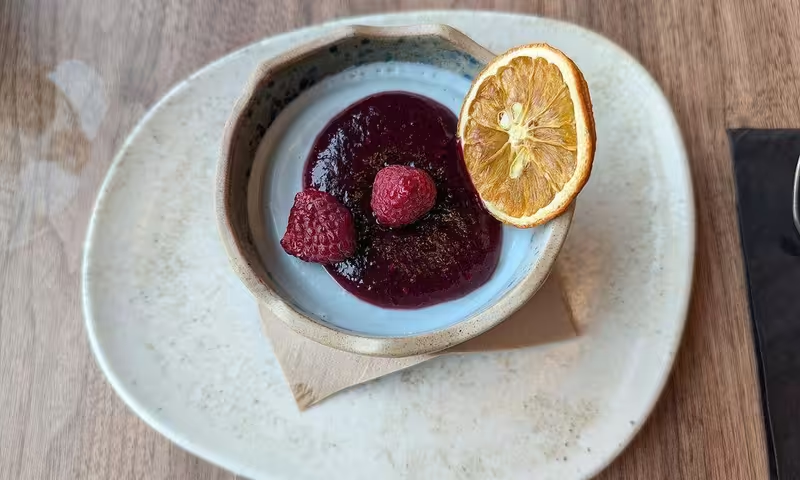
Freeze it in its serving molds or glasses, covered, without unmolding. Unmold after partial thawing when the outside has softened but the center still holds, and hide the texture shift under a generous fruit coulis or caramel.
Before it goes in
- Chill the panna cotta until fully set before it goes into the freezer.
- Cover each mold or jar with a lid or plastic pressed to the rim.
- Freeze upright and undisturbed so the surface stays smooth.
- Plan the sauce first — a coulis or caramel is what makes the thawed version sing.
Containers & wrapping
Individual serving glasses, ramekins, or silicone molds with tight lids. Avoid unmolding-type presentations that depend on a flawless surface; the thawed panna cotta will have small weeping marks.
Freezer storage
1 month
The gelatin network keeps tightening the longer it is frozen, so a two-week panna cotta is noticeably better than a six-week one. Heavier cream versions hold up slightly better than milk-heavy ones.
Cold does not make panna cotta dangerous over time. Held at 0 °F / -18 °C it remains safe indefinitely, and the window above is an honest estimate of when texture starts to go.
How to thaw frozen panna cotta
Thaw in the refrigerator overnight, or for 4–5 hours for small portions. Unmold while the center is still slightly firm; a fully thawed panna cotta sags and may refuse to leave the mold cleanly.
Is refreezing panna cotta worth it at home?
No. The gelatin has already squeezed out what it will squeeze out, and a second freeze turns the dessert grainy and watery for good.
Texture & flavor changes
Expect visible weeping — a spoonful of clear, milky liquid collecting around the base — and a texture that shifts from silken to faintly rubbery, with a slightly grainy finish on the tongue. Flavor survives intact; the sauce covers nearly everything else.
Best uses after thawing
Where thawed panna cotta shines:
- Hidden under fruit coulis
- Layered in parfaits
- Served semi-frozen
- Cut into cubes for trifles
Caveats worth knowing
- Do not unmold straight from frozen — the outer layer thaws unevenly and the dome slumps or tears.
- Low-fat or milk-based panna cotta weeps more than full-cream versions, so expect a bigger puddle under the leaner ones.
- If the presentation depends on a flawless unmolded dome, the refrigerator is the better home — the freezer will mark the surface.
What readers ask about panna cotta
Can you freeze panna cotta in glass jars?
Yes, provided the glass is freezer-safe and you leave a little headroom. Wide, straight-sided jars are best, and thawing in the same jar it set in avoids the unmolding problem entirely — just expect some liquid to collect.
Why did my panna cotta get watery after freezing?
The gelatin network contracts during freezing and squeezes water out of the cream, which pools as it thaws. It is a structural change, not spoilage — stir it back in, or plan on a sauce that makes the puddle part of the presentation.
How long does panna cotta keep in the fridge instead?
Two to three days covered, and the texture stays exactly as intended. For anything beyond that, freezing works — just build a sauce into the plan and accept a firmer, slightly weepier dessert.
Related foods