Can You Freeze Mozzarella?
The low-moisture mozzarella in the deli case was engineered for shelf life, and the freezer agrees with its design. Thawed, it gives up clean slicing and nothing else — which is why pizzeria-minded cooks freeze it without a second thought.
Also called: low moisture mozzarella · mozzarella block · pizza cheese block · part skim mozzarella
Yes — low-moisture mozzarella freezes well for cooking; thawed it crumbles rather than slices, which is no problem on a pizza.

Best way to freeze mozzarella
Cut the block into 200 g portions, wrap in parchment, then bag, or freeze it pre-grated in flat bags. Grated mozzarella goes from freezer to pizza with no thaw at all.
Before it goes in
- Portion the block into recipe-sized pieces — enough for one or two pizzas.
- Wrap each piece in parchment, then slide into a freezer bag with the air pressed out.
- Grate a portion or two now for fast weeknight pizzas; freeze flat.
- Label with the date and part-skim versus whole-milk if you buy both.
Containers & wrapping
Parchment plus freezer bags, or a vacuum sealer if you own one. Like all cheese, it absorbs freezer odors — a snug second layer keeps the flavor neutral.
Freezer storage
3–4 months
Whole-milk mozzarella holds its melt better than part-skim over time. Beyond four months the thawed cheese turns dry and squeaky.
A freezer at 0 °F / -18 °C is a safety off-switch for mozzarella. It stays safe for as long as it is solid, so the 3–4 months window on this page is a quality promise rather than a deadline.
How to defrost mozzarella safely
Thaw in the refrigerator overnight, or scatter frozen shreds straight onto pizza and into baked pasta. A thawed block crumbles readily — perfect for shredding, not for slicing.
Should you refreeze mozzarella without risk?
Only if it thawed in the refrigerator and stayed cold; expect a drier cheese after the second freeze. Grate and portion once to avoid the question.
Texture & flavor changes
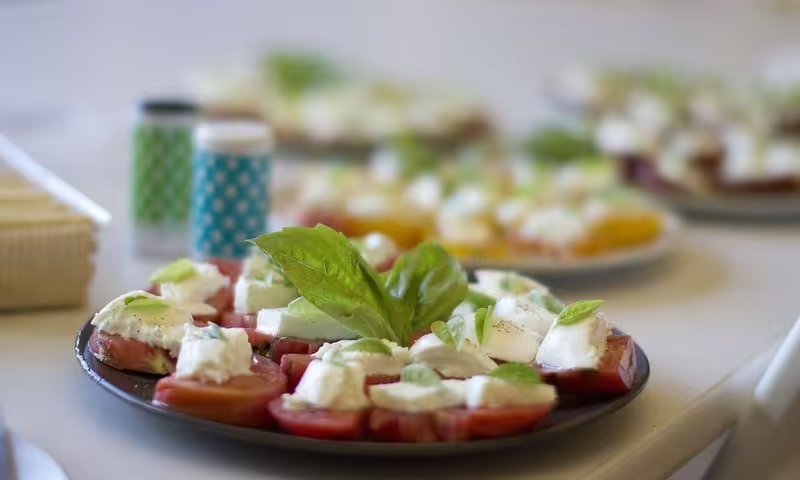
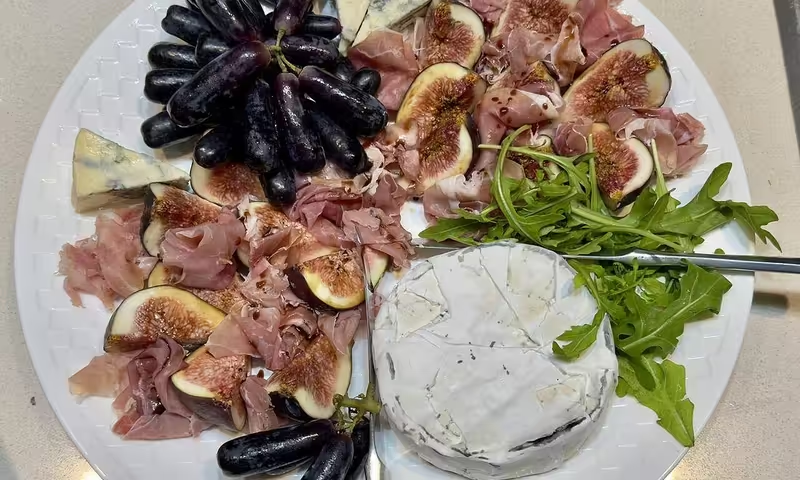
The block turns crumbly and slightly mealy after thawing, with a touch less elasticity when melted. On pizza, in lasagna, under a broiler, the difference is marginal; on a caprese or antipasto board it is obvious.
Best uses after thawing
Where thawed mozzarella shines:
- Pizza
- Lasagna
- Baked ziti
- Panini
- Stromboli
Caveats worth knowing
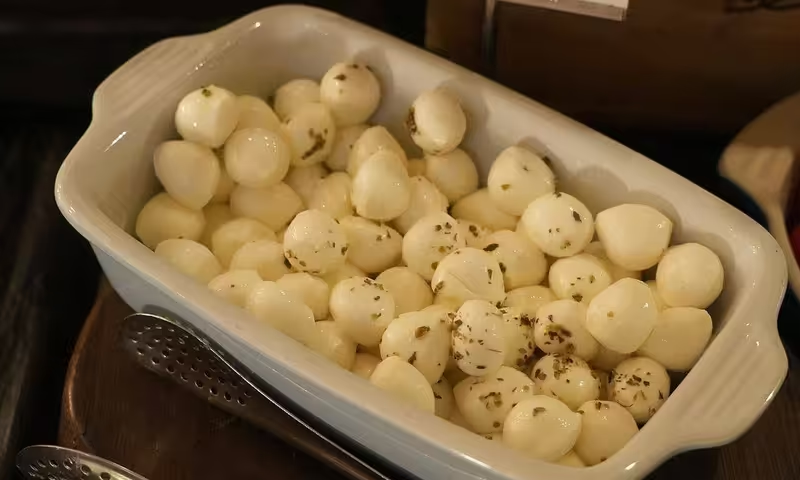
- This entry is about low-moisture mozzarella — the soft, water-packed balls behave differently and have their own card.
- Thawed mozzarella slices poorly; shred it and the whole problem vanishes.
- Vacuum-packed blocks that puff, smell sour, or feel slimy before freezing should be discarded, not frozen.
Mozzarella: questions about the freezer
Can you freeze mozzarella cheese for pizza?
Yes — it is the best use of the freezer for it. Grate the block, freeze the shreds flat in bags, and scatter them on pizza straight from frozen. They melt exactly like fresh.
How long can you freeze mozzarella?
Three to four months for best quality. It stays safe while frozen, but the cheese dries out and turns squeaky with time, so use older blocks in cooked dishes.
Can you freeze mozzarella after opening?
Yes. Rewrap the cut surface in parchment, then bag it, and freeze within a couple of days. Cut pieces freeze just as successfully as the original sealed block.
The details that decide it
Eleven months at minus twenty left a casein marker in frozen mozzarella but far fewer yeasts
Mozzarella di Bufala Campana is a fresh cheese with a short life, so the industry freezes curd when spring and summer demand runs past the milk supply. This study followed mature curd from three dairies through eleven months at minus twenty and looked for the fragment gamma-four-casein, which an earlier work had proposed as a molecular marker of freezing storage. The fragment appeared and its trend stayed constant for every month and every dairy, which makes it a marker of having been frozen rather than of how long. The microbiology moved more interestingly. Yeasts fell by about one log in the curd from two of the dairies and by about two logs in the third, so the freezer did prune the spoilage yeast population. The psychrotrophic bacteria, the organisms that actually tolerate cold, went the other way in one dairy, rising by about one log, while in the other two they held steady across the whole period.
- The curd spent eleven months at minus twenty before analysis.
- Yeasts fell by about one log in two dairies and by about two logs in the third.
- Psychrotrophic bacteria rose by about one log in one dairy and held steady in the others.
Feeding frozen curd back at twenty per cent changed the cheese, and at fifty the redox potential moved
Freezing curd is only useful if it can go back into the vat, so this trial made mozzarella with frozen curd at zero, five, twenty and fifty per cent of the blend and measured what changed. The curd had been frozen statically in a room at minus twenty for about three to four hours, which the authors note is faster than a standard freezing cell allows. Significant differences appeared at the twenty per cent level against both the zero and the five per cent cheeses, and the ash content tended to climb with the frozen fraction. The oxidation-reduction potential rose steadily with the frozen curd share, from 186 millivolts at zero per cent to 210 millivolts at fifty per cent, which points at a measurably different internal environment. Part of the explanation is compositional rather than physical: the frozen curd carried less fat than the fresh curd it replaced.
- Frozen curd went into the blend at zero, five, twenty and fifty per cent.
- The curd was frozen at minus twenty for about three to four hours.
- Redox potential rose from 186 millivolts at zero per cent to 210 at fifty per cent.
Shreds frozen a week and thawed a week still melted through the same window, and moisture was the lever
Fat-free mozzarella shreds are the hardest version of the product to freeze well, because most of their behaviour comes from the protein network rather than the fat. This short study froze shreds at minus eighteen for seven days and then thawed them over seven days at five degrees, and followed the bake with a temperature ramp from thirty to seventy and back, using the point where tan delta passes one as the melting point. The comparison was between shreds soaked in water and shreds left as they were, because the protein-to-moisture ratio governs how the casein micelles sit and how far the cheese spreads. Moisture is a narrow lever: below the practical ceiling it improves hydration and cuts drying, but past sixty per cent the shreds turn sticky and stop shredding cleanly, so a cheese built for freezing has to be formulated inside that band rather than simply watered up.
- The shreds were frozen at minus eighteen for seven days and thawed over seven days at five.
- The melt point was read where tan delta passed one across a ramp from thirty to seventy degrees.
- Moisture past sixty per cent makes the shreds sticky and hard to shred.
Related foods