Can You Freeze Milkshakes?
A milkshake that melts and refreezes by accident comes back icy, grainy, and split — the blender's emulsion does not survive the chaos. A milkshake frozen on purpose is a different story: pour it into cube trays, re-blend with a splash of milk, and it is a shake again.
Also called: frozen milkshake · leftover milkshake · fast food milkshake · malt
Yes, with changes — a melted and refrozen milkshake turns icy and grainy, but frozen cubes re-blend into something nearly fresh.
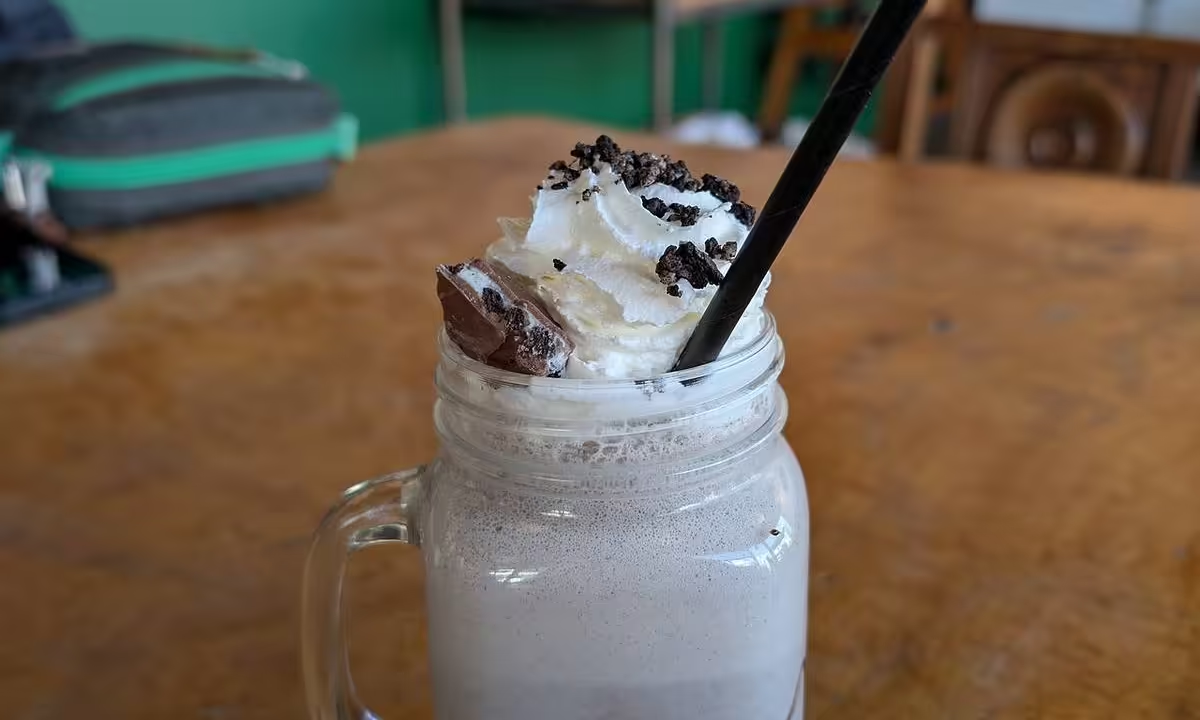
The method for freezing milkshakes
Pour leftover shake into ice-cube trays and freeze solid. Re-blend the cubes with a small splash of milk until thick and smooth. Skip the fridge-thaw entirely — cubes straight into the blender skip the icy-grainy phase altogether.
Before it goes in
- Freeze leftover shake within an hour, while it is still cold and mixed.
- Pour into ice-cube trays, or single-serve containers for scoop-and-blend portions.
- Once solid, pop cubes into a labeled freezer bag.
- Keep mix-ins like cookie crumbs out of the freezer plan — they go soggy.
Containers & wrapping
Ice-cube trays plus freezer bags are the workhorse; rigid single-serve containers work too. A shake left in its cup, melted and refrozen as a block, is the failure mode this card exists to prevent.
Freezer storage
1 month
The dairy base dulls and the texture coarsens over time. Cubes keep best when the tray is covered so they do not absorb freezer odors — chocolate shake flavored like frozen fish is a real thing.
Safe and good are two different clocks for milkshakes: at 0 °F / -18 °C it stays safe as long as it is solidly frozen, and the 1 month window above is about eating quality.
How to bring milkshakes back
Do not thaw — blend frozen. Cubes go straight into the blender with a splash of milk and re-emulsify in under a minute. For a slushier drink, let cubes soften for five minutes on the counter first.
Is refreezing milkshakes allowed in practice?
Once, in cube form, if the shake thawed in the refrigerator. Repeated melt-refreeze cycles are what create the icy, grainy texture — each cycle grows the ice crystals and breaks the emulsion further.
Texture & flavor changes
Accidental melt-refreeze turns the shake icy, grainy, and separated, with a watery layer over gritty slush. Deliberately frozen cubes re-blend to a texture close to the original, though the foam on top is never quite as perky as a fresh pour.
Best uses after thawing
Where thawed milkshakes shines:
- Re-blended shakes
- Popsicles
- Floats
- Thickener cubes for fresh shakes
Which version is it this time?
Thick shakes built on hard ice cream freeze into the best cubes. Soft-serve and fast-food shakes, churned with more air and less fat, separate more and make grainier cubes — still usable, just blend longer.
The same leftover shake has two futures: poured into trays it re-blends beautifully; left melted in the cup it refreezes into an icy brick. The difference is five minutes of effort, and it is worth all five.
Caveats worth knowing
- Never refreeze a shake that fully melted at room temperature — the dairy sat warm, which is a safety question as much as a texture one.
- Mix-ins and toppings — cookie crumbles, whipped cream, cherries — turn soggy and weepy; add them fresh after re-blending.
- Shakes with real fruit separate more than pure ice-cream versions; expect to blend longer to smooth them out.
Milkshakes: questions about the freezer
Can you freeze a milkshake and eat it later?
Yes, but freeze it as cubes rather than as a solid cup. When the craving returns, blend the frozen cubes with a splash of milk and the shake comes back thick and smooth. A solid block thaws unevenly and turns icy.
Can you refreeze a melted milkshake?
Not happily. Melted and refrozen, the emulsion breaks and the texture turns icy and grainy. If it melted in the refrigerator, refreezing in cubes and re-blending is acceptable; if it sat out warm, discard it for safety.
How do you make a milkshake last longer?
Freeze it within an hour in ice-cube trays, bag the cubes airtight, and use them within a month. Re-blend straight from frozen with a splash of milk — no thawing — and the texture stays close to freshly blended.
Related foods