Can You Freeze Deli Meat?
The half-pound of turkey you over-ordered at the deli counter does not have to go slimy in the refrigerator. Cold cuts freeze safely for about two months — the catch is texture: thawed slices weep and turn soft, which sandwiches forgive and platters do not.
Also called: lunch meat · cold cuts · sliced turkey · sandwich meat
Yes, with trade-offs — deli slices freeze safely for 2 months but thaw weepy; cooked uses suit them best.
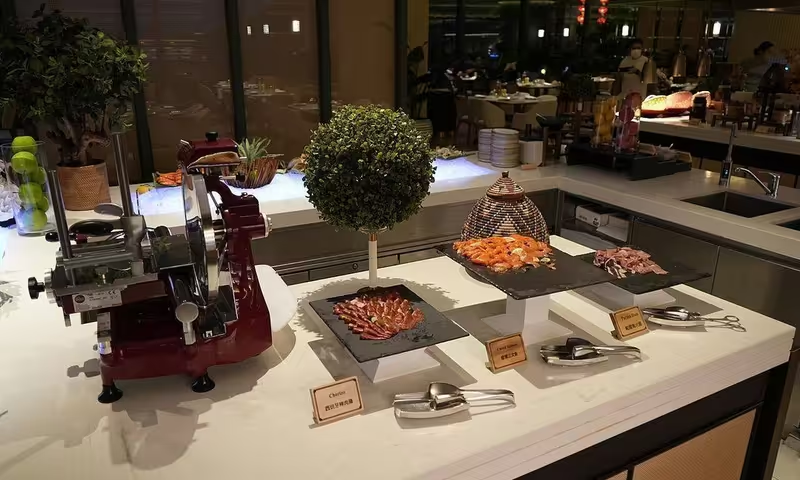
The method for freezing deli meat
Freeze small packs of slices with parchment between layers, pressed flat and sealed airtight. Thawed packs go into grilled cheese, quesadillas, and omelets — cooked uses where weepiness vanishes.
Before it goes in
- Portion into sandwich-sized packs — four to six slices each.
- Layer the slices with parchment or wax paper so they separate.
- Press the air out and seal; thin packs thaw fast.
- Label with the meat and the date.
Containers & wrapping
Airtight freezer bags pressed flat; rigid containers for stacks with parchment. Vacuum sealing whole, unsliced chunks preserves texture best if the deli counter will cut it fresh later.
Freezer storage
2 months
Deli slices hold quality about 2 months frozen; opened packs last only days in the refrigerator, so freezing is a genuine rescue. Keep the freezer clock short — slices dry at the edges first.
Treat the storage window on deli meat as a quality clock. Frozen solid at 0 °F / -18 °C it does not become unsafe with time; the window tells you when the eating starts to slip.
How to thaw frozen deli meat
Refrigerator-thaw flat packs in an hour or two, overnight for thicker stacks. Pat the slices dry before layering. Do not thaw at room temperature — lunch meat is handled, sliced meat; treat it carefully.
Is a second freeze okay for deli meat at home?
Not recommended. Slices already weep once thawed; a second cycle turns them slimy-edged and papery. Freeze in sandwich-sized portions and thaw one at a time.
Texture & flavor changes
Slices release moisture as they thaw and turn noticeably softer — layered cold on bread, they can read as damp. Heated in a grilled cheese, panini, or omelet, the extra moisture steams off and the flavor lands normally.
Best uses after thawing
Where thawed deli meat shines:
- Grilled cheese
- Quesadillas
- Omelets and scrambles
- Panini
- Chef salads (dried well)
Which version do you have?
Whole, unsliced chunks from the deli counter freeze and thaw with far less damage than pre-sliced packs — slice them after thawing. If your counter sells halves, that is the better freezing shape.
Caveats worth knowing
- Do not plan a cold-cut platter from frozen slices — the texture change is front and center when served cold.
- Freeze within a day or two of slicing; deli meat's short refrigerator life is the reason it freezes, not a problem freezing fixes.
Freezer FAQs for deli meat
Can you freeze sliced deli meat?
Yes — up to 2 months for best quality. Layer the slices with parchment, press the air out, and freeze flat. Thawed slices are softer and a bit weepy, so they shine in grilled cheese, panini, and omelets rather than served cold on a platter.
How long does lunch meat last in the fridge compared to the freezer?
Opened deli meat keeps only 3–5 days refrigerated, which is exactly why the freezer earns its keep: frozen packs hold quality about 2 months. Freeze in sandwich-sized portions, thaw in the refrigerator, and use the slices in cooked applications for best results.
How do you freeze a whole pack of deli meat?
Separate the slices with parchment and freeze them flat in a bag; the slices then peel apart one at a time without thawing the stack.
The details that decide it
Sliced meat from the counter is a ready-to-eat food that skips the cooking step
The thing that separates deli meat from raw meat is not the animal, it is that nobody cooks it again before eating it. Risk assessments for Listeria monocytogenes classify high-risk ready-to-eat foods as pre-prepared salads, deli meats, cold-cooked poultry, soft cheeses and cold-smoked or marinated fish, and the reason deli meat sits on that list is that ready-to-eat products are generally eaten directly, with no further processing by the consumer to act as a fail-safe. Contamination in these foods typically ranges from under one cell per gram up to levels approaching the regulatory limit of a hundred per gram at the end of shelf life, so a pack can be legally fine and still carrying a real number of organisms. The reference point for the whole category is post-lethality contamination, the idea that the hazard is introduced after the cook, and the USDA rule for meat and poultry is aimed specifically at that window.
- Deli meat is a ready-to-eat food eaten without a cooking step.
- Ready-to-eat meats rank among the high-risk Listeria food groups.
- Contamination a hundred per gram at end of shelf life can still be legal.
On a ready-to-eat meat the storage temperature matters more than the calendar
For this class of food the risk models keep pointing at the thermometer rather than the date stamp. Listeria monocytogenes is a short bacillus that can multiply at low temperatures and in the presence of high salt concentrations, which is precisely the environment a chilled deli pack provides, and quantitative risk assessments consistently find that storage temperature has a higher impact on predicted illness than storage duration does. In one review of those models, temperature fluctuations at retail and temperature misuse during home storage were identified as major contributors to risk, and consumer handling practices had more influence on the outcome than retail conditions. The practical reading is uncomfortable: moving a pack from a four-degree fridge to a ten-degree shelf does more to its risk than leaving it there a week longer, which is why the cold chain, not the best-before date, is the thing to watch.
- Listeria can multiply at low temperatures and at high salt.
- Risk models rank storage temperature above storage duration.
- Retail temperature swings and home misuse are major risk contributors.
The freezer delays the problem on deli meat, and does not solve it
Freezing a pack of sliced deli meat is a reasonable way to buy time, as long as it is understood as a pause. Listeria is reported in pork and in processed pork products, so the organism is not hypothetical in this category, and freezing stops it from growing without being a validated kill step, which means the cells present when the pack went in are broadly still there when it comes out. Thawing restores the very conditions the organism favours, a moist, mildly salty, near-neutral surface held cold, and Listeria will resume multiplying slowly at ordinary refrigerator temperatures. Because the hazard on deli meat is introduced after cooking and eaten without a further cook, freezing is best treated as a delay on the clock rather than a reset of it, and the thaw should happen in the coldest part of the fridge.
- Listeria is reported in pork and processed pork products.
- Freezing halts growth but is not a validated kill step.
- Thawing returns the moist, cold, mildly salty niche it grows in.
Related foods