Can You Freeze Chocolate Mousse?
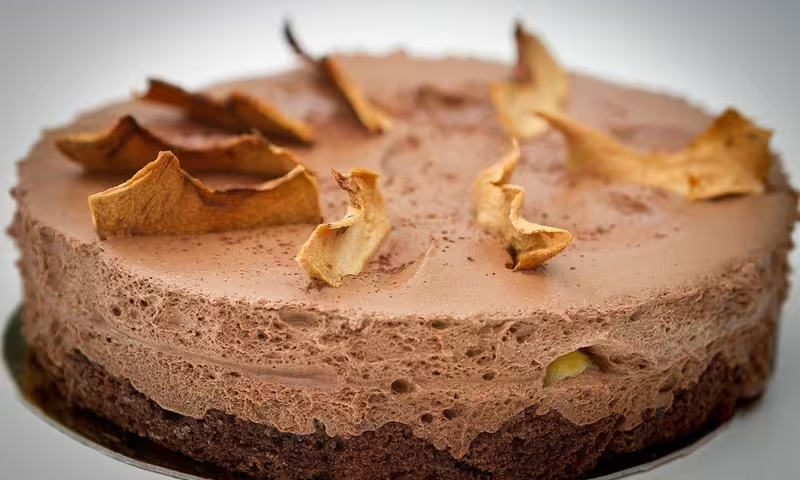
A mousse is a foam: thousands of tiny air bubbles trapped in chocolate and cream, and that trapped air is the entire dessert. The freezer pops those bubbles and squeezes the liquid out, so thawed mousse sits dense and weeping in the glass, closer to fudge sauce than to dessert.
Also called: mousse au chocolat · chocolate mousses
No — freezing collapses the whipped air out of chocolate mousse; it thaws dense, weepy, and grainy instead of light.
What to do instead
Refrigerate instead — mousse keeps two to three days chilled, and it is at its airy best on the first day. There is no version of a frozen mousse that comes back as the dessert you made.
Before it goes in
- Spoon the mousse into single-serving ramekins or small jars rather than one large bowl.
- Let it chill and set fully in the refrigerator before serving.
- Cover each portion with plastic pressed lightly onto the surface.
- Eat it within two to three days — a mousse does not wait.
Containers & wrapping
Individual glass jars or ramekins with tight lids. Chilling one large bowl is a mistake of its own: the middle sets long after the edges, and unmolding it never works.
Storage
Not recommended
Quality slides from the first day in the freezer. Refrigerated mousse actually tastes better at day two than frozen mousse does at any point — keep it in the fridge and eat within two to three days.
Nothing spoils while chocolate mousse is genuinely frozen. Held at 0 °F / -18 °C it is safe indefinitely, and the date on the bag tracks flavor and texture rather than danger.
If it froze anyway
Not applicable — there is no thaw that puts the air back. Expect a dense, weeping glass of chocolate if it was frozen, and the only question is how much liquid collects at the bottom.
A second round after an accident
Never. There is no structure left to protect after the first thaw, and a second freeze just squeezes out more liquid.
Texture & flavor changes
The foam collapses and the dessert turns dense and fudgy, with a grainy edge as the cocoa and butter in the chocolate reorganize. Clear liquid weeps to the bottom of the glass, and piped peaks or garnishes sink into the surface.
If it froze anyway, use it here
Where it still works:
- Chilled in small ramekins
- Blended into milkshakes
- Melted into warm sauce
- Stirred into hot coffee
Which version is it?
Both styles collapse, but cream-whipped mousse turns slightly grainier while egg-white mousse weeps more freely. Neither recovers; choose based on which failure you mind less, or simply chill instead.
Caveats worth knowing
- Egg-based mousse left softening at room temperature is a real safety risk — keep it chilled and discard anything left out for hours.
- The weeping is not cosmetic: pooled liquid means the emulsion has broken, and no amount of stirring brings the mousse back.
- Do not bother freezing piped or layered presentations; the decoration will be flat and wet when it thaws.
Chocolate Mousse FAQs
Can you freeze chocolate mousse to make it set faster?
You can chill it in the freezer briefly — 20 to 30 minutes will firm it up — but leaving it there to set fully costs you the texture. The mousse sets beautifully in the refrigerator in a few hours without any collapse.
How long does chocolate mousse last in the fridge?
Two to three days when covered and refrigerated, which is far better than freezing it. Egg-based versions are best eaten within a day or two; cream-based versions hold a day longer without losing their lightness.
Why did my frozen mousse turn watery?
The ice crystals that formed during freezing ruptured the foam and the emulsion, so the liquid that was whipped into the mousse drained out as it thawed. This is expected and irreversible — the weeping is why freezing mousse is not recommended.
Related foods