Can You Freeze Bulgur?
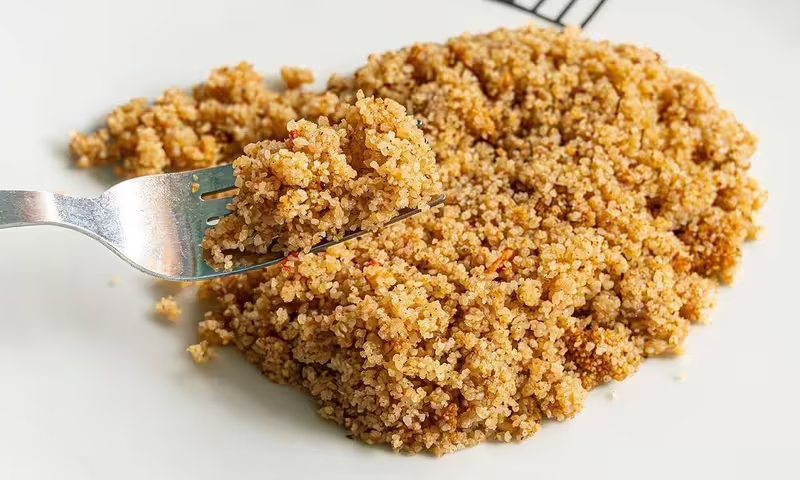
Bulgur arrives parboiled, which sounds like a head start and is one: it freezes acceptably, but the grains come back softer and less nutty. Coarse bulgur keeps a workable chew; the fine grind behind tabbouleh deserves to stay fresh.
Also called: cooked bulgur · cracked wheat
Yes — cooked bulgur freezes acceptably, though the grains soften and lose their nutty snap; coarse grinds fare better than fine.
The freezer routine for bulgur
Cook coarse bulgur slightly firm, toss with a little olive oil, and freeze flat in cup portions. Keep fine bulgur out of the freezer entirely and make tabbouleh fresh.
Before it goes in
- Cook coarse bulgur until just tender — a minute shy keeps some bite for the freeze.
- Drain well and toss with a teaspoon of olive oil so the grains stay separate.
- Cool, portion into flat bags, and press thin for quick thawing.
- Keep the fine grind out of the freezer; it belongs in fresh salads.
Containers & wrapping
Flat freezer bags or small rigid containers. The oil toss does the real work; packaging just needs to be airtight.
Freezer storage
1–2 months
Coarse grind keeps best; fine bulgur, even frozen well, never returns to salad-worthy texture.
Keep the freezer at 0 °F / -18 °C and safety stops being a question for bulgur. What the calendar measures is quality: past its window it is safe, only a step further from fresh.
What to do when bulgur comes out
Refrigerator-thaw overnight and fluff with a fork, or warm from frozen in a covered pan with a splash of broth. Fine for cold bowls once fully thawed.
Can you re-freeze bulgur at home?
No — the grains are soft enough after one freeze; a second turns them mealy.
Texture & flavor changes
Grains come back softer and a touch mealy, with less of the toasted-wheat flavor. In pilafs, stuffings, and soups the difference disappears; in a raw herb salad it is all anyone can taste.
Best uses after thawing
Where thawed bulgur shines:
- Pilafs
- Soup and stew bulk
- Stuffed vegetables
- Warm grain bowls
- Kofte-style mixtures
Caveats worth knowing
- Tabbouleh and fine-grind salads should be made fresh; frozen fine bulgur turns damp and dull.
- The oil toss matters — uncoated bulgur clumps into a solid block that resists fluffing.
- Use thawed bulgur in cooked or dressed dishes rather than as a plain side; softness shows most when it stands alone.
Freezing bulgur: questions and answers
Can you freeze cooked bulgur?
Yes, with a texture trade — it freezes safely but softens, losing some of its nutty chew. Cook it slightly firm, toss with oil, and freeze flat; reheated into a pilaf or soup, thawed bulgur behaves well.
How long can you freeze bulgur?
One to two months for good quality. It stays safe while solidly frozen, but the grains dry and soften as the weeks pass, so bulgur works better as a short-stay freezer grain.
Can you freeze tabbouleh?
Not really. The parsley, mint, tomato, and lemon that define it all turn limp and watery, and fine bulgur goes damp. Make tabbouleh fresh — it takes fifteen minutes — and freeze the coarse bulgur plain for cooked dishes instead.
The details that decide it
Bulgur sits between rice and quinoa in the freezer
Bulgur is cracked wheat that has already been parboiled, and it lands between rice and quinoa once frozen. It does not dry at the edges the way rice can, but it softens more than quinoa, whose little germ ring keeps a bite. The coarse grind comes closest to rice-like behaviour, and the fine grind comes closest to clumping like couscous. Which one you cook depends on whether the end dish is a pilaf or a salad.
- Bulgur softens more than quinoa but does not dry like rice.
- Coarse behaves more like rice; fine clumps like couscous.
- Cook the coarse grind when the freezer is the plan.
Bulgur is already a broken grain, so it cools and clumps at once
Bulgur is thirstier than most grains, so it dries out even before the freezer gets to it. Freeze it the day you cook it rather than on the third or fourth, and dress the grains with a little oil first so they still fluff apart later. Keep the fridge window to three to four days and no longer.
- Bulgur is thirsty — freeze it the day you cook it.
- Oil the grains so they still fluff apart later.
- Do not push past the four-day fridge window.
As a binder, bulgur freezes without the texture trade
Bulgur is the binder in kibbeh and in many stuffed vegetable and kofte mixtures, and in that role its softness stops mattering entirely. Mixed with minced meat or wrapped around a filling, the grain is no longer eaten as itself, so the freezer does its usual job with no texture argument to have. Shape the pieces first, freeze them on a tray so they hold their form, then bag them and cook from frozen.
- As a binder, bulgur freezes with no texture penalty.
- Freeze shaped pieces on a tray before bagging them.
- Cook them from frozen rather than thawing first.
Related foods