Can You Freeze Brisket?
Brisket is a two-day project that always makes more than the table needs — and luckily it is one of the best-freezing cooked meats there is. Sliced with its juices or sauce, frozen flat, and reheated low, it comes back smoky, tender, and entirely worthy of the effort.
Also called: beef brisket · smoked brisket · bbq brisket · packer brisket
Yes — cooked brisket freezes well for 2–3 months sliced and packed with juices; it reheats into its original glory.
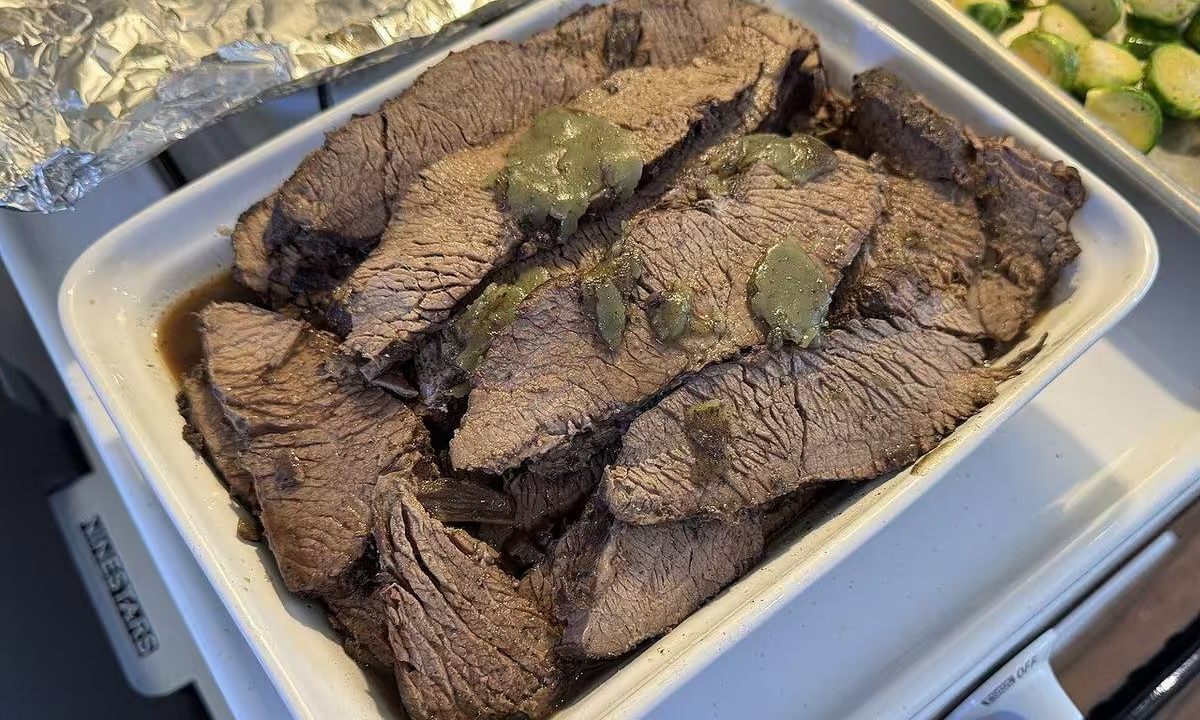
How to freeze brisket without spoiling it
Slice the cooled brisket, layer it in flat packs with cooking juices, sauce, or a splash of broth, and freeze. The moisture layer protects the bark and the lean point alike — it is the whole trick.
Before it goes in
- Cool the brisket, then slice across the grain into dinner portions.
- Mix the collected juices with a little sauce or broth.
- Layer the slices in flat freezer bags, pouring a few spoonfuls of liquid over each layer.
- Press out air, freeze flat, and label with the date.
Containers & wrapping
Flat freezer bags for slices; rigid containers with sauce for chopped or burnt-ends portions. Vacuum sealing works for unsauced slices — add the liquid at reheating instead.
Freezer storage
2–3 months
Cooked brisket holds quality 2–3 months; the smoke flavor mellowing is the first change, dryness the second. Safe indefinitely while solidly frozen at 0 °F / -18 °C.
Cold does not make brisket dangerous over time. Held at 0 °F / -18 °C it remains safe indefinitely, and the window above is an honest estimate of when texture starts to go.
Thawing brisket without spoiling it
Refrigerator-thaw overnight, then reheat covered and low — an oven around 300 °F with the juices, or a gentle steam on the stove — until the center is hot. Flat packs also reheat from frozen, covered, on low.
Is a second freeze safe for brisket if you are careful?
Not recommended — it has been cooked and handled once already. Portion by the meal at freeze time; brisket portions rarely go unused anyway.
Texture & flavor changes
Reheated frozen brisket keeps its tenderness; the smoke edge softens slightly and the flat can dry if reheated without its liquid. With juices and a covered, low reheat, most eaters will call it the same brisket.
Best uses after thawing
Where thawed brisket shines:
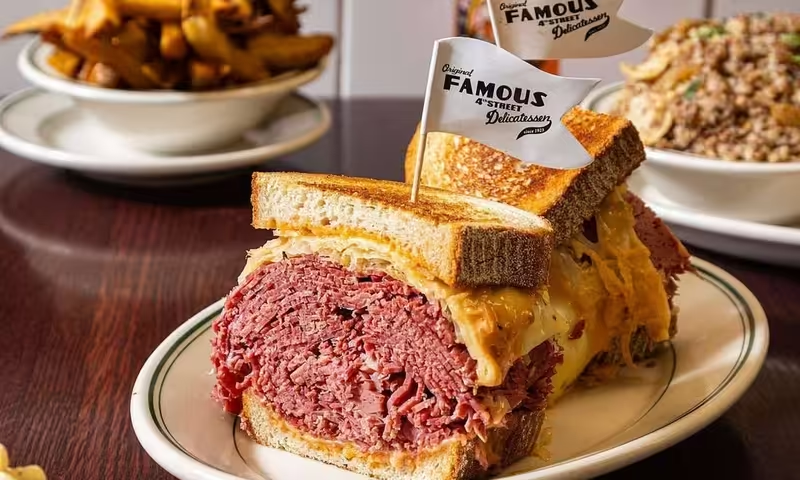
- Brisket sandwiches
- Tacos and quesadillas
- Burnt-ends chili
- Brisket hash
- Barbecue plates
Which one are you freezing?
Sliced with juices returns closest to original; chopped brisket freezes more flexibly for tacos, chili, and hash. Both hold 2–3 months — split the batch if your household does both.
Caveats worth knowing
- Reheating is where brisket is won or lost — always covered, always low, always with the liquid you froze alongside.
- Freeze within a couple of days of cooking; brisket held a week in the refrigerator first brings that week's flavor to the freezer.
Brisket: questions about the freezer
Can you freeze cooked brisket?
Yes — 2–3 months at best quality. Slice the cooled brisket, pack it flat with cooking juices, sauce, or broth, and freeze. Thaw overnight in the refrigerator and reheat covered and low with the liquid; done that way, it comes back remarkably close to fresh off the smoker.
How do you reheat frozen brisket without drying it out?
Thaw it overnight in the refrigerator, then reheat it covered at around 300 °F with the juices or sauce it was frozen in — about 20–30 minutes for slices, until the center is hot. The liquid steams the meat gently; uncovered, high-heat reheating is what turns brisket dry.
Can you freeze brisket with its juices?
Yes, and you should — freeze the sliced brisket flat in its own cooking liquid, which keeps the point end from drying out.
The details that decide it
Brisket is the cut you freeze and then cook for hours, and collagen is why
A brisket comes from the deep and superficial pectoral muscles, a working pair that the animal used constantly, and that history is why it is tough and why the freezer is not its main problem. The muscle is loaded with connective tissue, so its tenderness is won by dissolving collagen over a long, moist cook rather than by the state of the muscle fibres themselves. That reframes what freezing does here: a brisket is routinely vacuum-packed, blasted frozen and held at minus eighteen degrees until it is needed, and because the long cook will break down and solubilise much of the collagen anyway, the cut is more forgiving of a freeze than a lean steak would be. The freezer still costs it water and some oxidation, but it does not destroy the property the cook is trying to create.
- Brisket is the deep and superficial pectoral muscles, worked hard by the animal.
- Its toughness is connective tissue, not the muscle fibres themselves.
- The long cook dissolves collagen, which makes the cut forgiving of a freeze.
Sixty days at minus eighteen leaves a measurable chemical trail in a beef cut
Even at the temperature most home freezers never drop below, time is doing something to a beef cut. A study of a beef round stored at minus eighteen for up to sixty days alongside a week of chilled storage measured changes in lipid oxidation through thiobarbituric-acid-reactive substances and tracked metabolite and water-related parameters, and noted that the salt present shifts pH and therefore the reactivity of the proteins and enzymes. The point for a brisket is not that sixty days makes it dangerous, which it does not, but that the cut is not frozen in amber: oxidation markers climb, the water moves, and the chemistry drifts. A vacuum-packed brisket held cold is a slowly changing product, and the change is measurable rather than imaginary.
- A beef cut held at minus eighteen was measured over sixty days.
- Lipid oxidation markers rose across the frozen storage period.
- Salt shifts pH and changes the reactivity of proteins and enzymes.
The freezer mostly costs a brisket water, and the long cook hides some of it
Strip away the collagen argument and what the freezer takes from a brisket is largely water, and it takes it by two routes described across frozen meat. Ice crystals mechanically damage the fibre network and let water migrate out of the myofibres into the spaces between them, where it cannot all be reabsorbed, and separately the breakdown of ATP toward hypoxanthine alongside a pH fall drives protein denaturation that makes the remaining water easier to lose. On a steak that loss defines the eating quality. On a brisket it is partly masked, because the hours at low heat that dissolve collagen also bring moisture back into a moist environment, and a slice is judged by collagen conversion far more than by a few percent of drip.
- Freezing costs a brisket water through two separate mechanisms.
- Crystals damage the fibre network so water migrates out of the myofibres.
- ATP breakdown and a pH fall drive protein denaturation and further water loss.
Related foods