Can You Freeze Lemon Meringue Pie?
The lemon part of a lemon meringue pie is the part that keeps. The meringue is where the plan dies: its fragile sugar-foam balloons weep syrup, shrink from the crust, and turn rubbery. Make the curd ahead, hold it chilled, and save the meringue for serving day.
Also called: meringue pie · lemon meringue · lemon pie
No — meringue weeps and shrinks in the freezer; make the lemon filling ahead and top the pie with fresh meringue.
What to do instead
Make the lemon filling ahead in airtight containers and hold it chilled, with the blind-baked crust wrapped separately if you have one. On pie day, spoon the chilled filling into the shell, top with fresh meringue, and bake as the recipe intends.
Before it goes in
- Make the lemon filling and cool it completely before chilling it.
- Portion into rigid airtight containers sized to fill one pie shell each.
- Wrap a blind-baked, fully cooled pie crust tightly in plastic and foil.
- Never freeze the assembled pie — build the meringue fresh instead.
Containers & wrapping
Rigid airtight containers for the filling, with headroom; the crust in a double wrap inside a rigid box so nothing snaps the edges. Label both — lemon curd and other fillings look alike.
Storage
Not recommended
Not as assembled — the verdict. The make-ahead parts: lemon filling (two to three days chilled) and a blind-baked crust (about a day, wrapped), each stored separately; the meringue is always made fresh.
Freezer burn, drying and dulled flavor are quality problems with lemon meringue pie, not safety ones — anything solidly frozen at 0 °F / -18 °C is still fine to eat, just further from fresh.
If it froze anyway
Not applicable — there is no thawing an assembled pie back to life. Bring the chilled filling out of the refrigerator, stir it well, and warm it briefly if it has loosened; the wrapped crust comes to room temperature in under an hour.
A second round after an accident
Not applicable — none of this belongs in the freezer, so there is nothing to round-trip. Portion the filling per pie so the question never comes up.
Texture & flavor changes
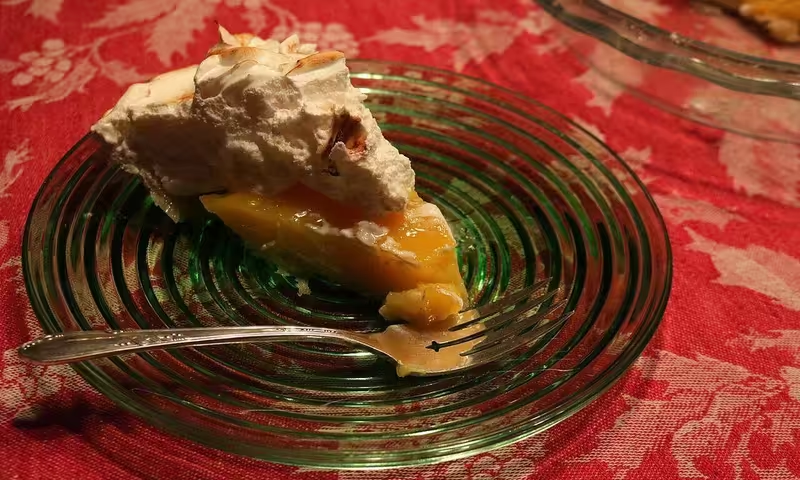
On a frozen-and-thawed assembled pie, the meringue weeps beads of syrup, shrinks back from the crust, and goes tough and tacky against the filling. The filling itself, kept chilled, stays true with only a mild loosening that a restir fixes.
If it froze anyway, use it here
Where it still works:
- Chilled curd for fresh pies
- Tart filling
- Spoon over ice cream
- Layered in parfaits
Which version is it?
The full assembled pie is a hard no because of the meringue. The filling alone, made ahead in pie-sized portions and chilled, is the workable version — combine it with a fresh crust and fresh meringue, and the pie reads as homemade, because it is.
The same logic covers chocolate and butterscotch meringue pies: the filling keeps, the meringue does not. Whatever the flavor, the plan starts and ends with making the base ahead, never with the topping.
Caveats worth knowing
- Do not attempt to freeze the assembled pie — the meringue damage is immediate, visible, and irreversible.
- Cornstarch-thickened fillings can thin overnight in the refrigerator; restir while warming, and add a minute of low heat if needed to rebind.
- Keep the crust separate from the filling and protect its edge — a cracked shell cannot be patched.
Lemon Meringue Pie FAQs
Can you freeze lemon meringue pie?
Not the assembled pie — the meringue weeps, shrinks, and turns rubbery once ice touches it. The workable plan is to make the lemon filling ahead and hold it chilled in airtight containers, keep the crust separate, then assemble and top with fresh meringue when you are ready to serve.
Can you freeze lemon curd or the lemon filling?
Chill it rather than freeze it: lemon curd keeps about a week in airtight containers in the refrigerator. Stir it well when you use it; cornstarch-thickened filling may loosen slightly, and a minute of gentle heat while stirring brings the body back.
Why does meringue weep after freezing?
The foam's delicate sugar structure collapses as ice crystals form, releasing the liquid it held. The beads of syrup on top and the shrinking from the crust are that collapse in action — no reheating trick undoes it, which is why fresh meringue is the answer.
Related foods